On the evening of October 16, a supertanker carrying over 2 million barrels of crude oil was damaged in the Strait of Hormuz. According to IRNA, the Islamic Revolutionary Guard Corps (IRGC) Navy announced that an "illegally-routed supertanker in violation of regulations" struck a sea mine, causing an explosion and fire. Hamshahri reported that the IRGC released footage of the incident. At the same time, India's Maritime Minister claimed that a tanker carrying 15 Indian sailors was "struck by a projectile" in the strait and stated that none of the crew were injured.
These two accounts point to the same incident in the same location but explicitly contradict each other on causation: the IRGC says mine, India's government says a projectile strike. According to Donya-ye Eghtesad's analysis based on open-source intelligence (OSINT), the vessel struck appears to be a UAE-linked VLCC (very large crude carrier) called "MT ST 3" with IMO number 9220964. The ship is flagged to the Marshall Islands, has a cargo capacity of 302,977 tons, and measures 333 meters in length; it is listed as operated by SAFEEN Tankers and SAFEEN Feeders. According to the report, the vessel's Automatic Identification System (AIS) has been off for approximately 18 days, last activated on August 26; this gap raises uncertainty about the incident's circumstances.
Which account is accurate remains unconfirmed. The IRGC's "mine" claim aligns with the narrative of strait blockade and mine threats in recent days, while India's "projectile" claim points to a different type of attack. No official casualty figures have been reported. The presumption of innocence applies.
How the Persian press covered it
IRNA and Hamshahri presented the story based on the official IRGC statement, framing it as "a mine strike on an illegally-routed tanker," with both sources emphasizing that the vessel was carrying over 2 million barrels and that the IRGC released video footage. ISNA, by contrast, focused the story on India's claim of a projectile strike and highlighted that 15 Indian crew members were safe. Donya-ye Eghtesad, unlike the state agencies, offered independent technical analysis based on OSINT sources and noted that the vessel's AIS signal has been off for weeks.
Context
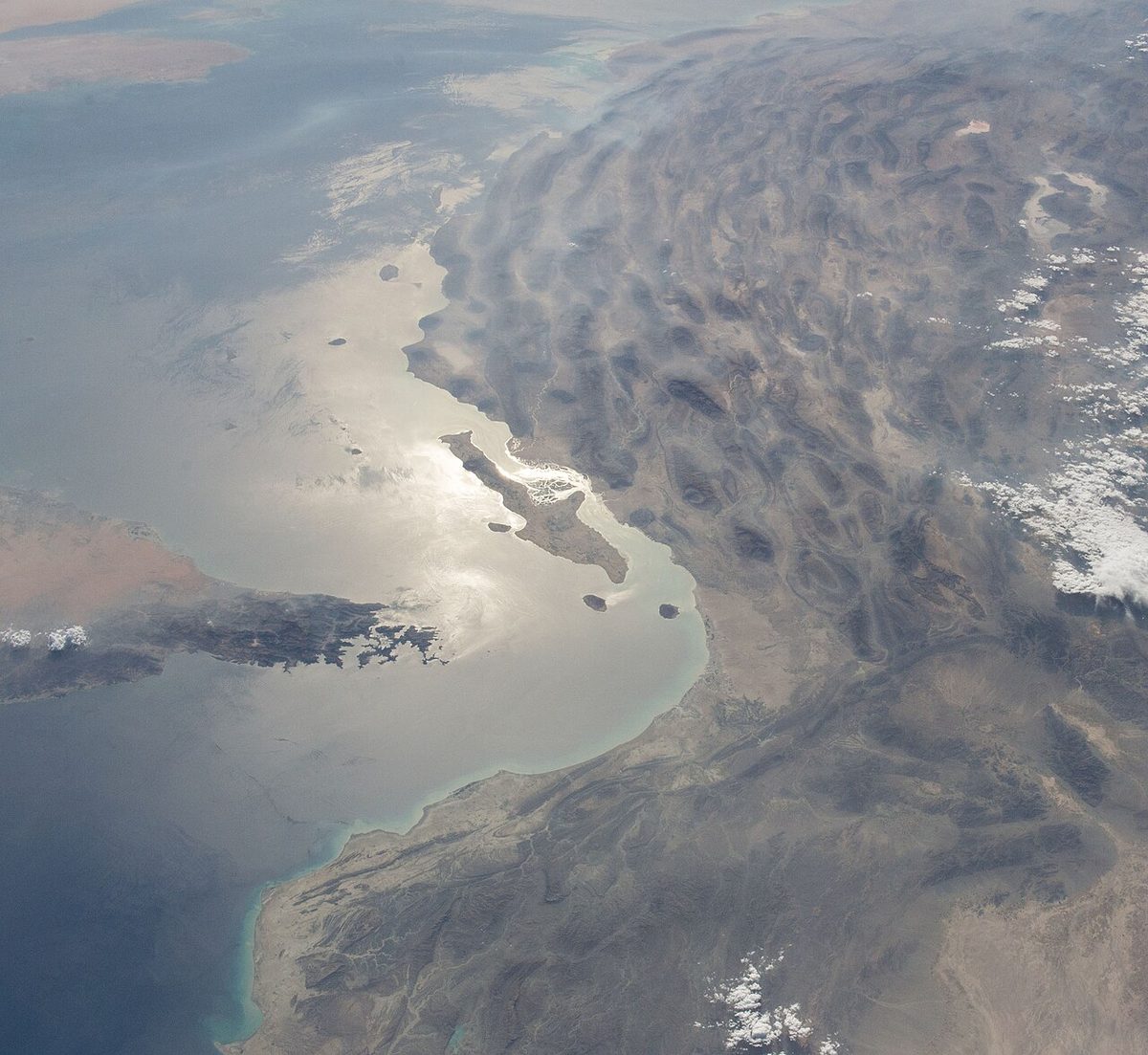
The Strait of Hormuz is a narrow waterway through which a significant portion of the world's seaborne crude oil passes. Tanker incidents have occurred repeatedly in recent weeks: on October 15, a 2,500-container vessel reportedly struck a mine and sank; a week earlier, a third supertanker hit a mine in what the IRGC described as a "rules violation" incident. (See: Third supertanker hits mine in Hormuz). The same week, French President Macron announced a trip to the Gulf to address the crisis. (See: Macron heading to the Gulf for Hormuz crisis)
The U.S. CENTCOM command claims that the naval blockade in the strait is "impenetrable" and that mine-clearing operations continue; however, the conflicting accounts from the parties involved make independent verification of responsibility increasingly difficult with each incident. The vessel's AIS being dark for weeks also raises questions about off-the-books navigation and hidden cargo information—practices known as "shadow fleet" operations that complicate tracking of sanctioned oil. International maritime insurance and shipping costs are affected by this ambiguity; insurers continue to apply "high-risk war zone" premiums in the region.
A day later, the attack count itself became disputed: TASS reported 22 ships hit in 13 days while the UK's UKMTO recorded 12 in the same window (Attack count disputes: TASS said 22 ships in 13 days; UK center logged 12). The target list later widened: a newspaper close to Tehran reported that Iran's "target bank" now also includes the undersea internet cables running through Hormuz (related article).
This article is for information only; not investment advice.