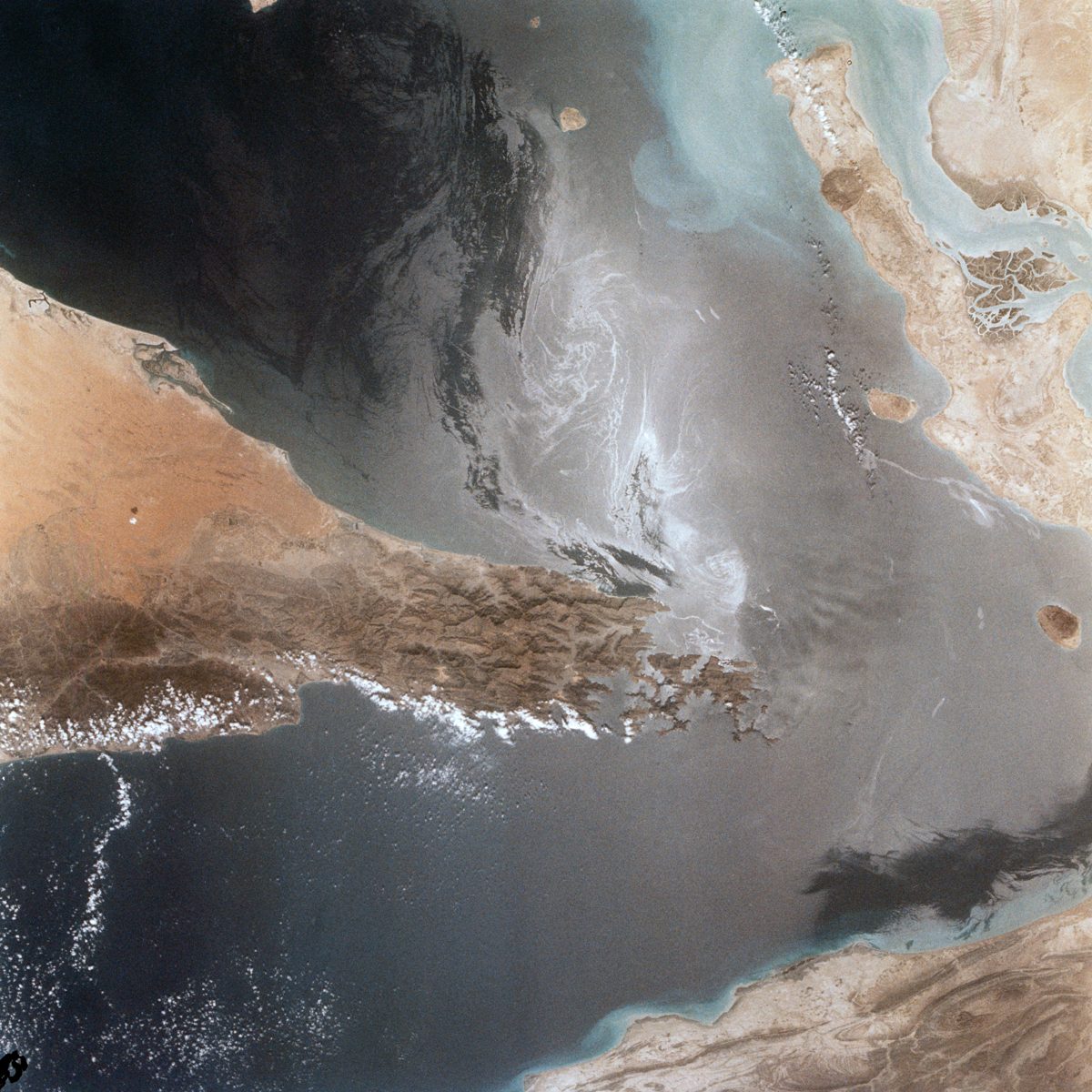
According to a report cited by IRNA from Russian news agency TASS, 22 vessels were attacked in the Strait of Hormuz during the first 13 days of October. The UK Maritime Trade Operations Center (UKMTO), monitoring the same period from a different angle, recorded 12 attacks in the October 10-16 period in and around the strait; the two figures don't corroborate each other even if both are accepted as official counts.
According to UKMTO's weekly report released October 16—with data mostly covering through October 14—the strait saw 125 outbound and 129 inbound transits over seven days. The prior week those figures were 129 and 146 respectively. According to Iran International's account, UKMTO derives this statistic by combining vessel tracking system AIS data with U.S. figures for "expedited passage," though the center says it cannot independently verify the U.S. data. Of UKMTO's 12 recorded attacks, 10 occurred directly in Hormuz and two in the Persian Gulf and Sea of Oman; six ships resumed course or reached port, one went missing, and two sustained damage or lost maneuvering capability. The center also notes that most of the targeted ships did not report to it, meaning the picture may be incomplete.
According to a statement by the IRGC Navy, on Saturday, October 25 (October 17 by Western calendar), a second "non-compliant" supertanker attempting to transit through prohibited routes struck a naval mine, caught fire, and became immobilized; this occurred shortly after a similar incident in the same area. Kayhan reported that both tankers carried more than two million barrels of crude oil each and attempted transit with radar and positioning systems disabled, "with U.S. support," according to the statement. The Navy also announced detection of another immobilized tanker east of the strait and warned that "Hormuz is not open."
How the Persian press covered it
| Source (orientation) | Headline / framing |
|---|---|
| IRNA (state news agency, via TASS) | Reports the "22 attacks" figure from an outside agency without added comment. |
| Kayhan (hardline) | Frames attacks as "non-compliant tankers" striking mines, portraying the U.S. as an accomplice. |
| Iran International (opposition, diaspora) | Draws a more measured picture based on UKMTO's official but cautious, unverified data. |
None of the three sources report the same numbers; UKMTO itself acknowledges its data may be incomplete. Which figure comes closest to reality remains unconfirmed.
Context
Incidents in Hormuz have dominated news nearly daily since late September, with a prior tanker reported hit by either mines or missiles, disputed between the IRGC Navy and Indian government officials. According to Reuters reporting from October 8, roughly 125 large merchant vessels transited the strait daily before the war, and one-fifth of global crude oil and liquefied natural gas moved through this route; despite the drop in transit numbers, rerouting through the Sea of Oman and Red Sea is making up part of the gap. This isn't the only count that doesn't add up: CENTCOM has declared the strait's naval blockade "impenetrable," even as Reuters reported Iran quietly selling LPG and jet fuel by tanker loads (CENTCOM claims blockade is "impenetrable," Reuters reports Iran selling LPG and jet fuel). A same-day statement by Russia's deputy prime minister warned that if tensions remain unresolved, oil prices could climb again, adding to the fog of this picture.
This uncertainty also echoes Qatar's same-day disclosure that Iran's proposal for managing the strait's security has stalled over Washington's insistence on including the nuclear file (Qatar: Iran's $6 billion frozen funds a trust-building card in talks).