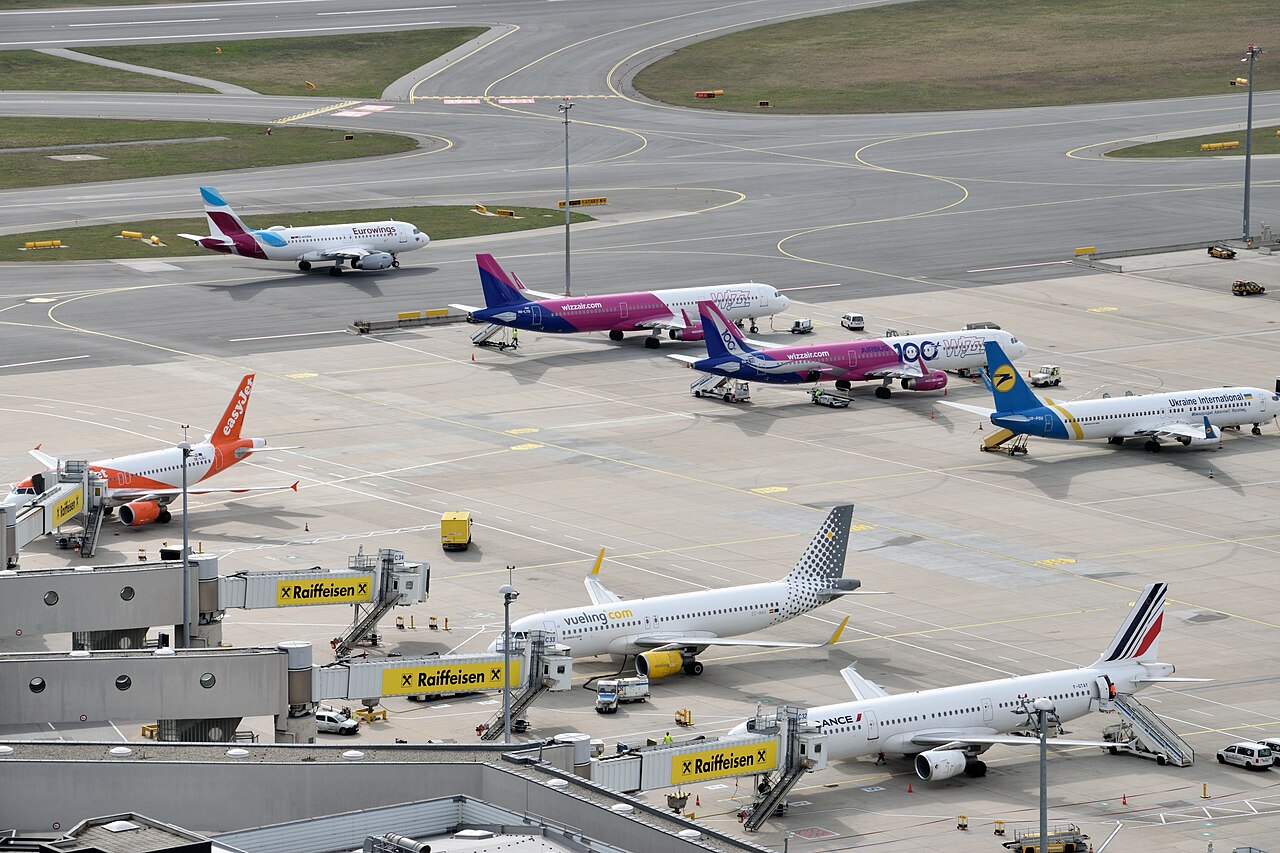
Per Iran International's report, at least 14 passenger flights across Europe faced bomb threats on Friday; the threats led to route changes for some flights and the scrambling of fighter jets.
According to the report, flights operated by Aer Lingus, Wizz Air, Finnair, Ryanair and LOT heading to Rome, Warsaw, Sofia, Brussels, Vienna, Bucharest and Prague faced threats. Threatened routes included Dublin-Rome, Milan-Warsaw, Helsinki-Rome and Helsinki-Vienna, London-Sofia, Madrid-Sofia, Copenhagen-Sofia, Warsaw-Brussels and Milan-Bucharest. Fighter jets from Italy, France and Bulgaria escorted some passenger aircraft; some flights were redirected to alternative airports. European officials stated that all aircraft that landed did so safely and that no explosive materials were found on any aircraft checked. The European Union stated in a Friday announcement that it remains unclear whether these threats are connected to one another, and that the source and purpose of the threats remain unknown.
Per Donya-ye Eghtesad's report, this wave of threats came following an earlier period on Tuesday when at least seven passenger flights across various European countries faced similar threats; this indicates the incident is not a one-time event but part of a series of consecutive threats. The source and motivation of the threats were not clarified in either source; this point remains unverified.
European air traffic management authorities note that threats are typically communicated electronically to airlines or airports during flight, so as a matter of security protocol, affected aircraft are directed to land at the nearest suitable airport or to continue to their destination only after receiving fighter jet escort. Fighter jets from Italy, France and Bulgaria intercepted threatened aircraft in the air for radar tracking and visual confirmation; these types of operations are a standard precaution in civil aviation and are implemented regardless of whether a threat is credible.
How the Persian press covered it
| Source (orientation) | Headline / framing |
|---|---|
| Iran International (Opposition, diaspora) | Reports Friday's 14-flight wave in detailed routing and airline lists, highlighting the EU's "source unclear" statement. |
| Donya-ye Eghtesad (Economic daily, technocratic) | Connects the incident to Tuesday's earlier seven-flight wave, framing it as a "new wave." |
Context
Waves of bomb threats targeting civil aviation in Europe have increased in frequency recently; while most of these threats have proven false, they have nonetheless repeatedly prompted authorities to take costly measures including fighter jet escorts and emergency landings. No direct connection was established between the incident and Iran or tensions over the Strait of Hormuz; its presence in the Persian press reflects the regular monitoring by Iran-based media outlets of major security incidents across Europe. European security authorities are continuing their investigation.
The fact that such mass threat waves target multiple airlines and countries simultaneously or on successive days complicates investigations; the EU's statement that "it remains unclear whether these threats are connected" reflects this challenge. Donya-ye Eghtesad's reference to Tuesday's seven-flight wave points to similar incidents recurring since early this month, yet responsibility and purpose remain equally unclear in each instance.