According to Lebanese newspaper El Ahbar, Iran is updating its "target bank" in response to a potential new U.S. and Israeli attack, signaling that its response will not be limited to energy facilities and military bases but will also encompass communications and digital infrastructure. The newspaper reports that Tehran is operating on a principle of "security for all or security for none" and is messaging that any new strike will be met with expanded retaliation.
According to El Ahbar, orders on how to respond to a potential attack have been communicated to all military and security units; commanders were specifically instructed that field units must be capable of independent action in case of assassination attempts or disruption of the command chain. According to the newspaper, artificial intelligence data centers and fiber optic cables in the Strait of Hormuz and Persian Gulf waters are among potential targets; Supreme National Security Council Secretary Mohsen Rezaei and some Islamic Revolutionary Guard Corps commanders have recently issued warnings that this infrastructure could be targeted. Additionally, IRGC Political Deputy Yedullah Javani stated on Wednesday, October 21, that if Iran's infrastructure is attacked, the seven main internet cables in the Strait of Hormuz could also become targets; on the same day, two senior Iranian security officials told Reuters that plans exist to strike undersea communications cables in the Persian Gulf if U.S. and Israeli attacks resume, and that repairs could be prevented.
According to Donya-e Eqtesad's separate analysis using TeleGeography data, it is unclear from either Reuters' report or Iranian officials' statements which seven cables are meant; three known active systems passing through the strait are FALCON, Asia-Africa-Europe 1 (AAE-1), and Gulf Bridge International, though it cannot be said this list matches the alleged seven targets. Qatar and Bahrain obtain over 95% of their international internet connectivity through this route; widespread damage to the cables could increase internet outages in these countries to 70-90% range. Saudi Arabia's dependence is lower because the country also uses the Red Sea route as an alternative.
Strategic analyst Mustafa Necafi, close to Mohsen Rezaei, told El Ahbar in an assessment that the inclusion of internet cables in official threats is evidence that the war has expanded to communications infrastructure and the digital economy; he stated this approach aims to increase the war's cost for the U.S., complicate the other side's calculations, and strengthen the Strait of Hormuz's strategic importance. Describing the message delivered to Tehran during Pakistani Chief of Army Staff General Asim Munir's visit as a "threat and war message," Necafi said he found the likelihood of a "third war" breaking out in coming days to be "very high."
How the Persian press covered it
| Source (orientation) | Headline / framing |
|---|---|
| El Ahbar (Lebanon, Hezbollah-aligned; via Donya-e Eqtesad) | Framed the story as Iran's defense strategy; incorporated the "security for all or security for none" principle into the headline. |
| Donya-e Eqtesad (economic daily, technocratic) | Treated the same claim as an unverified threat; highlighted the ambiguity about which cables are targets and presented data on regional internet dependency. |
On the identity of the seven cables referenced in Reuters' report: an "unconfirmed" notation should be added; neither Iranian officials, El Ahbar, nor Reuters published a concrete list.
Context
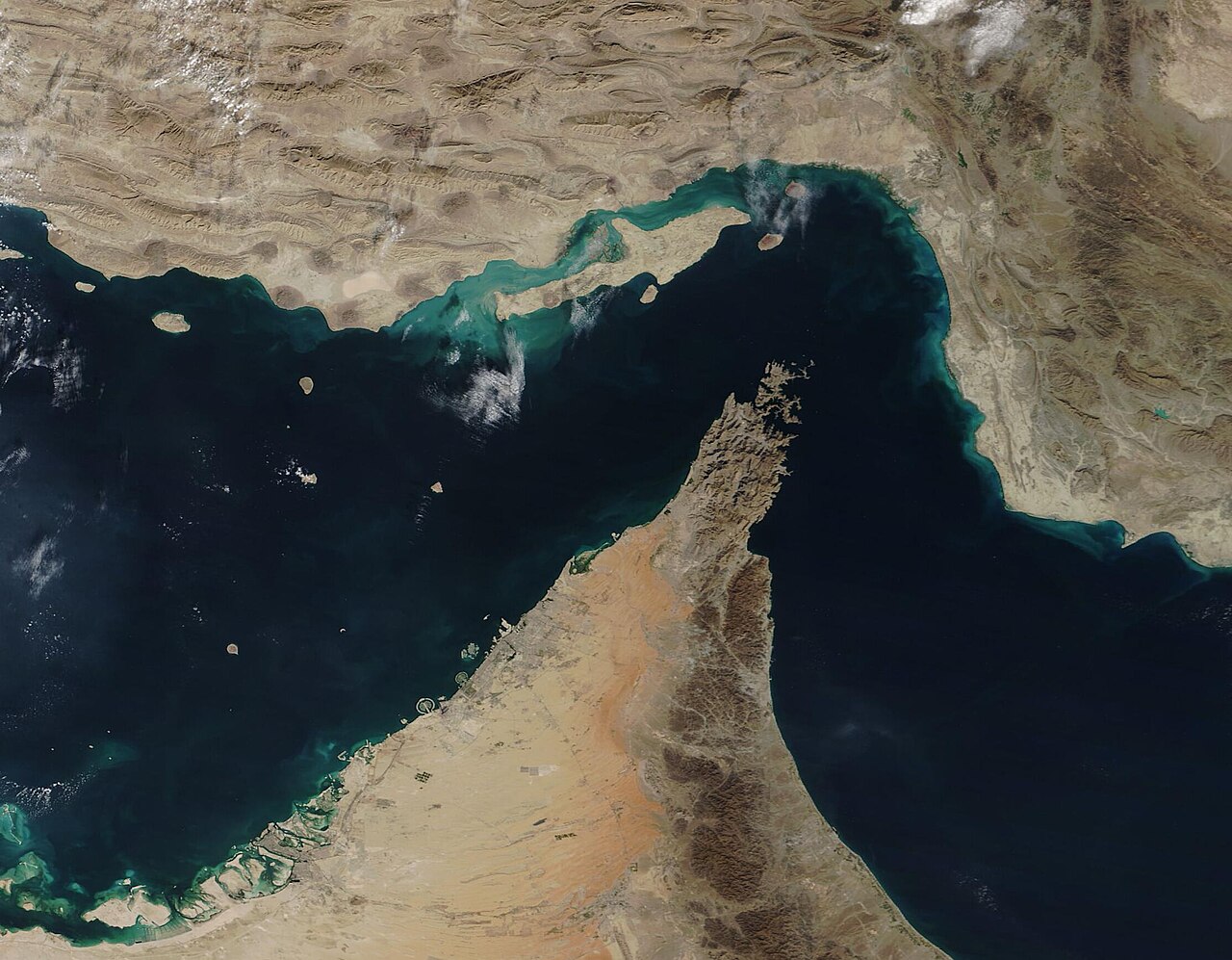
The Strait of Hormuz is not only a narrow waterway through which a significant portion of global oil trade passes, but also the route of submarine fiber optic cables linking Persian Gulf countries to Asia and Europe. The threat to these cables carries potential to shift the war's front from physical energy infrastructure to digital and financial transactions; the region's investment in cloud computing and artificial intelligence data centers, combined with the concentration of cables in shallow waters and limited routes, renders this infrastructure fragile against military tensions. Tehran's "target bank" language came during a period when tanker strikes and mine allegations continue in the strait; Pakistani Chief of Army Staff General Asim Munir's visit to Tehran also signals intensified diplomatic traffic in the region. Because these claims cannot be independently verified, this report should be read as a threat statement transmitted through a newspaper aligned with Tehran.