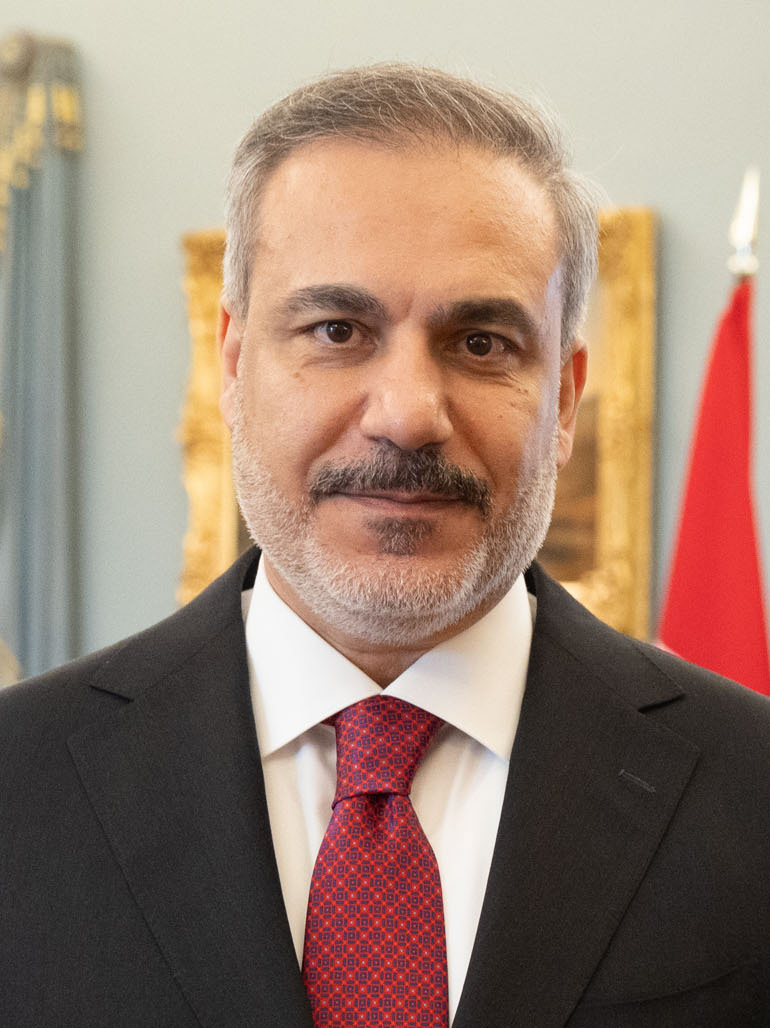
According to ISNA, Turkey's Foreign Minister Hakan Fidan warned Saturday that the months-long closure of the Strait of Hormuz, especially when combined with the war in Ukraine, is imposing a heavy burden on the global economy. ISNA quoted Fidan as saying that the bottleneck in the strait is driving up energy and shipping costs, and that the situation has become a worldwide problem rather than merely a regional one. The ISNA report did not provide detailed context for when Fidan made the statement; the agency's text confined itself to directly relaying his words.
The Donya-ye Eghtesad newspaper's report of the same statement framed Fidan's remarks as "Turkey's explicit warning" and reported that the conjunction of the Hormuz crisis with the Ukraine war is creating a "cascading" effect on the global economy. According to the article, Fidan said that the two crises occurring simultaneously are causing unpredictable fluctuations in energy prices and supply chains, and that these swings are hitting both developed and developing economies alike. Donya-ye Eghtesad positioned the story in its economics section, framing the issue as a global supply-chain problem rather than a regional security matter.
Fidan's statement is not an isolated outburst; Turkey's foreign service has articulated months earlier that the strait's closure should not be used as a "weapon." According to Hurriyet Daily News, Fidan previously stated in a speech in Doha that the closure of the Strait of Hormuz is imposing a great burden on the world economy, that the strait should not be wielded as a coercive tool, and that Turkey supports a diplomatic rather than military solution. This confirms a consistent position Turkey has maintained over months: Ankara positions itself not as a party to the crisis but as an actor capable of offering mediation to reopen the strait.
Fidan's warning aligns with similar recent assessments by international organizations. The United Nations Conference on Trade and Development (UNCTAD) warned that the de facto closure in the strait is rapidly increasing pressure across energy, trade, and finance channels; this assessment confirms that the crisis is no longer just a regional dispute but a structural risk affecting global supply chains.
How the Persian press covered it
| Source (orientation) | Headline / framing |
|---|---|
| ISNA (Semi-official) | Conveys Fidan's warning directly, reporting that strait closure is increasing global economic pressure. |
| Donya-ye Eghtesad (Economic daily, technocratic) | Presents the same statement under the headline "Turkey's explicit warning," emphasizing the combined effect of the Hormuz crisis and Ukraine war on the global economy. |
Both sources report Fidan's words identically; there is no factual contradiction between them, only that Donya-ye Eghtesad more explicitly ties the issue to the Ukraine war.
Context
The Strait of Hormuz has been under de facto constraint for months since the Islamic Revolutionary Guard Corps announced the closure decision during the February 2026 U.S.-Israel-Iran conflict. A tanker was attacked with a projectile on October 30, and a separate attack on the tanker Louise Mina was reported on October 31; these incidents show that the security environment in the strait remains tense. The strait is a narrow passage through which a significant portion of seaborne petroleum transits; its closure or de facto restriction directly affects insurance premiums, shipping costs, and energy price volatility.
Turkey is a non-combatant country but one directly affected by the strait's bottleneck and the energy-market swings it causes. Ankara sources a significant portion of its energy imports through the Gulf and Eastern Mediterranean; consequently, a disruption in Hormuz poses a direct risk to Turkey in terms of both energy supply security and regional trade routes. The ongoing Russia-Ukraine war was already straining Europe's energy supply routes; Fidan's linkage of the two crises suggests this dual pressure is being felt simultaneously in global energy markets. Ankara's reiteration of this message suggests an effort to signal that the Hormuz bottleneck has become a "structural" rather than temporary risk; Turkey frames itself not as a party to the dispute but as an actor advocating for a diplomatic solution to reopen the strait.
Turkey's stance aligns with other diplomatic initiatives in the region. Oman's Foreign Minister made similar statements around the same time regarding Gulf security; Ankara and Muscat are among the countries not directly involved in the conflict but with the most at stake in regional stability. Fidan's statement reiterates that these countries' shared interest lies in an economic and diplomatic, rather than military, solution.
For information only; not investment advice.