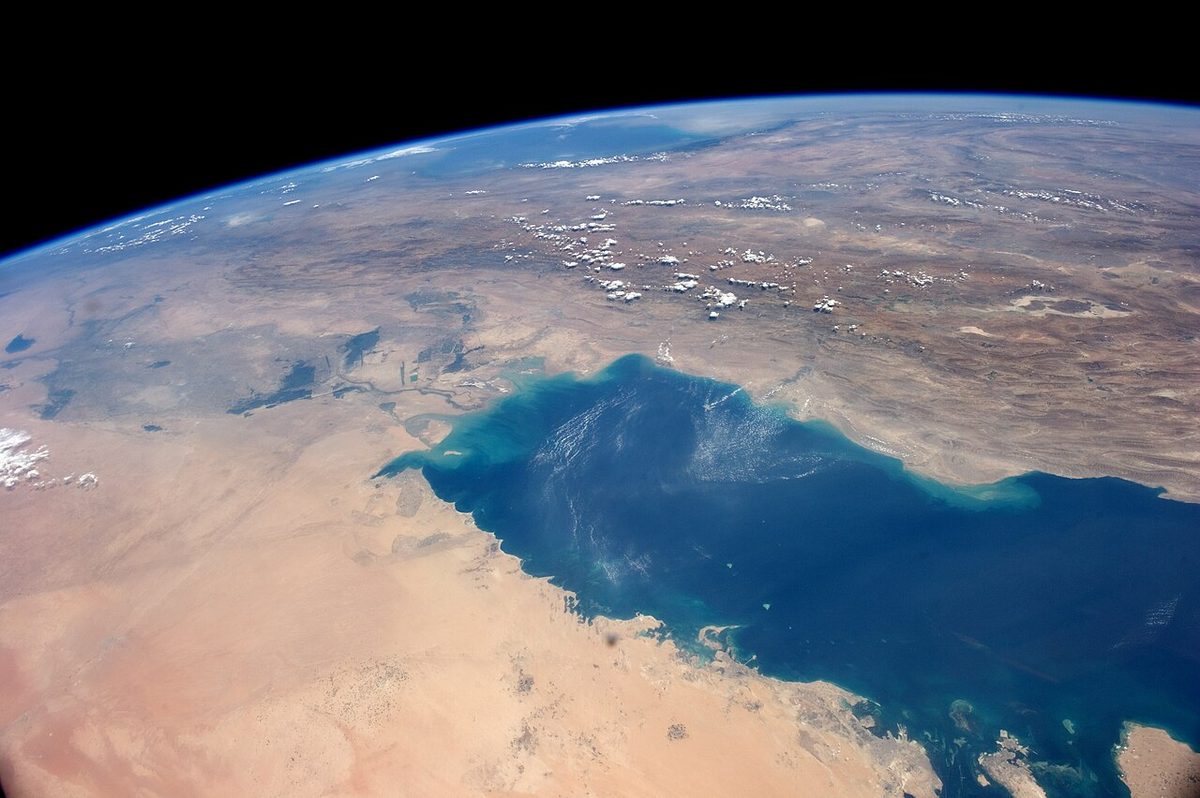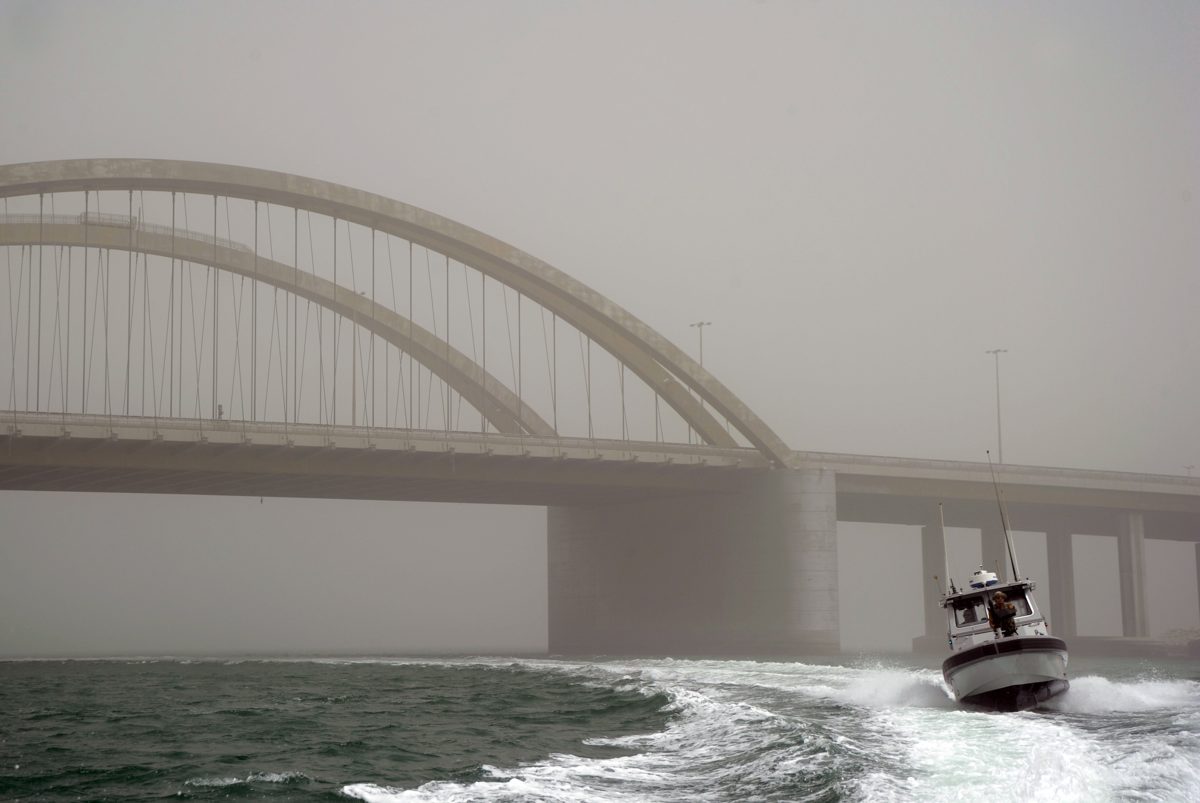
The Revolutionary Guards Corps said Friday morning in "Statement No. 22" that in response to an "enemy air attack" on a telecommunications tower in Sirik, Hormozgan Province, it had targeted and destroyed an early-warning radar of the "aggressive Americans" on the island of Bahrain. According to IRNA's reporting, the statement says the Aerospace Force of the IRGC carried out this strike "hours before"; ISNA published the same announcement simultaneously with IRNA.
The Guards' statement opens with a religious preamble, asserting that the "courageous and glorious Iranian people's eight-month saga of historical resistance" has awakened world peoples and "drawn youth from many nations to the field." Referencing this popular support, the statement says combat units continue to gain honor in the field "with reliance on Almighty God and trust in this boundless people support," then continues: "Hours ago, in response to an enemy air attack on a telecommunications tower in Sirik, our Aerospace Force units targeted and destroyed the early-warning radar of the aggressive Americans on the island of Bahrain." The statement describes this action as a "serious warning" toward ending "air mischief and oil smuggling" in the Strait of Hormuz, declaring that the Aerospace Force stands "fully prepared for unlimited response" should violations be repeated. The statement also warns that companies that have "surrendered to the enemy" will face "heavier punishment," and closes with the assertion that "not even the slightest conciliatory approach toward the enemy will squander the great achievements gained through the blood of martyrs."
According to Hamshahri, residents of Sirik on the eastern shore of Hormozgan heard several explosions in recent hours; the nature of the blasts remains unclear, with some sources interpreting them as "warning shots at violating ships." The same report recalled that Iranian military forces had previously cited two "violating" tankers that hit mines in the Strait of Hormuz; whether these two events—tanker mines and Sirik explosions—refer to the same incident remains unconfirmed. Donya-ye Eqtesad, in a separate report citing IRNA, wrote that "official sources confirmed the attack on Sirik" but provided no details about who carried it out or with what weapons; the same site's news feed also carried separately the military's claim that "two tankers hit mines in the Strait of Hormuz," but the chronological sequence and relationship of these two reports remain unclear.
The timing is also striking: the Guards' statement announced the alleged Bahrain radar strike but did not first disclose the Sirik "enemy air attack" to the public—only the response strike was made public. For this reason, details about the Sirik attack—what target was hit, with what weapons, and when—rest solely on the Guards' own account and have not been independently verified.
In ISNA's report, the Guards' statement is noted as directly using the phrase "aggressive American military" and particularly emphasizing the radar's "early-warning" function. Neither IRNA nor ISNA provided additional information about whether the radar has been disabled, whether it can be repaired, or about any other damage.
How the Persian press covered it
| Source (orientation) | Headline / framing |
|---|---|
| IRNA / ISNA (state news agency / semi-official) | Reported the Guards' official statement, framing the event as "retaliation to enemy attack"; cited directly from the Guards that the radar was "destroyed." |
| Donya-ye Eqtesad (economic, technocratic) | Used the headline "Official sources confirmed attack on Sirik," reporting the attack's confirmation but not its details. |
| Hamshahri (Tehran municipality, principlist) | Described the explosion sounds in Sirik as "unclear in nature"; citing some sources, suggested they may be "warning shots at violating ships" without confirming the claim. |
While the Guards-affiliated and official sources present the event as a single, clear retaliation, Hamshahri's report used more cautious language about the source of the Sirik explosions; the gap between these two narratives—including the relationship between the radar strike and the Sirik blasts—remains unconfirmed. No source reported whether the alleged radar strike in Bahrain has been confirmed by the U.S., or whether CENTCOM issued any statement; at publication time, no independent verification from Bahrain or U.S. authorities was available.
Context
Background:
- February 28, 2026: U.S.-led CENTCOM began implementing a naval blockade; from that date forward, commercial-ship traffic in the Strait of Hormuz was frequently disrupted.
- November 8, 2026: Two tankers were reported to have hit mines in Hormuz; Iranian military said it laid the mines; CENTCOM countered that it intervened against a separate vessel for "blockade violation" (details).
- November 11, 2026: Three competing approaches to ending the war were reported to be in contention within the Washington administration (details).
- December 12, 2026: G7 foreign ministers in a Paris statement called on Iran to guarantee maritime passage through Hormuz (details).
Who / concepts: The Niru-ye Havafeza-ye Sepah (IRGC Aerospace Force) oversees the Revolutionary Guards' ballistic-missile and drone programs; the U.S. 5th Fleet headquarters in Bahrain is the U.S. regional naval command center, and early-warning radar systems are part of that base's air-defense network.
By the numbers:
- The Guards' statement cited an eight-month duration of conflict, pointing to the war's renewed escalation around March 2026 (IRNA, November 13, 2026).
- U.S.-led naval blockade has been in effect since February 2026; according to Shafaq News citing Reuters, multiple tanker attacks and mining claims have been recorded during this period (Shafaq News/Reuters, November 2026).
- Statement No. 22 suggests a series of similarly numbered official Guards announcements through the war, though the full list of prior statements was not included in IRNA's report.
What to watch: Neither the Guards nor the U.S. side announced a possible response after the radar strike; a new maritime warning from UKMTO is expected. Whether CENTCOM issues an official statement and whether a third-party image independently confirming the Sirik attack is shared remain unclear. If UKMTO issues a new warning for commercial traffic in the Strait of Hormuz, whether it is linked to the Sirik incident will be another detail to monitor.