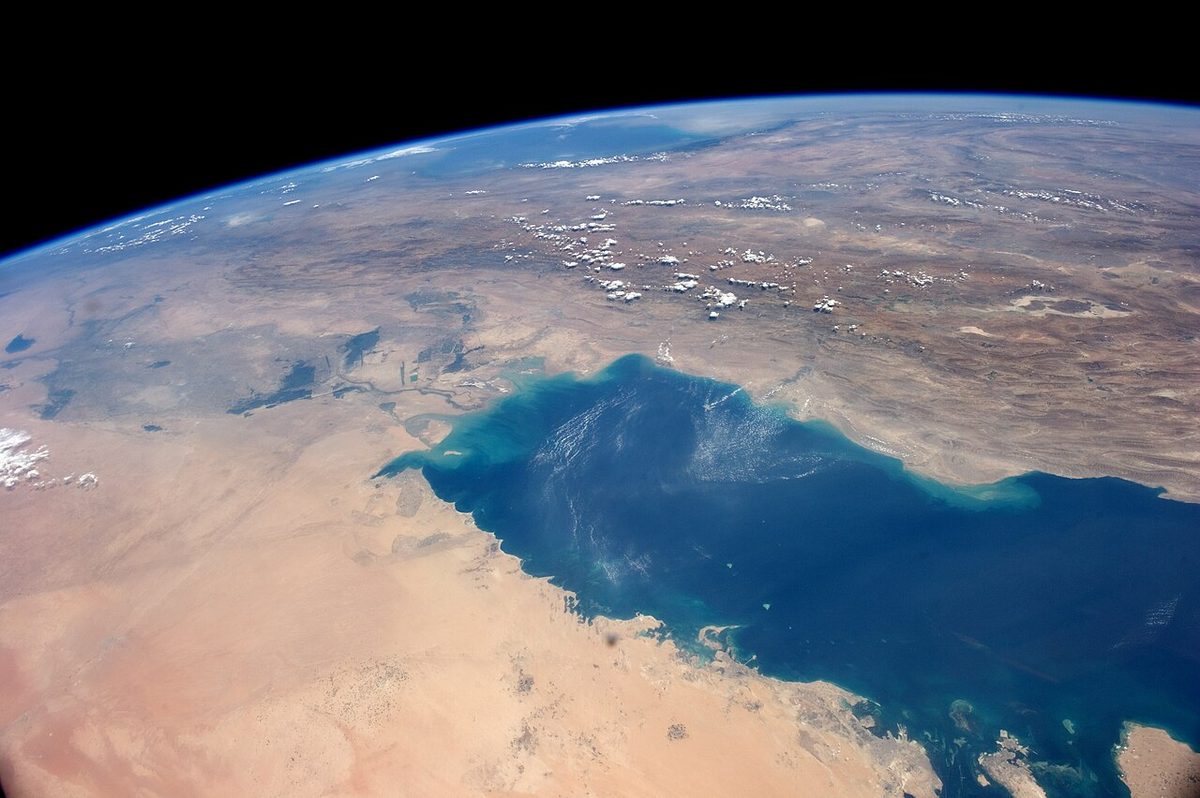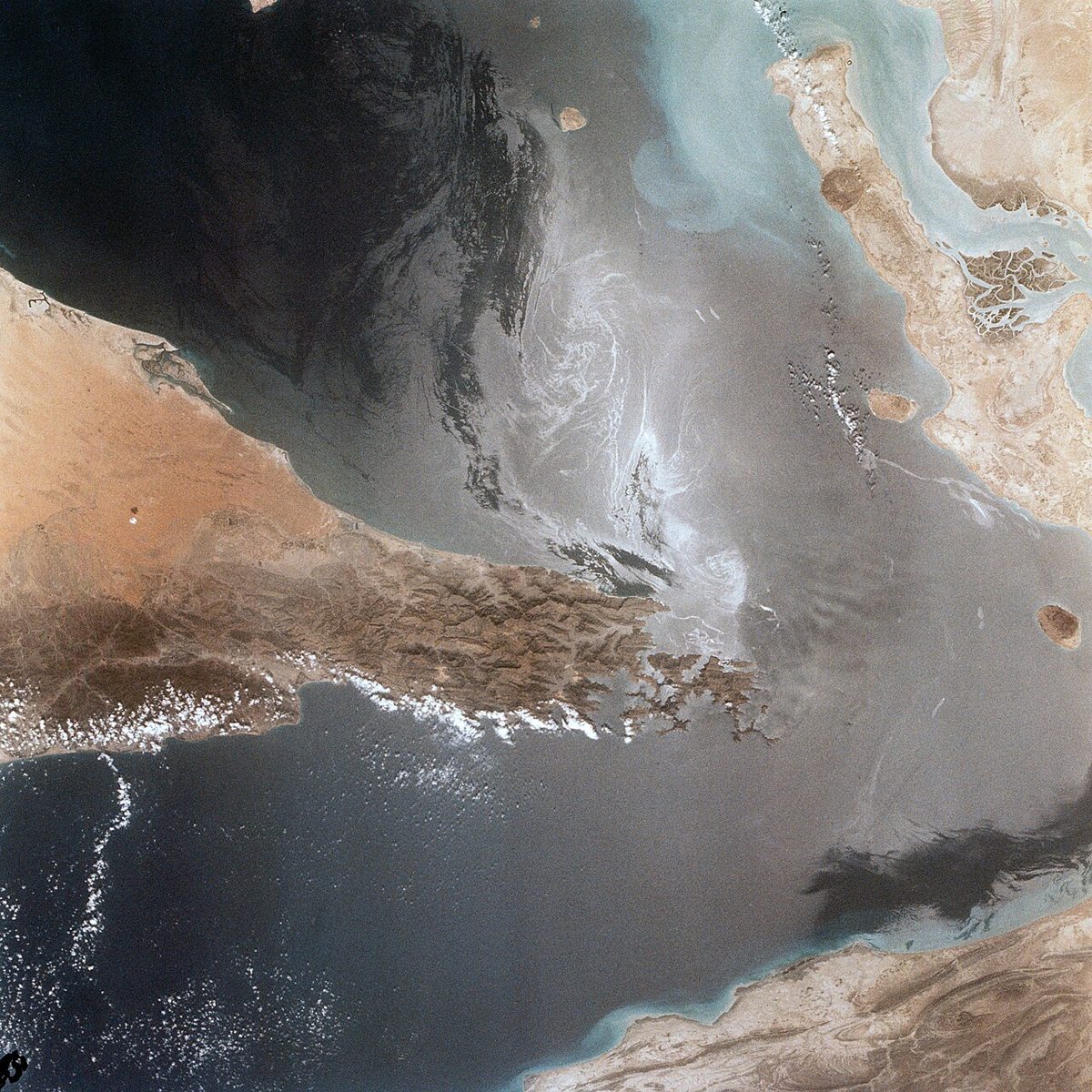
On Saturday evening, November 7, Iran's Islamic Revolutionary Guard Corps Navy announced that two tankers it described as "violators" caught fire in the Strait of Hormuz after striking a mine; according to IRNA's account, one tanker was in the eastern section of the strait and the other was transiting the strait itself. That same night, U.S. Central Command (CENTCOM) announced it had immobilized a separate commercial vessel in the Sea of Oman for blockade violations; the relationship between the two announcements could not be independently verified.
According to the Islamic Revolutionary Guard Corps Navy's statement, the two "violator" tankers shut down navigation and positioning systems to attempt transit through an unauthorized route in the Strait of Hormuz and in the process struck a mine, resulting in a violent explosion and fire. According to ISNA's account, the navy reiterated that "every ship cooperating with the U.S. military and non-compliant with Iranian rules will strike a mine" and called on mariners to "disregard the fantasy words of the CENTCOM commander"; this statement served as an indirect response to CENTCOM's announcement the same night. According to Donya-ye Eqtesad, the Islamic Revolutionary Guard Corps' official bulletin did not identify the two tankers that reportedly hit the mine or list their flags.
According to Khabaronline's account, CENTCOM said on X (Twitter) that evening that the Saint Kitts-flagged cargo vessel "M/V Huda" had repeatedly ignored warnings and attempted to breach the U.S. naval blockade on Iran several times; therefore, a U.S. military aircraft fired a guided missile at the ship's stern, immobilizing it. According to CENTCOM, the vessel was in a port and was attempting to leave the regional waters.
Whether the two tankers the Islamic Revolutionary Guard Corps claimed hit a mine and the "M/V Huda" that CENTCOM said it struck refer to the same incident or represent two separate events occurring the same night remains unclear between the sources; this could not be verified. The locations also do not fully align: the Islamic Revolutionary Guard Corps placed the two tankers inside and east of the Strait of Hormuz, while CENTCOM's target was identified as the Sea of Oman.
How the Persian press covered it
| Source (orientation) | Headline / framing |
|---|---|
| IRNA (state news agency) | Reported the two tankers striking a mine using the Islamic Revolutionary Guard Corps official bulletin, in "violator ship" framing. |
| ISNA (semi-official) | Used the same mine framing; also included the navy warning that dismissed CENTCOM commander's "fantasy words." |
| Hamshahri (Tehran municipality, principlist) | Reported the mine framing in a separate headline; without questioning, separately reported CENTCOM's claim of striking a "blockade-breaking" vessel. |
| Khabaronline (moderate conservative) | Presented both statements in sequence, accompanied by the navy warning to "disregard CENTCOM's fantasy words"; reported CENTCOM's "M/V Huda" claim in detail. |
| Donya-ye Eqtesad (economics, technocratic) | Presented the mine claim under the navy bulletin headline, focused on maritime risk. |
Sources aligned with and representing the Islamic Revolutionary Guard Corps and state described the incident in "mine" and "violator ship" framing, while outlets reporting CENTCOM's claim used "blockade violation" and "warnings ignored by crew" framing. No source confirmed that the two statements refer to the same vessels.
Context
Background:
- February 28, 2026: According to Shafak News citing Reuters, Iran has restricted commercial shipping traffic in the Strait of Hormuz since the Iran-U.S. war began.
- October 31, 2026: An alleged attack on a tanker in Hormuz was addressed in a separate Farsçadan report (details).
- November 2, 2026: UKMTO reported an alleged tanker attack in the Persian Gulf (details).
- November 4, 2026: A new alleged tanker attack in Hormuz was reported (details).
Who/what: CENTCOM (U.S. Central Command) is the unified command responsible for U.S. military operations in the Middle East, Central Asia, and Horn of Africa; it has been responsible for executing the naval blockade on Iran since February 2026. UKMTO (United Kingdom Maritime Trade Operations) is a unit of the British Royal Navy that issues security alerts for civilian shipping traffic in Hormuz and surroundings; it does not independently verify claims by CENTCOM or the Islamic Revolutionary Guard Corps, only records reported events and issues cautionary guidance to mariners.
By the numbers:
- CENTCOM disclosed in May 2026 that it had issued over 20 warnings before immobilizing the Gambian-flagged vessel "Lian Star" (The Week, May 31, 2026).
- One of the tankers the Islamic Revolutionary Guard Corps claimed struck a mine on November 1 was reported to carry over 2 million barrels of crude oil; Reuters said it could not independently verify this claim at that time (Shafak News/Reuters, November 1, 2026).
- In today's statements, neither the Islamic Revolutionary Guard Corps nor CENTCOM shared the cargo capacity or flag of the vessels (except M/V Huda) with the public; this detail could not be verified.
What's next: Neither Iran nor the U.S. has announced a follow-up statement clarifying whether the two announcements refer to the same vessel; UKMTO is expected to issue an updated maritime alert on the matter. As in the Islamic Revolutionary Guard Corps' previous statements, no independent images or third-party verification from the incident site has been shared.