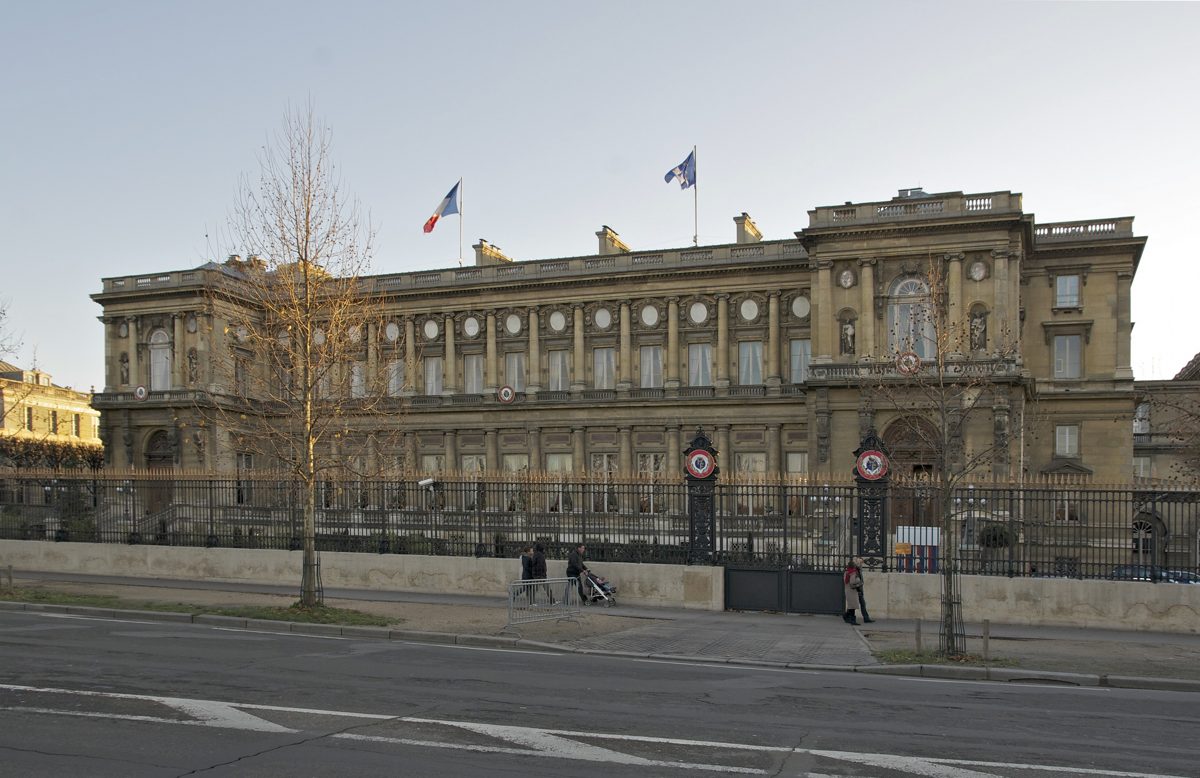
G7 foreign ministers released a joint statement Wednesday following their November 18–19 meeting in Paris, expressing concern about Iran's "violent plots." According to Iran International, the U.S., UK, France, Germany, Italy, Canada, and Japan foreign ministers, along with the EU's high representative, emphasized that Iran must never be allowed to acquire nuclear weapons and that if diplomacy fails, economic and political pressure will continue.
In the statement, the G7 ministers said they appreciate the efforts of regional mediators and support diplomatic initiatives aimed at addressing international concerns about Iran's nuclear program. The ministers reiterated calls for full implementation of the sanctions and restrictions reintroduced via the "snapback" mechanism on September 25, 2025 (September 6, 1404 in the Iranian calendar) under UN Security Council Resolution 2231, and called on all UN member states to comply. They demanded that Iran comply with its international obligations and return to full cooperation with the International Atomic Energy Agency (IAEA) to clarify the nature of its nuclear program and ensure transparency.
In a separate section, the G7 stated that it "strongly condemns" Iran's actions in the Strait of Hormuz as disruptive to international commerce, energy security, and the global economy. The ministers called for an end to attacks on civilian ships and reiterated opposition to any charges, fees, or discriminatory restrictions on passage through the strait. The statement highlighted the importance of CENTCOM's mine-clearing and escort operations in the strait, and noted that an independent, multinational initiative led by France and Britain to verify the collection of all mines could help restore civilian maritime traffic through the strait.
The G7 foreign ministers also expressed "serious concern" about Iran's role in violent plots against the territories and citizens of member states; they referenced the UK's November 5 attribution of an incident at RAF Fairford to Iran and emphasized unity among member states in protecting national sovereignty. The statement called on Iran to cease support for non-state armed groups in the region, condemned Houthi attacks in Yemen against Saudi Arabia, called for Hezbollah's disarmament in Lebanon, and condemned Iranian and North Korean military aid to Russia in the Ukraine war.
How the Persian press covered it
| Source (orientation) | Headline / framing |
|---|---|
| Iran International (Opposition, diaspora) | Provided a detailed account close to the full text: all topics covered including mine-clearing in Hormuz, the Franco-British initiative, the Fairford attribution, and snapback references. |
| Donya-ye Eghtesad (Economic daily, technocratic; citing Sputnik) | Reported the story under the headline "G7's demand from Iran in Hormuz" but flipped the frame: wrote that the strait closed due to "the U.S.'s aggressive and illegal war," called the G7's "interventionist statement" full of "baseless allegations," and included Foreign Spokesman Bakayi's statement rejecting the Fairford allegations as a "false flag operation." |
| ISNA (State news agency) | Kept reporting brief, focusing only on the call for renewed IAEA cooperation; did not cover Hormuz, Fairford, or sanctions details. |
Context
Background:
- June 2025: The U.S. and Israel bombed Iran's Isfahan, Natanz, and Fordo nuclear facilities; Iran suspended IAEA cooperation afterward.
- March 2025 (Cairo Accord): Iran and the IAEA agreed to allow inspections at facilities that were not bombed; however, Iran argues the comprehensive inspection framework should be updated to fit post-war conditions.
- September 27, 2026 (September 5, 1404 in the Iranian calendar): An attack attempt on RAF Fairford was prevented by British security; on October 12, the UK Prime Minister attributed the incident to Iran's Revolutionary Guards (Sepah). This incident overlaps with the U.S. indictment of a network that also has Turkey connections.
- November 18–19, 2026 (Paris): G7 foreign ministers met and released the joint statement on November 20 (November 19 evening Turkish time).
Who and what: Snapback (mechanical trigger), a provision in the 2015 nuclear deal (JCPOA) tied to UN Security Council resolutions; if any party finds Iran in violation, previous UN sanctions automatically return without a vote required. Iran disputes the legal validity of this mechanism.
By the numbers:
- The G7 statement confirms that sanctions under UN Security Council Resolution 2231 were reintroduced via snapback on September 25, 2025 (September 6, 1404) (Iran International, November 11, 2026, citing the G7 statement).
- Seven G7 member nations plus the EU high representative signed the statement; the meeting lasted two days (November 18–19) (Iran International, November 11, 2026).
Turkey factor: Turkey is not named directly in the statement, but the G7's backing of the France-Britain-led Hormuz initiative and reference to regional mediation efforts intersect with Turkey's own role in regional balance efforts; also, the Fairford investigation includes a network member who was arrested in Istanbul this year, showing the network's Turkey connections.
What's ahead: The G7 statement says that if diplomacy fails, economic and political pressure will continue "in a coordinated manner"; however, no specific timeline or new sanctions list has been announced. The timeline for the Franco-British initiative to begin mine-clearing operations in Hormuz has not been announced.
See our report on the RAF Fairford attack plot and Turkey-connected indictment for details on this network.