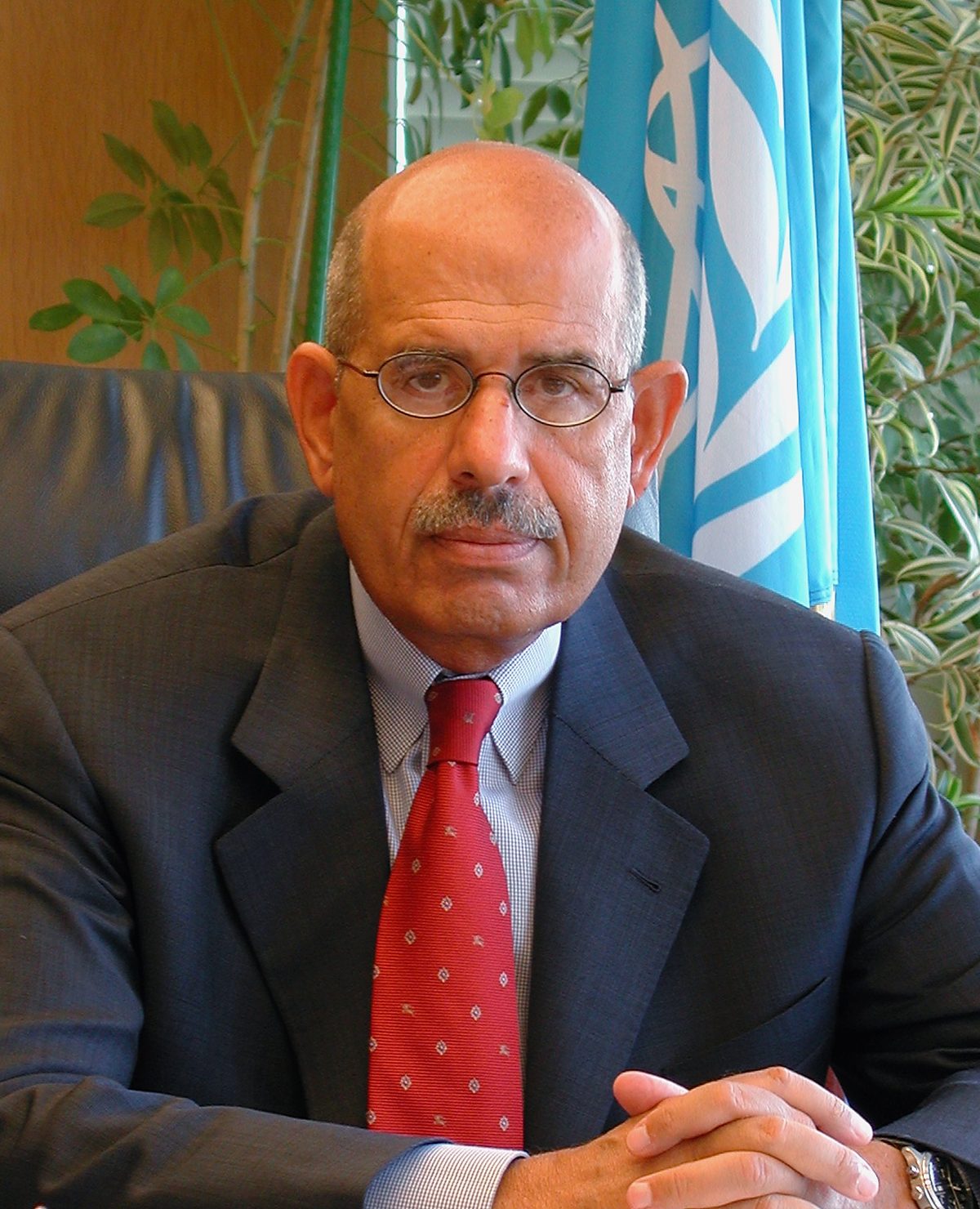
According to ISNA, Former International Atomic Energy Agency (IAEA) Director General and Nobel Peace Prize laureate Mohamed ElBaradei issued a warning about the possibility of a new U.S. military strike against Iran, characterizing it as "complete madness" (Persian original: "divânegi-ye mahz"). According to ISNA, ElBaradei said that a new attempt at "military aggression" against Iran by the U.S. would be a grave mistake with severe regional and global consequences.
Donya-ye Eghtesad, an economic newspaper, published the same assessment on the same day; the outlet wrote that the former IAEA director said "a U.S. attack on Iran again would be complete madness." Both reports did not specify through which medium ElBaradei made the statement (interview, social media post, or press conference), and therefore the full context and date of the statement are unconfirmed.
ElBaradei's statement came at a time when the possibility of a new potential U.S. military operation against Iran has been a topic of discussion in Washington. According to other reports in Iran's press the same day, U.S. President Donald Trump said "we are ending the war with Iran," while Israeli Prime Minister Benjamin Netanyahu is alleged to be pressuring for a possible new Iranian strike following the U.S. elections. These two narratives—Trump's claim of "ending the war" and allegations of Netanyahu's pressure for a new strike—contradict each other and are both reported in Iran's press unverified, each attributed to its own source.
How the Persian press covered it
| Source (orientation) | Headline / framing |
|---|---|
| ISNA (semi-official) | "Warning from ElBaradei to Trump against any new military adventurism toward Iran"—frames the statement as a warning directed at the Trump administration. |
| Donya-ye Eghtesad (economic daily, technocratic) | "ElBaradei warned: a U.S. attack on Iran again would be complete madness"—reports the same quote as a general assessment rather than targeting a political actor. |
Both reports carry the same substance, but ISNA explicitly presents the statement as a message directed at the Trump administration, while Donya-ye Eghtesad conveys the expression as a broader warning.
Context
Mohamed ElBaradei led the IAEA from 1997 to 2009 and has regularly appeared in the international spotlight for assessments of Iran and Iraq's nuclear programs; in 2005, he was awarded the Nobel Peace Prize along with the IAEA. During his tenure, ElBaradei issued similar warnings against U.S. administrations keeping military options against Iran on the table; the "military strike is madness" framing became a recurring line throughout his career. The current tensions carry the marks of the 12-day war in June 2026 and the airstrikes that followed; since then, the Iranian Parliament passed legislation making the government responsible for suspending cooperation with the IAEA—a step that further strained relations between Tehran and ElBaradei's former institution. ElBaradei's current statement shows an independent international voice opposing a new military escalation in a high-pressure environment, though there is no record of a response to his warning from either the U.S. or Israeli governments.
Read alongside the renewed calls for NPT withdrawal in the Iranian Parliament, ElBaradei's warning indicates that international tensions surrounding Iran's nuclear program are escalating in multiple directions.