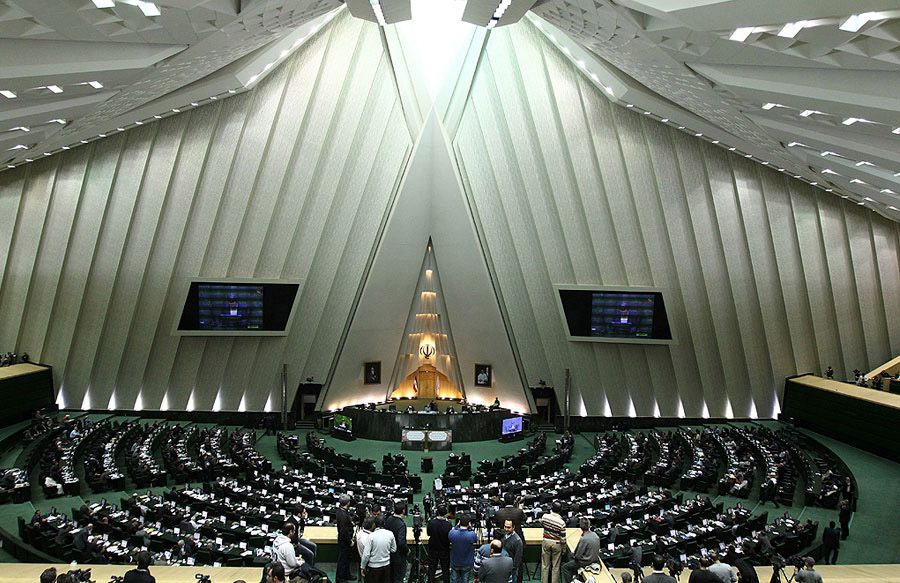
According to Kayhan's report, citing the Fars News Agency, numerous lawmakers in the Iranian Islamic Consultative Assembly took the floor during a plenary session on Sunday (October 22 / November 1) to emphasize the necessity of Iran's withdrawal from the Treaty on the Non-Proliferation of Nuclear Weapons (NPT) and to demand that bills on this matter be placed on Parliament's agenda. According to Kayhan, the focus of the demands is on finally bringing the withdrawal bills that have been pending before Parliament for months up for debate.
Hojjat al-Islam Nasrollah Pejmanfar, chair of the Assembly's Article 90 Commission and a representative from Mashhad, said that Iran's membership in the NPT has yielded no effective results to date and has instead created space for "enemy influence" within the country; Pejmanfar alleged that visits by IAEA Director General Rafael Grossi and his team to the country have produced "significant negative consequences." Malek Shariati, a representative from Tehran and member of the Parliament's Energy Commission, noted that the public is now chanting "NPT withdrawal is our right" and called for the withdrawal bill he submitted in September of last year along with 57 other lawmakers to be placed on the agenda. Representative from Shahinshahr Hossein-Ali Haji-Dehlighani said that a bill that has been ready and signed for more than a year awaits review in Parliament's leadership council.
The most forceful statement came from Hojjat al-Islam Mohammad Taqavi Nakdeli, representative from Hamedan, according to Kayhan's report: Nakdeli said "if yesterday we said 'nuclear energy is our right,' today we say 'nuclear weapons are our right'" and called for NPT withdrawal to become a legislative priority. This is one of the rare instances of a lawmaker directly characterizing nuclear weapons production as a "right"; the statement is reported as a direct quotation and attributed to him—not an editorial assessment by Farsçadan.
The report also notes that Ibrahim Rezai, a member of Parliament's National Security Commission, previously disclosed that at least 10 NPT withdrawal bills have been filed with Parliament. Kayhan also wrote that on a platform called "Fars-men," a group of users called for Iran's complete withdrawal from the NPT and for the cessation of inspections beyond security assurances.
Context
During the 12-day war in June 2026, the Iranian Parliament passed legislation requiring the government to suspend cooperation with the IAEA with a vote of 221 in favor out of 223 participating lawmakers; according to the law, the suspension will continue until conditions are met, including respect for Iran's sovereignty and territorial integrity, security of nuclear facilities and scientists, and assurance of the right to nuclear enrichment as recognized in the NPT. According to English-language reports from the Arms Control Association (a Washington-based, nonprofit arms control organization), the NPT withdrawal bill was first introduced to Parliament in September 2025, during the period when the UN Security Council's "snapback" mechanism reinstated sanctions, but has not been officially placed on the agenda since that time. According to Arab News, the bill has been referred to Parliament's legal affairs deputy and awaits review. Under Iran's Constitution, the final approval of strategic decisions in foreign policy rests with Supreme Leader Ali Khamenei; therefore, even if legislative rhetoric intensifies, actual withdrawal depends on the Supreme Leader's approval. NPT withdrawal would directly affect Iran's relationship with the international sanctions regime, and thus could have implications for Turkey and other regional countries' calculations regarding trade and security; however, this report contains no direct claims regarding Turkey.
Read alongside the report on increased Russian personnel at Bushehr nuclear power plant, the resurfacing of NPT withdrawal debate indicates that domestic political discourse surrounding Iran's nuclear program has hardened in the post-war period.