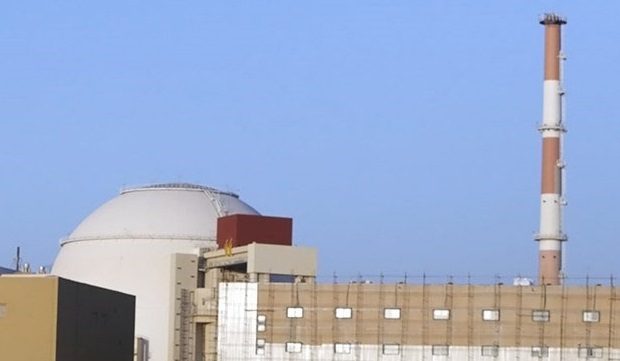
Rosatom CEO Alexey Likhachev announced that the number of Russian personnel working at Iran's Bushehr Nuclear Plant in the south will be increased to 700. According to Donya-ye Eghtesad's report via IRNA, the news agency RIA Novosti reported that Likhachev told journalists that currently 142 Russian personnel are working in the construction area of the plant's new units and 50 in the maintenance unit.
According to Likhachev's statements, Russia aims to increase its personnel count at Bushehr; however, he added that this is tightly dependent on the course of regional tension: "If tensions escalate, we will at least slow down this increase process; but right now we are moving toward our target." According to IRNA, Likhachev had previously told Russian television last year that plans to build two new units, each with a capacity of 1,000 megawatts, alongside Bushehr's first unit were continuing. Rosatom had also signed a $25 billion implementation agreement with Iran's Hormozgan Company to construct four third-generation nuclear reactors in the Sirri region in Hormozgan Province; Tehran and Moscow had also signed a memorandum of understanding on the construction of small modular reactors.
The announcement came following claims circulating on some news channels that Russian embassy personnel and Russian experts at Bushehr were beginning to be evacuated. Russia's Embassy in Tehran described these claims as "baseless" and denied them, stating that embassy and plant personnel were not being evacuated and that work was proceeding normally. In its statement, the embassy claimed that the channels spreading these rumors had "well-known sources." The original source of the evacuation claims cannot be independently verified in this report; therefore, both the evacuation claims and the official denial contradicting them remain at the level of mutual assertion and unconfirmed.
Context
Bushehr is Iran's only operational nuclear plant and Russia's largest civil nuclear investment in the region. The plant's first unit went operational in 2013 and since then Rosatom has maintained a dependent relationship with Iran concerning operation, maintenance, and fuel supply. The number of Russian personnel at the facility has long been monitored as a concrete indicator of Tehran-Moscow nuclear cooperation; increases or decreases in this number are read as a gauge of the extent of tension between Washington and Tehran. As discussions continue about how a possible US-Iran conflict could target nuclear facilities — including the Trump administration's statement that it rejected nuclear weapons but kept "mother of all bombs" on the table — Likhachev's statement that "if tensions escalate we will slow down personnel increase" suggests that Moscow is taking this possibility into account.
Rosatom's expansion plans in Iran are proceeding during a period when Western governments continue to impose sanctions on Iran's nuclear program. The company's commitment to building four additional reactors in Sirri in Hormozgan alongside Bushehr encompasses a total investment of $25 billion and represents a major step that would substantially expand Russia's civil nuclear presence in the region. From Moscow's perspective, the personnel count at Bushehr is also related to the security of Russian nationals on site; the embassy's swift and forceful denial of evacuation rumors points to the diplomatic sensitivity of the issue. Likhachev's statements show that Russia intends to continue the Bushehr project for now despite the war risk; however, how much this intention would change if tensions escalate remains unclear.