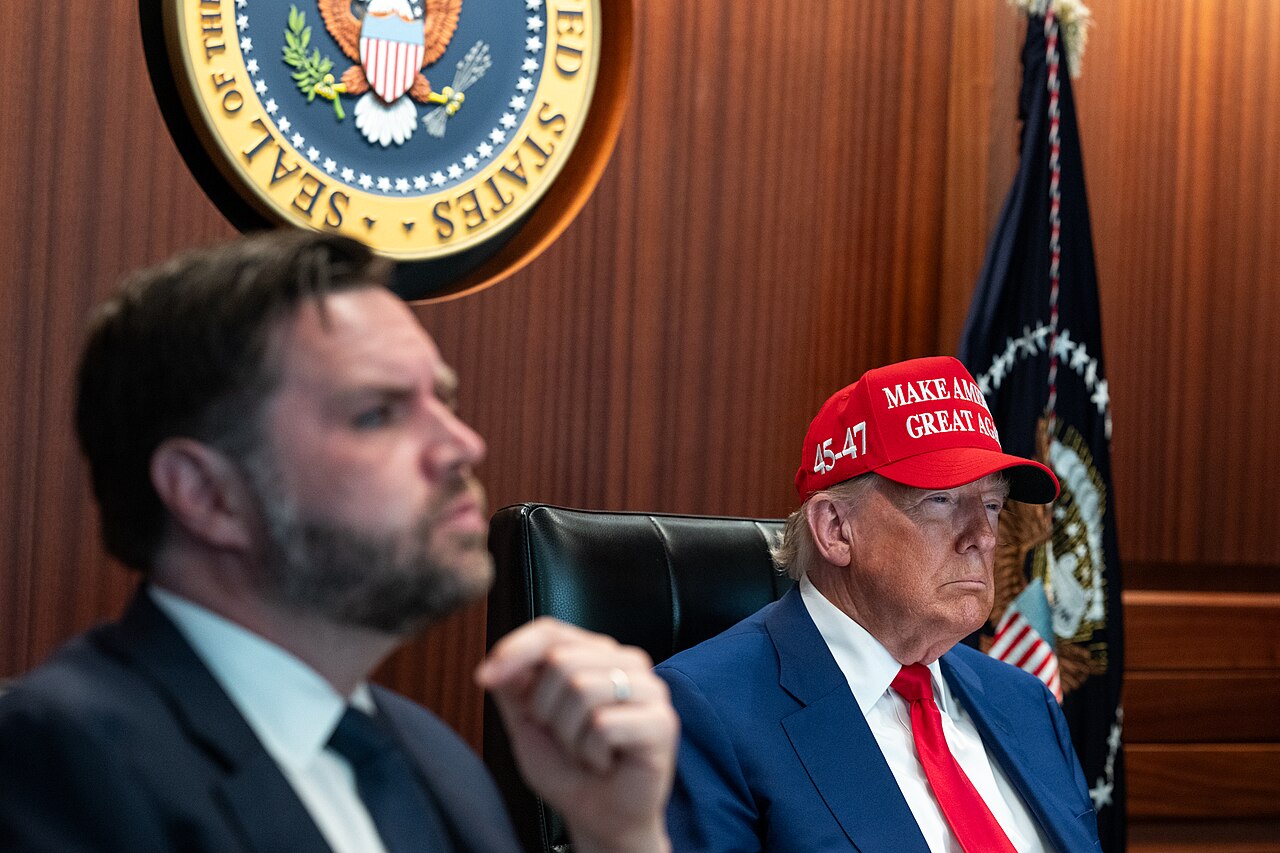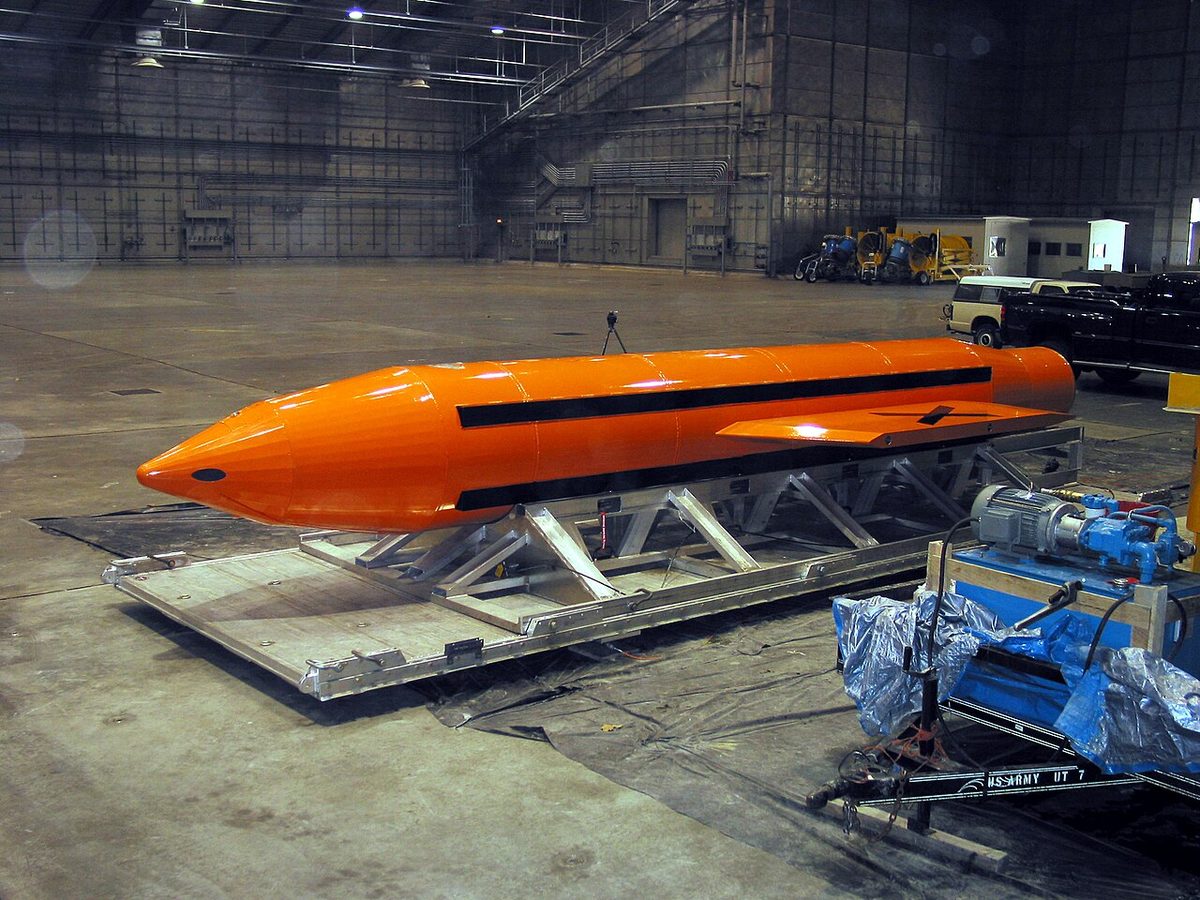
U.S. President Donald Trump said in an interview Thursday with the right-leaning news site Newsmax that he will not use nuclear weapons against Iran, but he did not rule out deploying the country's most destructive non-nuclear munitions—the GBU-43/B "Massive Ordnance Air Blast" (MOAB, or "mother of all bombs")—against Iran's nuclear facilities. According to Ettelaat's citing of Al Jazeera, this is the first time Trump has explicitly mentioned nuclear weapons against Iran. Trump stated: "I'm not using nuclear weapons. We don't have to. We're the largest nuclear power in the world," and said the U.S. could strike Iran's Kuh-e Kolang Gadar facility, which is believed to be embedded within granite layers underground.
According to Hamshahri's report, CNN had previously reported that the Trump administration is evaluating MOAB use in the near term. The MOAB carries approximately 8,500 kilograms of explosive payload, weighs nearly 9,800 kilograms total, and measures over 9 meters in length; because it is too large to fit in stealth aircraft, it must be transported by large transport planes such as the C-130 Hercules. The bomb was first used in 2017 in Afghanistan and is designed to destroy surface targets over a wide area. According to Hamshahri's reporting, doubts exist within the U.S. military about whether this weapon would be effective against deep underground facilities, and the U.S. arsenal is estimated to contain only about 10 such bombs.
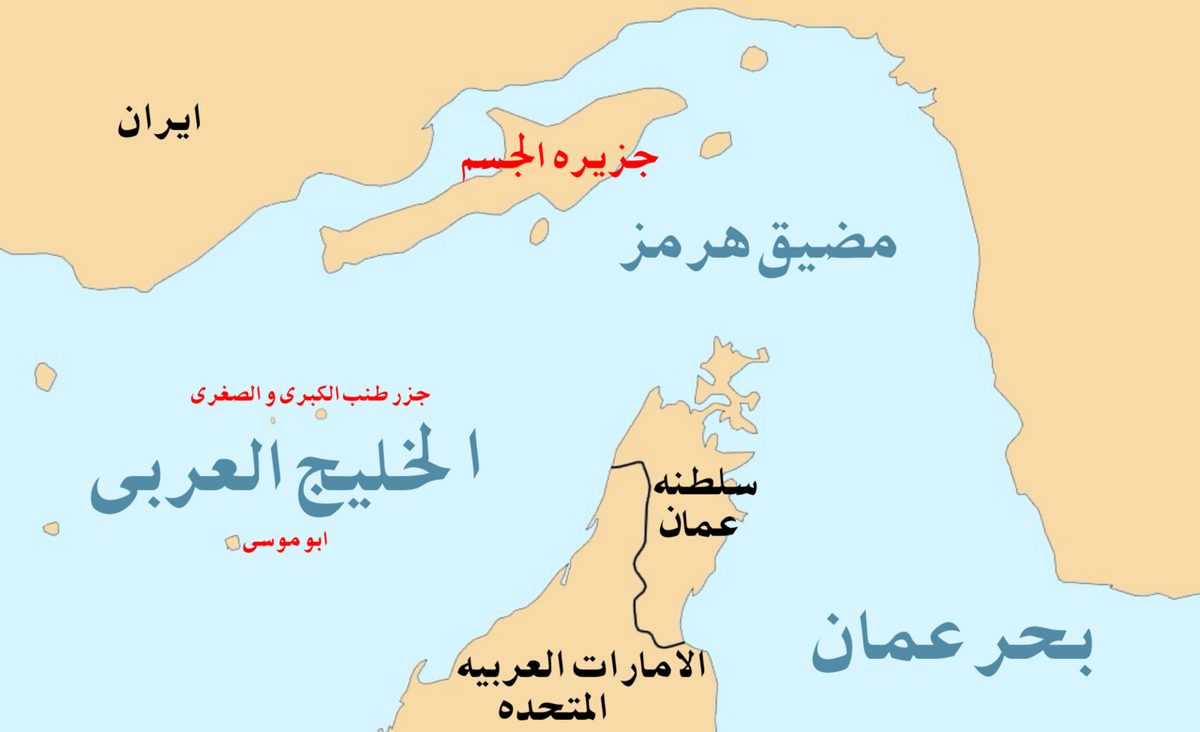
Iran responded swiftly to the threat. Alaeddin Boroujerdi, a member of the National Security and Foreign Policy Commission of Parliament, told the state news agency that "our policy on the Strait of Hormuz will not change in any way; we will defend the strait by force," adding: "If they want to use 'mother of all bombs,' we will use the 'father of all deceptions,' and they will see the cost of breaching our red lines." Boroujerdi urged Trump "not to threaten this great nation."
How the Persian press covered it
Hamshahri's analysis framed the threat largely as "a psychologically coercive move of questionable military feasibility" and criticized Trump as a figure who thought he would end the war quickly but is now adding new "bluffs" to his arsenal. Khabaronline presented the story through Boroujerdi's "mother of bombs vs. father of deceptions" retort. Ettelaat, citing Al Jazeera, presented the moment as Trump's first explicit rejection of nuclear weapons and focused on the interview details (Kuh-e Kolang Gadar, promise not to send ground forces).
Context
The MOAB debate is part of the months-long conflict between the U.S. and Iran, known as "Operation Epic Fury." U.S. CENTCOM had claimed earlier in the week that the naval blockade in the strait continued and that Iran's oil exports were largely halted. (See: U.S. Treasury adds Iran-linked individuals and entities to sanctions list). Washington's new threat comes as the strait closure has rippled through to U.S. consumers via energy and commodity costs; the Trump administration is under pressure to reduce prices before congressional midterms. Iran maintains it has not developed nuclear weapons; the U.S. argues that Tehran has deepened its underground facilities. This debate coincides with a senior Iranian diplomat's statement that Tehran is seriously weighing withdrawal from the NPT (see: Senior Iranian diplomat: We are seriously considering NPT withdrawal). The MOAB has been mentioned several times during the conflict; its first and only combat use occurred in 2017 against ISIS-K in Afghanistan, targeting a relatively surface-near tunnel complex rather than deep mountain facilities.