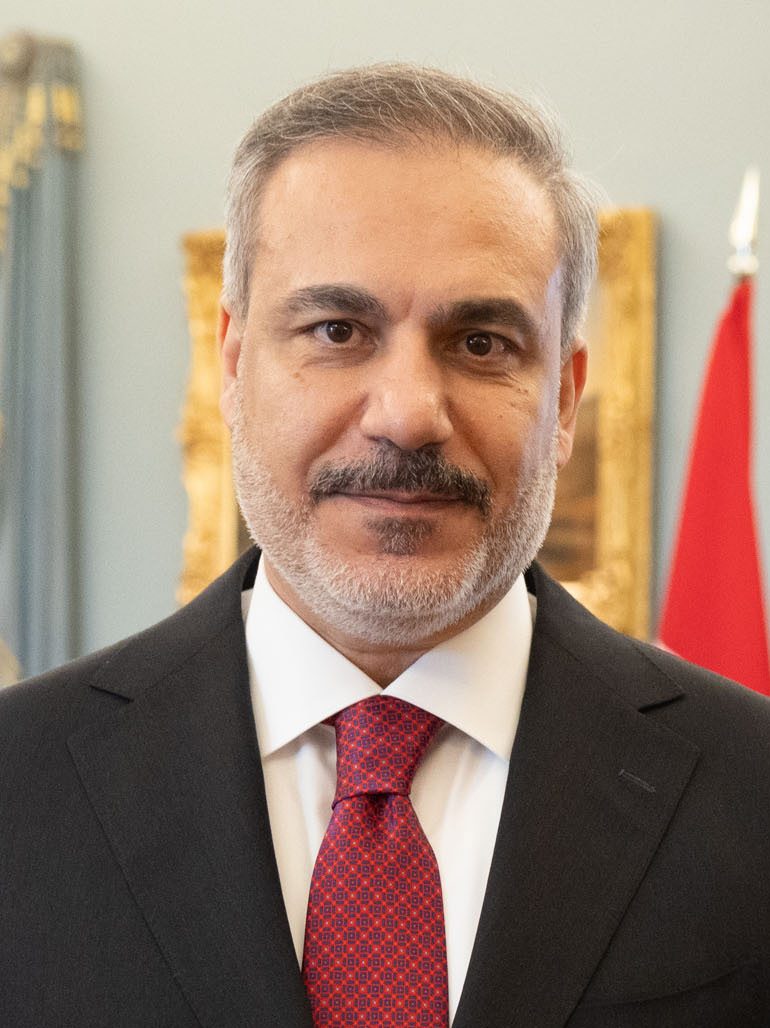
Turkish Foreign Minister Hakan Fidan announced after a gathering of foreign ministers in the R4 and R4+E3 formats in Istanbul that participating nations agree a new attack on Iran would widen war and conflict in the region. According to IRNA, Fidan said: "We are of the same mind that a renewed attack on Iran will expand war and conflict in the region."
The meeting in Istanbul yesterday brought together foreign ministers from Turkey, Saudi Arabia, Egypt, Pakistan (the R4 group) with Germany, France, Britain (the E3), and Italy. According to Ettelaat, citing the Guardian, Fidan said at the summit: "Military intervention in Iran is not a solution in any way; we have agreed that a new military attack would expand war and conflict in the region, and no country at this table wants to see war expand again." German Foreign Minister Johann Wadephul, while not directly criticizing the US, accused Houthis and Iran of "threatening global commerce and strangling energy resources." French Foreign Minister Jean-Noël Barrot said a new US-Iran war would be "bad for both sides" and would further raise oil prices. Britain's David Lammy's successor, Ed Miliband, called on both sides to favor diplomacy; Italian Foreign Minister Antonio Tajani stressed that dialogue is essential to reopen the Strait of Hormuz and the problem cannot be solved through military means alone. Ministers called in a joint statement for an end to Houthi attacks on Saudi Arabia and for the Strait of Hormuz, which Iran has restricted, to reopen.
How the Persian press covered it
| Source (orientation) | Headline / framing |
|---|---|
| IRNA (state news agency) | Presented Fidan's warning as a diplomatic initiative; used "attack on Iran" directly in the headline. |
| Iran International (opposition, diaspora) | Relayed the same statement as "new attack on the government"; shifted emphasis from the nation to the threat against the regime. |
| Ettelaat (Guardian-based, moderate-traditionalist) | Framed the summit as an "anti-war bloc" and presented it as a challenge to potential US-Israeli post-election attack plans. |
According to Ettelaat's report, the Middle Eastern side was represented by Egyptian Foreign Minister Badr Abdelatty, Pakistani Foreign Minister Ishaq Dar, and Saudi Foreign Minister Faisal bin Farhan alongside Fidan. On the agenda alongside Iran were the Palestinian issue (settlements expansion, settler violence, and two-state solution), navigational security in the Hormuz and Bab al-Mandab straits, and preventing spillover of the Russia-Ukraine war into the Black Sea. This was, by Turkish and German initiative, an unprecedented gathering of regional and European leaders in such a large format.
Context
The Istanbul meeting was the first time the R4 group's consultations—ongoing since March against the Houthi threat in Bab al-Mandab—united with the E3 countries (related story). The Mecca Defense Pact signed by Turkey, Saudi Arabia, and Pakistan is still awaiting ratification in the Turkish Grand National Assembly (related story), and Pakistan's parliament announced this week that it had ratified the pact; Egypt's potential accession is on the agenda, and the Egyptian Parliament is expected to vote on it October 26. The summit took place as publications like the Washington Post and the Atlantic reported the US was considering possible new military operations against Iran after the midterm elections. For Turkey, hosting the summit strengthens Ankara's mediator position between Washington and Tehran; President Recep Tayyip Erdogan has identified this mediator role as a priority of his foreign policy. However, it should be noted that actual military decisions rest with the US administration, and the ministers' statement carries no binding guarantee; among participating nations, reluctance continues about forming a joint front with Israel.
This news is a translation from Persian with AI assistance. Responsibility for the content rests with the reporting outlet.