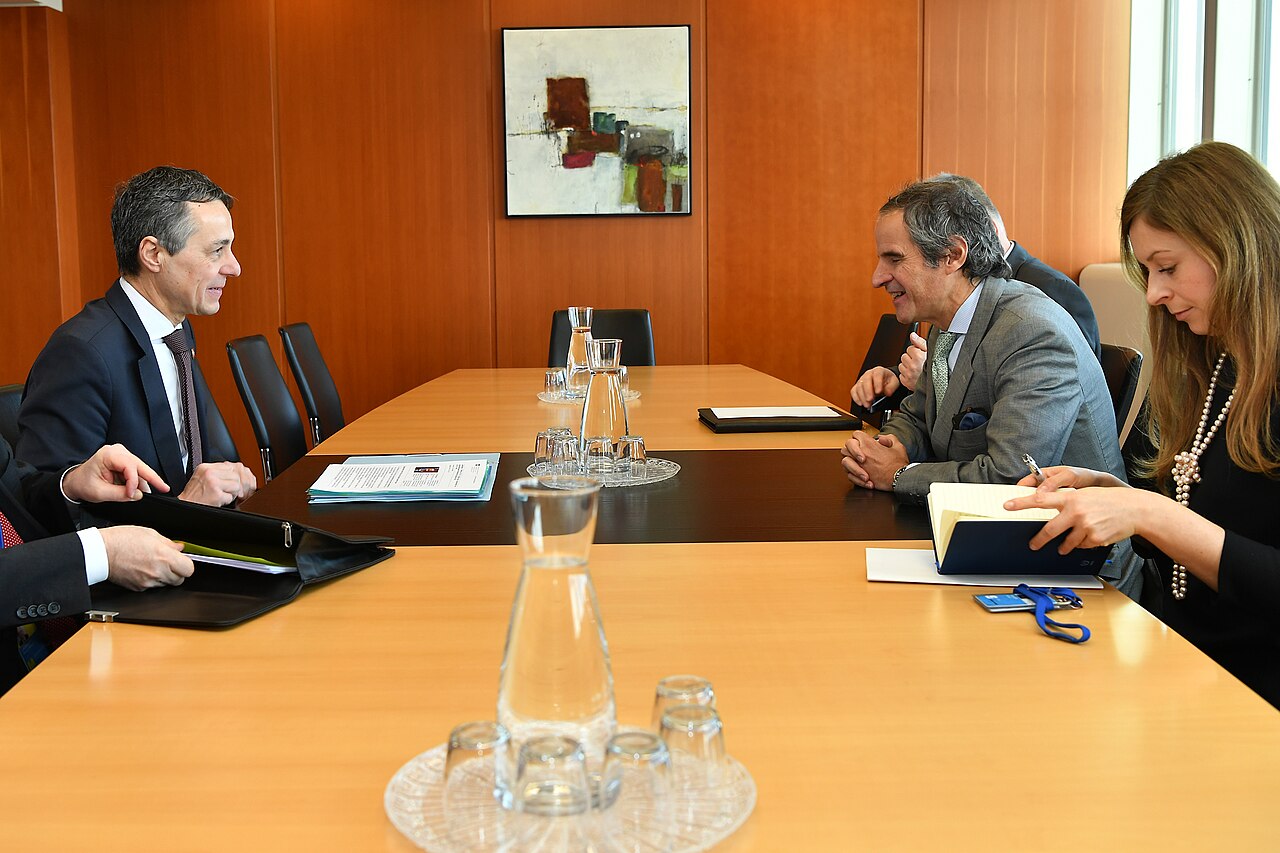
According to Hamshahri, close to Tehran's municipality, IAEA Director General Rafael Grossi told Colombia's Caracol Radio that Iran does not possess nuclear weapons. When responding to a question about the consequences of U.S. and Israeli military strikes on Iran's IAEA-monitored nuclear facilities, Grossi said that as a diplomat and the head of an agency working to prevent nuclear weapons proliferation, he always seeks political and diplomatic solutions.
According to Hamshahri's report, Grossi said he did not wish to comment on whether the use of force was beneficial; he said that evaluation should be made by those who carried out the strikes. While Grossi acknowledged that military strikes have damaged the infrastructure of Iran's nuclear program, he stressed that he is trying to find solutions that would prevent new military conflict, though he noted this is not impossible. Directly answering the question "Does Iran have nuclear weapons?", Grossi replied, "We should not confuse the audience on this; Iran does not have nuclear weapons." Grossi nonetheless repeated political claims about Iran's peaceful nuclear program; he said certain aspects of the program have concerning dimensions and that Tehran has not fully provided the inspection access and transparency that the agency seeks. Referring to uranium enrichment at 60 percent, Grossi said certain aspects of the program require more oversight, but such oversight is currently not possible. Regarding the "Kuh-e Kolang" facility near Natanz, when asked, he said the agency found no nuclear activity or equipment inside during its last inspection, but he could not comment on possible activity since then and said he wanted cooperation between Iran and the agency to resume.
Foreign Ministry Spokesperson Ismail Bakai criticized Grossi's stance at a press briefing Monday, saying "Grossi owes Iran a debt; he should pay that debt first before speaking about future processes." Bakai said one of Grossi's debts was his failure to condemn strikes against Iran and his attempt, through ambiguous reporting, to somewhat justify U.S. and Israeli actions; he emphasized that the agency's credibility has been damaged since military strikes on Iran's nuclear facilities and held the Director General directly responsible for that.
How the Persian press covered it
| Source (orientation) | Headline / framing |
|---|---|
| Hamshahri, IRNA, ISNA | Largely neutrally relay Grossi's interview; headline the "Iran has no nuclear weapons" statement, with a critical note about the agency's failure to condemn strikes. |
| Kayhan | Responds with a harshly worded opinion piece characterizing Grossi as an "agent" and "unreliable"; it targets not the interview's content but Grossi's past conduct. |
Kayhan's opinion piece focuses not on the substance of Grossi's statements but on the agency's past silence; by saying "Grossi has debts to Iran; let him pay those first," it refuses any new inspection and cooperation with the agency. This stance aligns with the government's official criticism through Bakai, but Kayhan's language is far harsher and more accusatory.
Context
Following U.S. and Israeli strikes on Iran's nuclear facilities in June 2026, cooperation between Tehran and the IAEA has been restricted due to a law passed by Parliament. In a report carried on November 2, it was reported that calls to withdraw from the NPT had resurfaced in Parliament; Grossi's inspection request comes amid this tense environment. Official Iranian authorities emphasize that the foundation for relations with the agency is the law adopted by Parliament, which empowers the Supreme National Security Council in this matter. No direct connection to Turkey has been reported.
For information only; not investment advice.