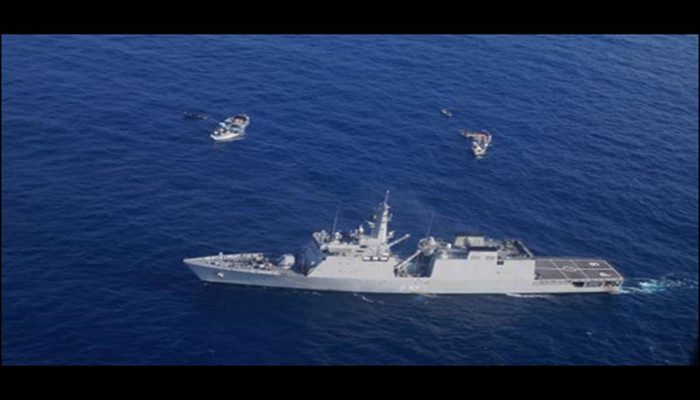
According to London-based Farsi-language outlet Iran International, citing the Associated Press, Somali pirates hijacked an Iranian fishing vessel with a 23-member crew in the Indian Ocean. According to the report, the vessel "Azini" was seized on October 29 (7 Aban) in waters between the coastal towns of Bandar Beyla and Hafun, off the northeast coast of Somalia. The ship carried 21 Iranian sailors and 2 Somali security personnel.
According to Iran International's report, a Puntland maritime police security official, who requested anonymity, told the Associated Press that 12 pirates took control of the vessel. A report released the same day by the Joint Maritime Information Center noted that the hijacking of the "Azini" indicated that piracy activity could spread from Somali waters north to the commercial shipping lanes east and south of Socotra Island. The center raised the possibility of pirates approaching commercial vessels in open waters.
According to a report published by the news site Inside Somalia on October 31 (9 Aban), the vessel was hijacked around 09:00 UTC on the morning of October 29, and the ship's captain transmitted a voice message to another captain reporting that armed men were boarding. The European Union's Maritime Security Centre for the Indian Ocean issued a warning on October 31 noting that the health and security status of the crew was unclear. In an updated warning, the center noted that pirates could use the hijacked vessel as a "mother ship" in attacks on commercial vessels.
The report did not include details such as how many crew members were counted as "Iranian," from which port the vessel departed, or the identity of the ship's owner company. There was no independent verification of the crew's safety and security status at the time of writing. No statement regarding the incident appeared in Iran's official or semi-official news sources (IRNA, ISNA, Kayhan, Donya-ye Eghtesad) at the time this article was prepared; therefore, whether Iranian authorities have acknowledged the incident is unconfirmed.
Context
Somali waters were the world's most dangerous piracy zone for commercial shipping during the 2008-2012 period, until international naval patrols significantly reduced the number of incidents. In recent years, however, reports have emerged of increased piracy activity in the region, particularly as some commercial vessels have changed routes away from the Red Sea—where Houthi attacks have been occurring—and headed toward Somali waters. Iranian fishing vessels stand out as targets for pirates both because of their weak technical equipment and because they often carry armed security; according to some accounts, they are also used as "mother ships." The presence of two Somali security guards on this vessel indicates that Iranian fleets purchase local security services in the region; however, the report does not clarify whether these personnel were also taken hostage.
The hijacking of Iranian fishing vessels off Somalia is not a new occurrence. Similar incidents have occurred previously, with Iranian-flagged or Iranian-crewed vessels being seized by pirates; in some cases, they were released by international naval operations after lengthy ransom situations. Such vessels present easier targets for pirates than large commercial ships due to weaker technical equipment and security, leading experts to note that pirates use them both as sources of ransom and as forward bases in attacks on larger vessels. This incident bears no direct connection to Turkey.
Read alongside UKMTO's November 1 report of an unauthorized boarding of a fishing vessel in the Arabian Sea, this hijacking shows that piracy risk in the region resurfaced twice within the same week; UKMTO's warning in that report about activity spreading near Socotra aligns with this incident as well.