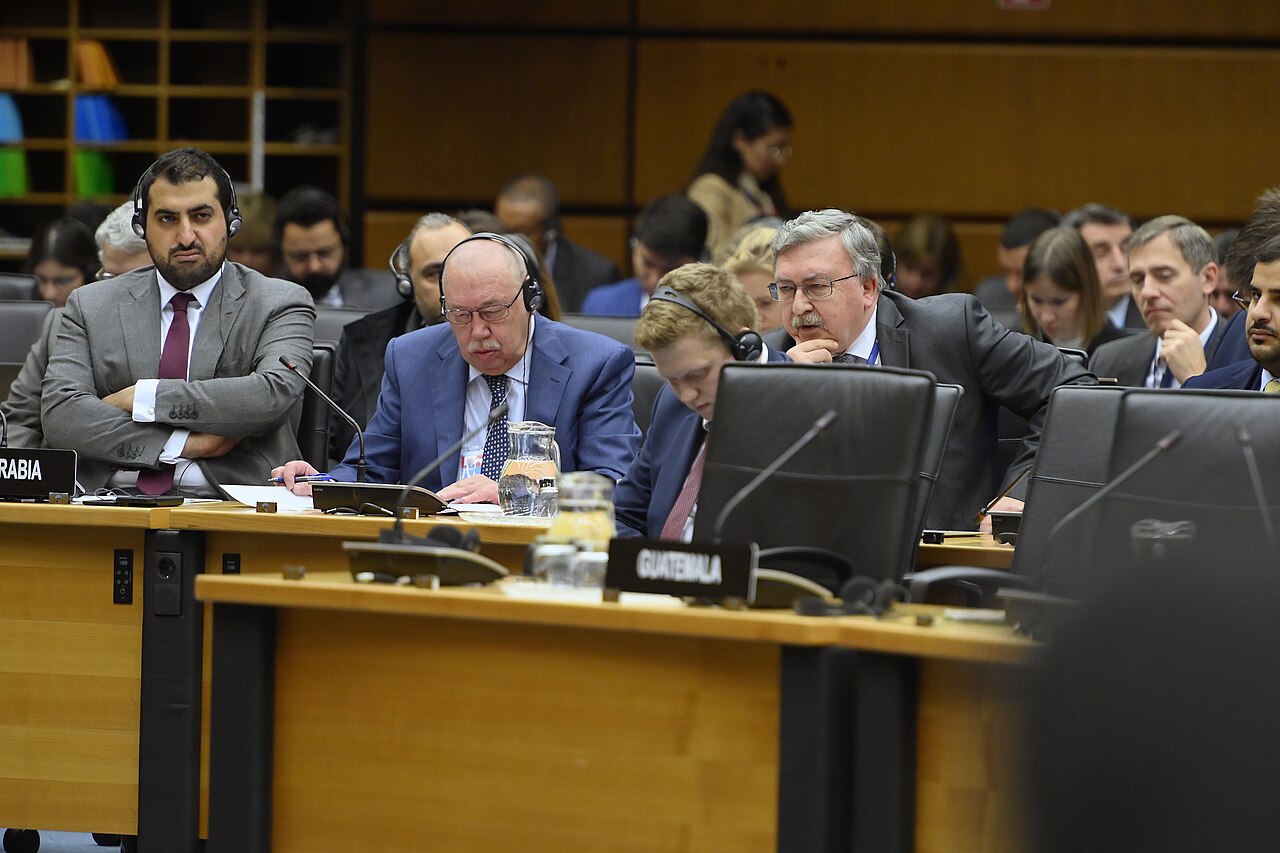
According to ISNA, Mikhail Ulyanov, Russia's special envoy to international organizations in Vienna, responded to remarks by Germany's Chancellor about the need to end the conflict with Iran, saying that Europe itself had laid the groundwork for U.S. strikes against Iran. ISNA quoted Ulyanov as implying that European countries should examine their own role before speaking about defusing the crisis.
Donya-ye Eghtesad's report clarified the channel through which Ulyanov made his remark: according to the article, Ulyanov posted on a social media platform, emphasizing the role European countries played in preparing the groundwork for American aggression against Iran. According to Hamshahri's account, Ulyanov stated that "Europe played a key role in laying the groundwork for U.S. aggression against Iran" and characterized this as an explicit warning.
A common element across all three sources is that Ulyanov's remarks were a direct response to a trigger—namely, the German Chancellor's earlier statement that "the conflict with Iran should be brought to an end." Russia is officially not a party to the conflict, but has maintained a consistent rhetoric throughout the war holding the United States and Europe responsible for the crisis's escalation.
How the Persian press covered it
| Source (orientation) | Headline / framing |
|---|---|
| ISNA (Semi-official) | Reports Ulyanov's remarks in response to Germany's Chancellor. |
| Donya-ye Eghtesad (Economic daily, technocratic) | Notes that the statement came via a social media post, using the headline "A Blunt Warning from Russia to Europe." |
| Hamshahri (Moderate-traditionalist) | Directly quotes Ulyanov's language, bringing the "key role" phrasing to the headline. |
All three sources relay Ulyanov's words in the same manner, and there is no factual contradiction; the difference lies only in which detail—the trigger statement, the social media channel, or the direct quotation—is foregrounded.
Context
Russia is not officially a party to the U.S.-Israel-Iran war that began in February 2026, but continues its strategic partnership with Tehran and has consistently employed a diplomatic rhetoric holding the United States and Europe responsible for the crisis. An earlier report based on leaked CIA information touched on Russia's possible role in retaliation scenarios; Ulyanov's statement today can be read as a diplomatic extension of this line.
The target of Ulyanov's accusation is Europe's claim that it is not directly involved in the war, but through its support to the U.S.—via intelligence-sharing, use of bases, and diplomatic legitimation—it has prepared the groundwork for the conflict. This charge has neither been formally confirmed nor denied by European governments; accordingly, the scope and concrete evidence for the "groundwork preparation" accusation remains unverified in public sources. The contrast between Germany's call for "ending the conflict" and Russia's counter-claim that "you prepared the groundwork" shows that even among parties favoring an end to the war there is a deep disagreement over responsibility.
Ulyanov, in his capacity as Russia's envoy to international organizations in Vienna (principally the IAEA), is a figure who frequently speaks on matters related to Iran's nuclear program during the war. This position lends his remarks not merely the weight of diplomatic commentary but the authority of an official Russian line. The sharp riposte to Germany's call for peace signals that there is no consensus among European capitals over how the war should end, and that Russia is pressing its own narrative into this discussion.