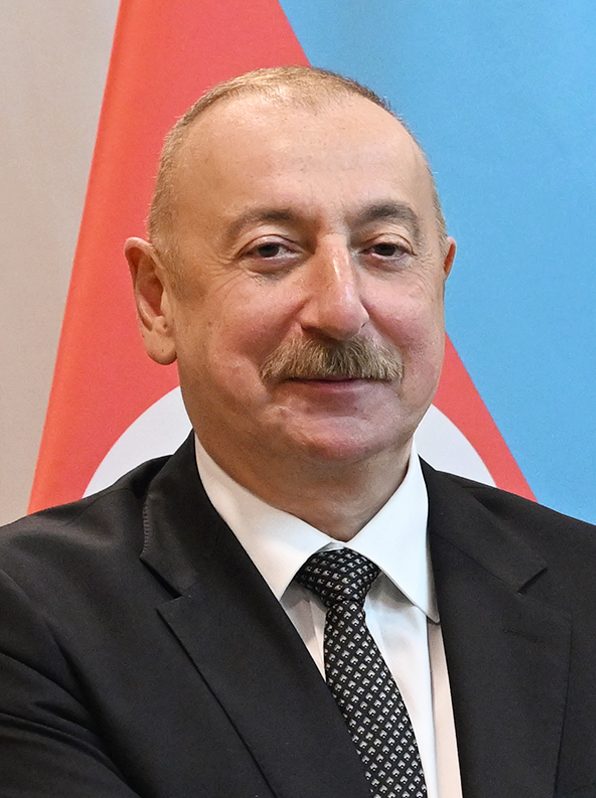
Azerbaijani President Ilham Aliyev did not attend the Organization of Turkic States summit held in Ankara on Friday. According to ISNA, this occurred despite President Recep Tayyip Erdoğan's personal invitation and has strengthened claims of growing friction between the two "longstanding allies" over domestic politics and regional issues. Hamshahri also reported the development via BBC Persian as "rising disagreements in Ankara-Baku relations."
According to a previous report from English-language Azat TV, Erdoğan had invited Aliyev in a phone call on October 22 to attend the summit in person; however, neither the Turkish nor Azerbaijani government immediately confirmed participation. According to the same source, the disagreement stems from Ankara's attempt to repair ties with Baku by dismissing an adviser (Oktay Saral) from his post; the adviser's social media posts had drawn sharp criticism from Aliyev's party. ISNA and Hamshahri wrote that Aliyev's absence signals that this disagreement persists; however, neither Baku nor Ankara has officially confirmed the existence of the tension—and so the scope and cause of the friction remain unconfirmed in public sources.
How the Persian press covered it
| Source (orientation) | Headline / framing |
|---|---|
| ISNA (semi-official) | Frames it as "Aliyev's pique," presenting the event as revealing an Ankara-Baku rift. |
| Hamshahri (principlist) | Relays the story citing BBC Persian, without adding additional commentary. |
Both Iranian sources cite BBC Persian as their ultimate source and present the event as official confirmation of Turkey-Azerbaijan tensions; however, neither Ankara nor Baku endorsed this framing.
Context
Friction between Turkey and Azerbaijan is not new: on October 27, Erdoğan dismissed his chief adviser Oktay Saral during a headscarf crisis with Azerbaijan; this move was read as an attempt to smooth disagreements between the two countries. Aliyev's absence from the Ankara summit despite the personal invitation suggests this attempt has not yet been sufficient. The Organization of Turkic States is a regional cooperation platform comprising Turkey, Azerbaijan, Kazakhstan, Uzbekistan, Kyrgyzstan, and other Turkic-speaking nations; state-leader participation has traditionally symbolized alliance strength, and a president's failure to attend a personal invitation reads as a diplomatic signal.
According to Azat TV, the visible flashpoint of the disagreement was Saral's critical social media posts about Azerbaijan's domestic politics and regional stance; these posts drew sharp responses from Aliyev's New Azerbaijan party containing calls to "avoid hegemonic tendencies." Ankara's dismissal of its adviser was an effort to repair a crack between two "longstanding allies" that had rarely become this public; but Aliyev's absence suggests the rift may reflect Baku's deeper reservations beyond social media posts—concerning regional policies and alliance expectations. Turkey and Azerbaijan are tightly bound in energy pipelines, defense-industry cooperation, and the Middle Corridor trade route; visible friction between them carries significance beyond diplomatic courtesy and serves as an indicator for the architecture of regional alliances.