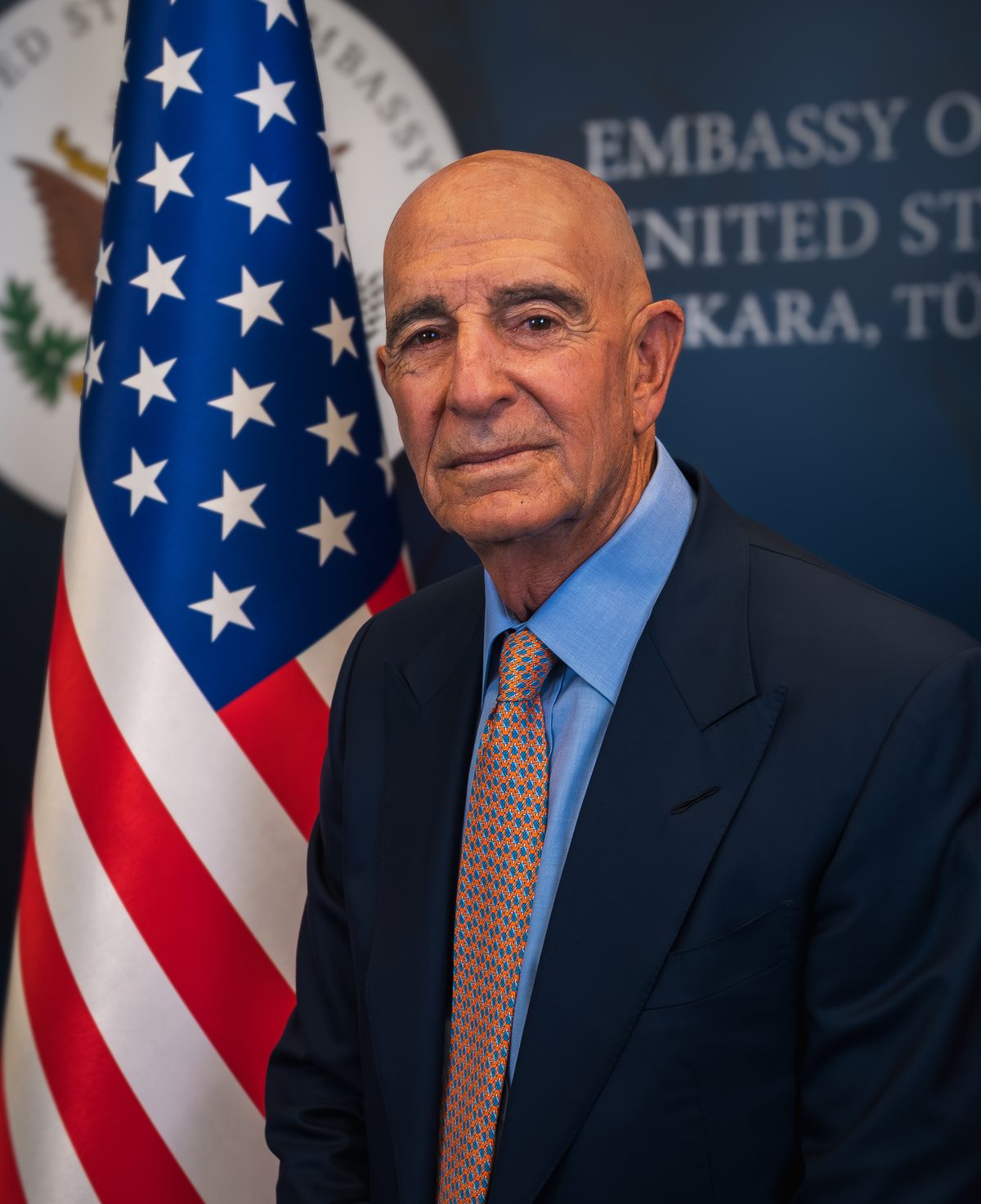
U.S. Ambassador to Turkey and Special Envoy for Syria-Iraq Tom Barrack signaled hope that tensions in the Middle East could ease within the coming two weeks, even as reports of potential renewed war with Iran persist. According to IRNA, Barrack said the U.S. is approaching an agreement that would reduce tensions with Iran.
According to IRNA, Barrack predicted that regional tensions could decrease "within two weeks." In remarks compiled by Donya-e Eqtesad, the ambassador used phrases like "striking progress can be made in the coming two weeks" and "we are close to a deal reducing tensions with Iran." According to ISNA, in a separate statement Barrack emphasized that Washington cannot solve all the region's problems, and regional nations need to take greater responsibility for their own security. CNN confirmed that in the "Global Perspectives" program broadcast from Doha, Barrack told the network that the U.S. and Iran are "very close" to a process reducing tensions, though he said this would be a temporary measure to "cool things down" rather than a comprehensive solution. "We won't have an immediate general agreement," he said.
How the Persian press covered it
| Source (orientation) | Headline / framing |
|---|---|
| IRNA (State news agency) | Framed Barrack's remarks against the backdrop of reports about renewed war; highlighted the two-week de-escalation hope. |
| Donya-e Eqtesad (Economic daily, technocratic) | In a brief "site news" note placed Barrack's "close to a deal" comment alongside commentary from a figure close to Mohsen Rezaei on a Vance letter. |
| ISNA (Semi-official) | Highlighted Barrack's emphasis that "regional nations should take responsibility"; did not address the de-escalation claim. |
While the phrases "two weeks" and "close to a deal" from IRNA and Donya-e Eqtesad do not directly contradict ISNA's emphasis on "regional responsibility," they reflect different priorities. The full quote from the ambassador was not independently verified.
In a separate report the same day, Donya-e Eqtesad cited a source close to Mohsen Rezaei alleging that U.S. Vice President JD Vance had sent a letter to an Iranian official through intermediaries, with a tone softer and more courteous than the Trump letter before the "12-day war," and with threats notably more muted. No official details of the letter's content were released; this claim was also not independently verified. The same day, Parliament Speaker Mohammad Bagher Kalibaff countered Barrack's optimistic tone by laying out a list of conditions, saying progress was only possible if the U.S. accepts Iran's "seven conditions." Ettelaat reported this statement with the headline "Kalibaff sprinkles water on American hopes."
Context
Barrack, serving as both Ankara Ambassador and Syria-Iraq special envoy, is known as a figure who often sends mixed signals in U.S. Iran policy; last week he said "an attack this weekend was definitely possible." His Ankara posting means his statements are read as a gauge of regional diplomacy from a U.S. perspective. His remarks align with reports that the Trump administration has sent a letter to Iran through intermediaries. The CNN-confirmed statement shows the ambassador's public message is aligned with official U.S. policy, but a specific two-week timeline should be evaluated in a context where similar forecasts in previous months have not held.