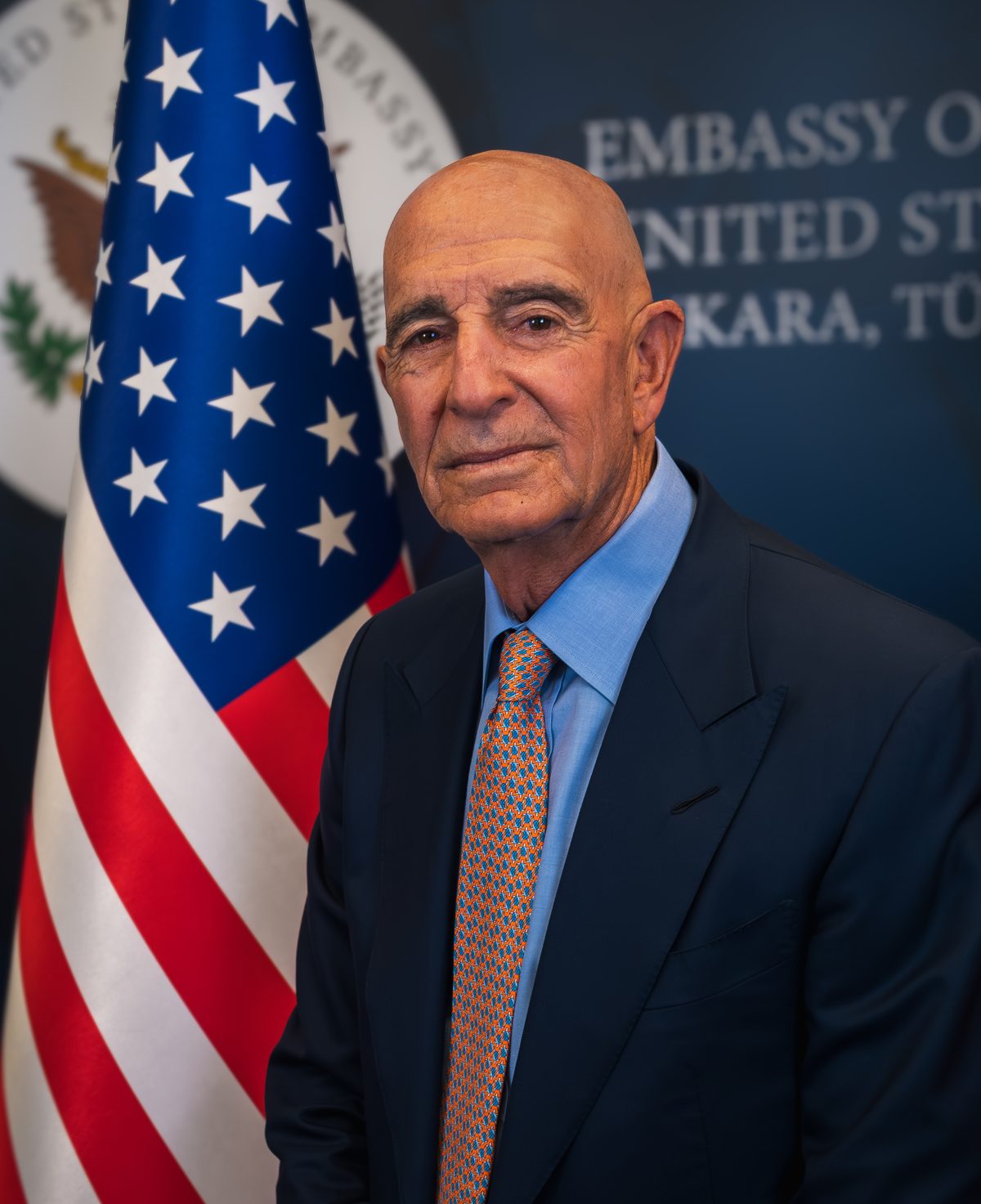
Tom Barrack, US Ambassador to Ankara and special envoy for Syria-Iraq, responded with "absolutely" when asked whether an attack on Iran might occur this coming weekend. According to Khabaronline, Barrack said: "President Trump has been completely forthright; he is ready and available to reach a deal. We have been at the negotiating table for months. Everyone is now agreed that an imminent nuclear threat has been eliminated."
According to Khabaronline's report, Barrack's remarks came as Trump continued making contradictory statements about Iran. According to Donya-e Eqtesad, Trump said on Thursday: "We are not negotiating with Iranians; very soon, something will happen, most people think we will take action in Iran after the election," then the next day offered different language: "We have a plan to negotiate with Iran, we will not attack them before the Congressional elections." According to Donya-e Eqtesad, the Atlantic magazine reported the Trump administration is considering a military operation lasting days after the midterm elections (related article), with possible targets including Iran's missile and drone arsenals, energy infrastructure, and nuclear facilities; in the same report, DropSite noted that over the past four months Trump has backed away from a comprehensive operation against Iran or the Houthis seven times.
How the Persian press covered it
| Source (orientation) | Headline / framing |
|---|---|
| Khabaronline (moderate conservative) | Featured Barrack's direct quote, presenting attack likelihood as "absolutely possible." |
| Donya-e Eqtesad (economic daily, technocratic) | Framed Barrack's statement alongside Trump's conflicting remarks and the Atlantic's post-midterm military operation scenario, viewed through oil market impacts. |
Donya-e Eqtesad's report also cited an assessment from Foreign Affairs magazine: according to the magazine, ending the Iran war requires painful concessions by Washington and Riyadh, but continuing the war could lead to even greater economic catastrophe. The same report included an evaluation from a former US Treasury official: "Iran does not yield to sanctions; a naval blockade exhausts the US military while Iran's cheap drones challenge Washington's expensive weapons systems." According to another claim attributed to the Wall Street Journal in the report, Iran has signaled through diplomatic channels that if the US and Israel launch new attacks, its response will not be limited to military bases and warships but will extend to regional economic infrastructure, airports, and energy lines; this claim rests solely on Donya-e Eqtesad's single source and has not been independently verified.
Context
Tom Barrack has served as US Ambassador to Ankara since May 2025 and simultaneously holds the title of special envoy for Syria and Iraq; this week he drew attention at the Doha Global Security Forum in Qatar for saying he does not view Iran as a "bad regime." US-Iran negotiations have been stalled for months, and uncertainty persists about whether a ceasefire will become permanent. As US Congressional midterms approach, public debate in Washington centers on how Iran policy is being shaped by the election calendar; Barrack's remarks should be read as part of that discussion, though no official confirmation of any attack decision has been made. Barrack's simultaneous roles as Ambassador to Ankara and special envoy for Syria-Iraq indirectly affect Turkey's position in regional diplomacy and warrant note.
This news is a translation from Persian with AI assistance. Responsibility for the content rests with the reporting outlet.