Various Turkish political parties leveled sharp criticism at the "Mecca Pact" signed among Ankara, Islamabad, and Riyadh. According to ISNA, the parties expressed concern that the agreement uses Muslims' religious sentiments as a tool to justify Saudi Arabia's military operations in Yemen, and could thereby pull Turkish armed forces into a regional conflict.
According to ISNA, the parties highlighted potential consequences for Turkey's national security and argued that the pact could serve as a tool to legitimize Saudi Arabia's military operations against the Ansarallah (Houthi) movement in Yemen. The report states the criticism focused on the assessment that while the pact does not formally commit Turkey to direct troop deployment, it carries a risk of drawing Turkey toward the Yemen theater through joint planning, training, and intelligence sharing.
ISNA did not identify individual parties by name in the report; however, the common emphasis was that the government's religious solidarity rhetoric in defending the pact could actually facilitate Turkish armed forces' entry into a regional conflict. According to the report, the parties also suggested such a step could jeopardize Turkey's diplomatic balance in the region.
ISNA framed this domestic Turkish debate as illustrating how regional tensions between Iran and Saudi Arabia reflect on Ankara's foreign policy; according to the report, government parties have not yet issued a direct response to the opposition's criticism. Given ISNA's position in the Iranian press, it should be noted that the report tends to highlight divisions within Turkey over Saudi Arabia's regional military partnerships.
Context
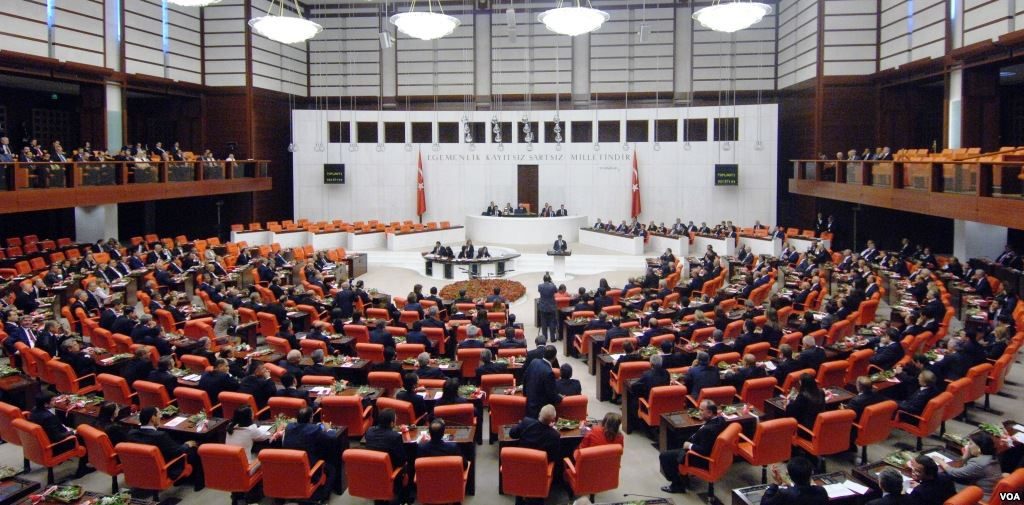
The Mecca Pact, signed in early October among Turkey, Pakistan, and Saudi Arabia, is a security agreement containing mutual defense commitments and was reported on October 8; the pact came into force during an escalation of Saudi Arabia's military operations against the Ansarallah movement in Yemen. According to Al-Monitor, Turkey's Foreign Minister Hakan Fidan said the pact is "a defense agreement, not an aggression agreement," and that if any signatory is attacked, the others will support it; he noted Ankara's contribution would be limited to joint planning, training, and intelligence sharing rather than direct military intervention. According to Al Jazeera, main opposition party leader Özgür Özel called government activation of the pact "adventurism" and warned it would send Turkish soldiers to Yemen's deserts; a different opposition MP called for clarity on whether the document was a binding defense agreement, a memorandum of understanding, or a joint declaration. Articles 90 and 92 of the Turkish Constitution require parliamentary approval for international agreements and foreign military deployments; as of this report, the pact had not yet been approved by the National Assembly. Some Turkish outlets close to the opposition criticized the government's move in stronger terms; these characterizations should be understood as coming from opposition-aligned sources and not as neutral assessments. According to Al Jazeera, on October 5, Turkey and Pakistan agreed at a Riyadh meeting to prepare rapidly deployable forces and military support for Saudi Arabia; however, Ankara stresses this preparation does not mean direct engagement on the Yemen front. The pact's full legal status—whether it is a binding defense agreement or a statement of intent—had not been clarified publicly as of the time this report was written. On October 22, the pact was formally submitted to parliament for approval (related report).