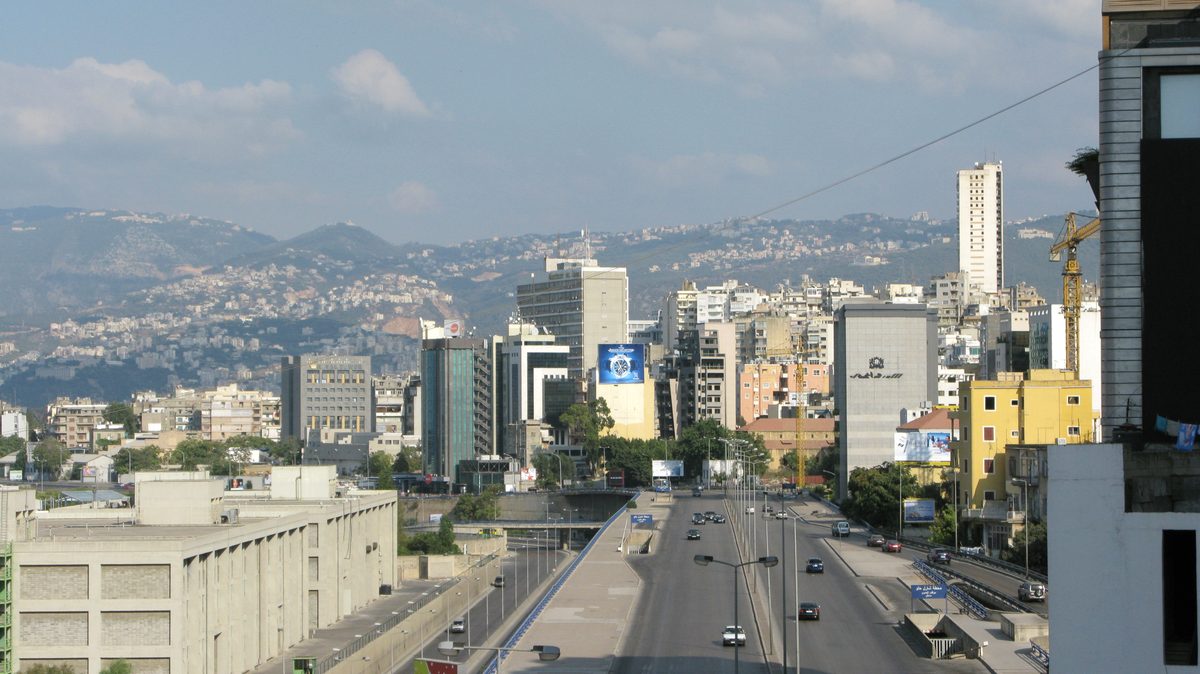
Lebanon's Central Bank revoked Bank Saderat Iran's operating license in the country. According to Hamshahri's report citing Bloomberg, the decision aligns with similar restrictions on Iran's financial system in some regional countries.
According to Hamshahri, Lebanon's Central Bank Governor Karim Said said the move continues other regional countries' decisions to increase restrictions on Iran's financial system. According to Iran International, the countries Said referenced include the United Arab Emirates and Turkey. According to Ettelaat, this is not the first instance of the Lebanese government taking a stance aligned with the U.S. against Iran.
Ettelaat wrote that the U.S., having failed at a military strike on Iran, intensified its economic pressure campaign, while some of Iran's major trading partners, such as China and Russia, have openly resisted these sanctions. According to the report, despite Lebanon's government having included the Lebanon file in the ceasefire accord text, it sat down for negotiations with Israel through U.S. mediation; these negotiations remain inconclusive, and the government has been unable to prevent Israeli military strikes on Lebanon.
How the Persian press covered it
| Source (orientation) | Headline / framing |
|---|---|
| Hamshahri (Tehran municipality, principlist) | Reported the decision as part of a regional restriction wave, using neutral language |
| Ettelaat (moderate-traditionalist) | Framed the decision as Lebanon siding with the U.S. against Tehran, with critical tone |
| Iran International (opposition, diaspora) | Reported Said's statement within the context of a regional list including the UAE and Turkey |
Context
Bank Saderat Iran, a major state bank operating since the 1950s, has had its overseas branches targeted by U.S. and EU sanctions in previous years. The Lebanese license revocation coincides with the new sanctions wave announced by the U.S. Treasury the same day, and can be read as a sign of Iran's narrowing regional financial access. A separate report published the same day quoted a senior Iranian diplomat emphasizing that the Lebanon file must be an integral part of any lasting peace agreement (see: Senior Iranian diplomat: We are seriously considering NPT withdrawal). Lebanon, despite hosting Hezbollah—one of Iran's closest regional allies—has become largely dependent on U.S.-backed financial aid following its post-war economic crisis; this dependency is interpreted as making Beirut more susceptible to Washington's demands on currency and banking matters.
Lebanon has struggled with a severe financial crisis since 2019; the national currency has depreciated sharply, and the banking sector has been strained by deposit withdrawal restrictions. This crisis has made the country's banking sector more vulnerable to international regulatory bodies and major powers. Financial support Lebanon expects from the IMF and Gulf countries is often conditional on transparency and compliance with international financial standards. The extent to which Lebanon's government acted on its own or under external pressure remains unconfirmed in the reports; therefore the true driver behind the decision was not clarified.