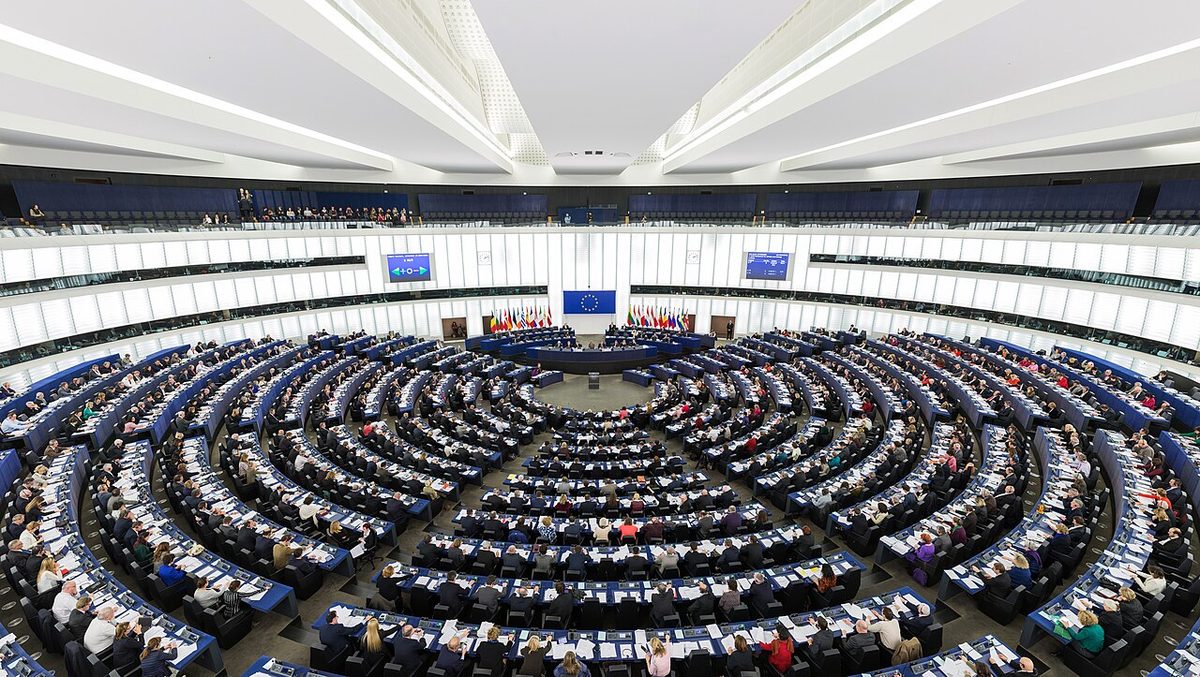
According to Khabaronline, the European Parliament passed three separate resolutions on Thursday regarding alleged "human rights violations" in Iran, Georgia, and Azerbaijan. The report states that parliament members accused Iran of violence against civilians, called for the abolition of capital punishment, and condemned Iran for alleged "oppression of religious and ethnic minorities" and "transnational repression." According to the European Parliament's official press statement, the Iran resolution passed with 541 yes, 11 no, and 25 abstain—figures that exactly match Khabaronline's account.
According to the European Parliament's official statement, the resolution identifies Iran as having the world's highest per-capita execution rate and calls for overturning death sentences imposed on Taraneh Rahimi, age 20, and Leyla Ebolhasani, age 43, both convicted following protest activity. The Parliament further calls for broader sanctions against the Iranian government, referral of the regime to the International Criminal Court, strengthening of the UN's independent fact-finding mission, and recognition of "gender apartheid" as a crime against humanity under international law. Khabaronline's report states that parliament members raised these allegations "without presenting any evidence"; this assessment is Khabaronline's own commentary and does not appear in the European Parliament's statement.
According to Khabaronline, citing ISNA, the parliament also passed separate resolutions on Georgia and Azerbaijan. Donya-ye Eghtesad reported the same development with a different headline, emphasizing only the "call to abolish capital punishment" without elaborate detail, while Khabaronline's account provides broader scope (sanctions, ICC referral, minority rights).
According to Khabaronline, following the passage of these resolutions, Iran's Islamic Republic Human Rights Center issued a statement requesting that "international human rights institutions apply the same legal and human rights standards to recent developments in France when evaluating other countries." The statement stressed that human rights compliance is "a universal obligation not to be influenced by political, alliance-based, or geopolitical concerns." Khabaronline connected this statement to allegations that France's student protests were violently suppressed by police with hundreds detained; this response constitutes whataboutism.
Context
The European Parliament has regularly passed similar resolutions on Iran in recent years: in February 2026 it passed a resolution with 524 yes to 3 no votes on regime repression, and in May 2026, with 516 yes to 14 no votes, on the execution of protesters. Today's resolution's vote distribution and content represent continuity with this pattern and do not signal a marked hardening of Parliament's stance toward Iran. The resolutions' binding force is limited; European Parliament resolutions do not automatically compel the EU Council or member states to impose sanctions—they remain advisory; final sanctions decisions require unanimous adoption by the Council.
Iran's human rights center's response invoking France indicates that Tehran has established a standard defensive line against comparable EU resolutions, one framing the EU's human rights discourse as "selective." The individuals named in the resolution—Taraneh Rahimi and Leyla Ebolhasani—have not been covered in detail in Persian sources to date; their cases remain unconfirmed outside the Parliament's own statement and dependent on the Parliament's documentation.