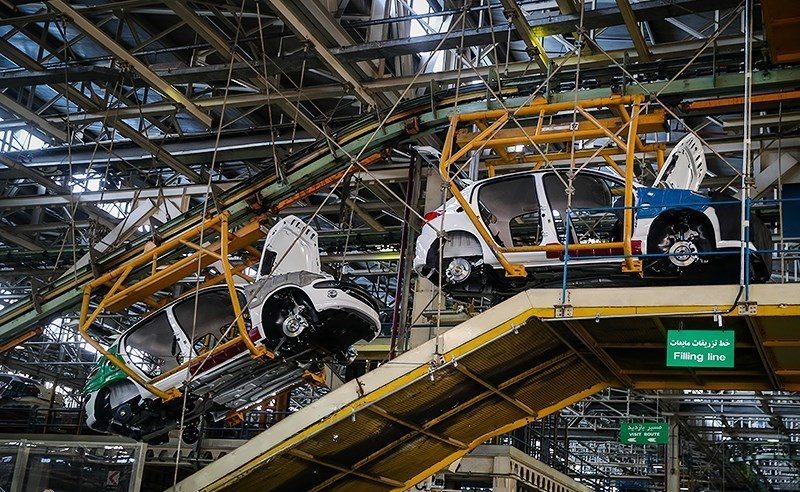
The US Treasury Department's latest sanctions package targets nearly all of Iran's automotive industry. According to Donya-e-Eqtesad, seven Iranian companies were added to the list:
- Iran Khodro
- Saipa
- Iran Khodro Diesel
- Pars Khodro
- Zamyad
- Niru Motor Shiraz
- Niru Motor Damavand
Also on the list are five foreign companies alleged to have supplied parts to Iran's auto industry:
- PT Golden Motorcycle International of Indonesia
- Integrated Auto Parts of the UAE
- Hessenberg Co. and Tanex Global Trading of Hong Kong
- Troy Trading of Turkey
The Treasury says these companies played a role in procuring, transferring or supplying parts for Iranian manufacturers.
According to Turkish and English-language sources, Istanbul-based Troy Trading is accused of shipping truck parts to Bahman Diesel, a subsidiary of the US-sanctioned Bahman Group. The US side alleges that Bahman Group is linked to the Iranian military. The sanctions were announced on Oct. 1 as part of an operation the United States has dubbed "Economic Outcast." On the same day, OFAC made new sectoral determinations for Iran's automotive and rail sectors under Executive Order 13902. These determinations mean that anyone operating in these sectors may face sanctions risk.
Donya-e-Eqtesad's question: Why again?
The newspaper notes that Iran Khodro and Saipa have already been under sanctions since the US withdrew from the nuclear deal in 2018, and asks: "What is the purpose of putting these companies on the sanctions list again?" According to the paper's analysis, what sets the new package apart is that it targets the supply chain. The pressure extends from sea routes to Iran's overland trade network and to third-country companies that supply parts. After 2018, European partners pulled out of Iran, and some Asian partners also limited cooperation because of sanctions risk.
Context
Iran Khodro and Saipa hold more than 90% of Iran's domestic car market. A sectoral determination raises risks not only for the listed companies but also for third-country companies doing business with the sector. This makes it a development to watch closely for firms in Turkey, an important route and source of supply in overland trade with Iran.
This report relays publicly available sources; it does not constitute legal or commercial advice.