Saudi warplanes bombed Yemen's capital, Sanaa, over the weekend, according to IRNA. On the same day, Yemen's Health Ministry said four people were killed or wounded in a Saudi drone strike on Taiz province. The Houthi movement (Ansarallah), in response, said it had struck facilities of the Saudi state oil company Aramco in Riyadh.
In a statement published by Ettelaat, Houthi armed forces spokesman Yahya Saree said: "In response to Saudi Arabia's attacks on Sanaa and Yemeni provinces, we carried out a special military operation against the Aramco company in Riyadh." Saree claimed that several ballistic missiles and drones were used in the operation, that the targets were hit "precisely and directly" and that a fire broke out; he said Yemen would continue to respond "to siege with siege, to escalation with escalation."
The hardline Kayhan wrote that the fire burned for about 12 hours, that multiple explosions were heard in Riyadh and that flights faced delays or cancellations. Donya-e-Eqtesad reported that flights were halted at Riyadh and Dammam airports, and that some unconfirmed reports claimed Aramco's Yanbu facility had also been targeted.
Kayhan, citing Reuters, wrote that Pakistan has sent 30,000 to 40,000 troops to Saudi Arabia to help with missile and drone defense; this figure also matches English-language reports based on Reuters. The same article claimed that Turkey is supplying Riyadh with military equipment; however, English-language sources on this point indicate that Ankara, for now, is not directly participating in the war but providing indirect/technical support under a trilateral defense pact and that drones sold before the war are being used, showing that the scope of the claim is not the same as "direct military support."
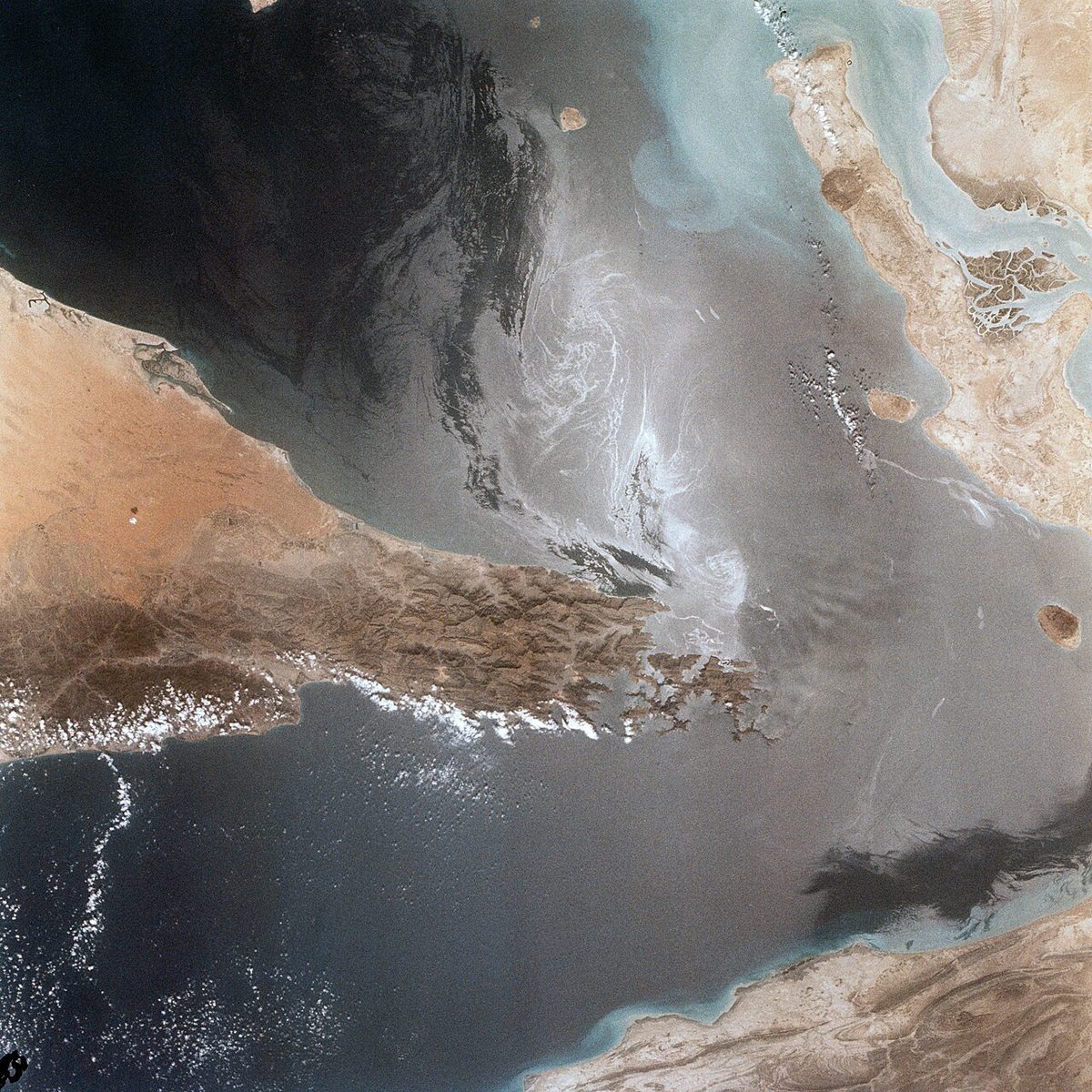
According to Kayhan, two US officials told Axios that the Saudis had for weeks been planning a broad operation to retake the Red Sea coast and Bab el-Mandeb from the Houthis, and that Defense Minister Khalid bin Salman had asked US Defense Secretary Pete Hegseth for airstrikes, but Washington has so far declined direct military involvement; the United States is said to be providing intelligence and targeting data.
How the Persian press covered it
| Source (orientation) | Headline / framing |
|---|---|
| IRNA (state news agency) | Plain news language: "Saudi Arabia bombed the capital." |
| Ettelaat (moderate-traditionalist) | Relays the Houthi spokesman's statement directly and neutrally. |
| Kayhan (hardline) | Legitimizes the attack under the headline "Aramco on fire in response to Saudi crimes"; stresses Saudi Arabia's dependence on foreign troops. |
| Donya-e-Eqtesad (technocratic) | Tells the story through flight cancellations and oil prices, focusing on the market impact. |
| Iran International (opposition) | Highlights government forces' counterattack against the Houthis and the displacement of about 200,000 people; this angle is absent from the other outlets. |
Context
The civil war in Yemen, fought since 2014 between the Houthi movement and the Saudi-backed Yemeni government, has become intertwined with regional Iran-US tensions. The Houthis are considered close to Iran, while Saudi Arabia has the backing of the United States and some Arab countries. Aramco is one of the world's largest oil companies, and attacks on its facilities directly affect global energy markets. A trilateral defense pact reportedly signed between Pakistan, Saudi Arabia and Turkey stands out as a new dimension of military cooperation in the region; the claim of a Pakistani troop deployment has also been confirmed by English-language sources.
This incident is a continuation of the Reuters claim reported in the story on Saudi Arabia's preparations to retake Bab el-Mandeb from the Houthis.