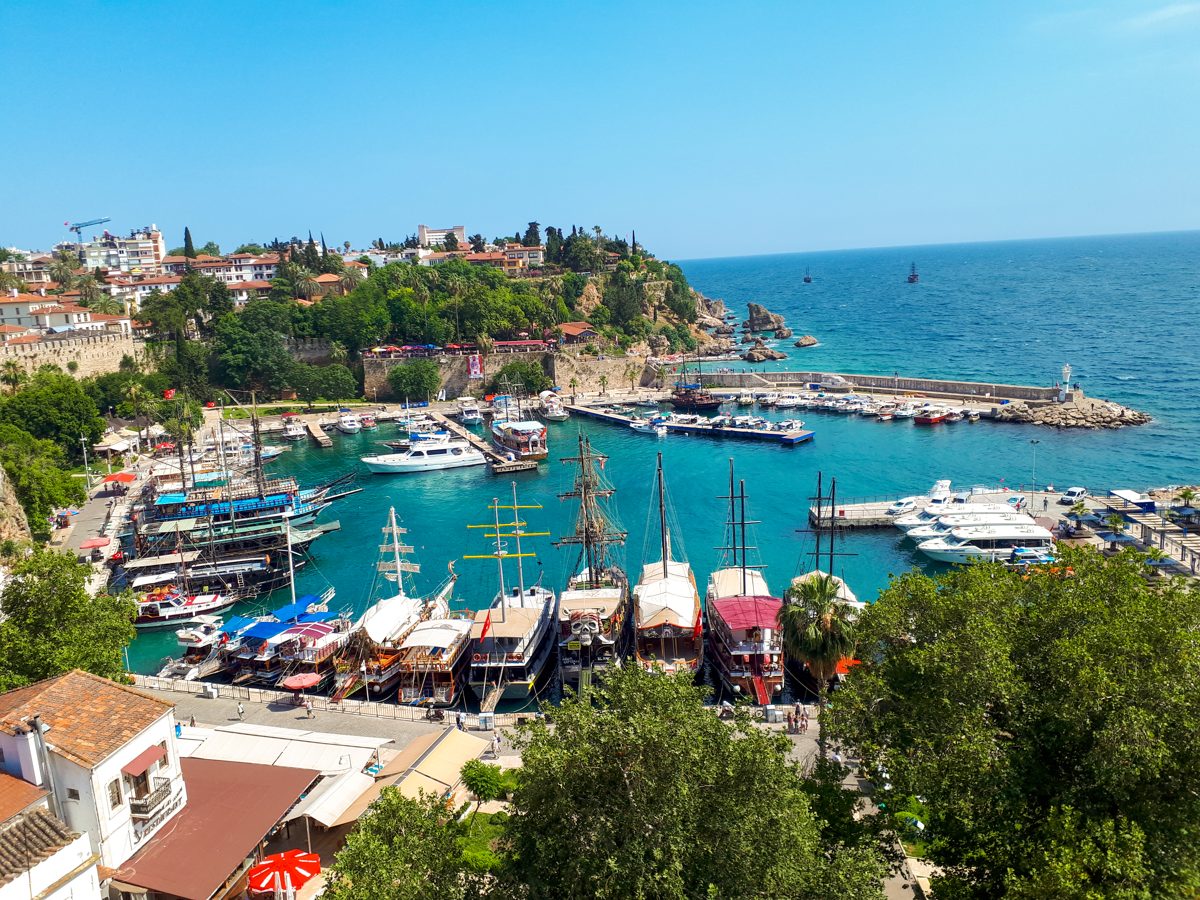
The United Nations' 31st Climate Change Conference (COP31) opened Wednesday in Antalya, Turkey; world leaders attending the summit warned of the Iran war's impact on the global economy while calling for reduced dependence on fossil fuels. According to Iran International's account citing Reuters, rising energy and food prices, wars, and trade disputes have distracted governments from the climate crisis, and UN officials and some world leaders are now framing global warming not only as an environmental imperative but also as a tool for controlling inflation and strengthening economic security.
UN Secretary General António Guterres said in his opening remarks that three-quarters of the world's population lives in countries dependent on fossil fuel imports and are vulnerable to price shocks beyond their control. Pointing to recent wars and disruptions to global energy markets, he called fossil fuel dependence a chronic source of insecurity and cost-of-living crises. UN Climate Change Convention Executive Secretary Simon Stiell said that volatility in global energy markets and climate disasters are driving inflation, straining government budgets, and raising household costs, lowering living standards.
According to Reuters' reporting, this year's summit has foregrounded the economic cost of energy dependence through the way the U.S.-Israel war on Iran has disrupted crude oil flows from the Middle East, raising global fuel prices. Rising energy and food prices were a major issue in recent U.S. midterm elections where Democrats gained congressional control; according to Iran International, this remains a top agenda item for governments in Europe and Asia. Turkey's President Recep Tayyip Erdoğan, hosting the summit, pointed to wars, crises, migration, famine, and poverty, saying these developments underscore the need for international solidarity more than ever. Brazilian President Luiz Inácio Lula da Silva said in his remarks that the hope created after Brazil hosted the summit last year has faded since the start of this year, and the climate issue has lost its place in world leaders' rhetoric and documents to discussions of armament and trade tariffs. He stressed that the world's fate must not be held hostage to competition among great powers.
Context
Background:
- November 9–20, 2026: COP31 is being held in Antalya under Turkey's presidency, with Australia leading negotiations; this format was accepted after hosting disputes in 2025.
- November 11–12, 2026: The summit's "World Leaders Summit" section took place under the theme "Implementation COP."
- June 2025: U.S. and Israeli attacks on Iran directly caused the environmental damage Pezeshkian described at the summit.
- Early 2026: Donald Trump called global warming a "hoax" and withdrew the U.S. from international climate partnerships; the U.S. showed no high-level participation in negotiations for the second consecutive year.
Who and what: COP31, the 31st Conference of the Parties to the UN Framework Convention on Climate Change; Murat Kurum, Turkey's environment minister, is summit president, and Australian Chris Bowen is lead negotiator.
By the numbers:
- According to Pezeshkian, an attack on the Assaluyeh fuel facility caused 500,000 tons of carbon dioxide emissions, and attacks on fuel storage around Tehran caused 1 million tons (Iran International, November 11, 2026, citing Pezeshkian's summit speech).
- Pezeshkian said Iran's renewable energy capacity grew from 1,250 megawatts to over 6,150 megawatts over the past two years, preventing approximately 2.5 million tons of carbon dioxide emissions (Iran International, November 11, 2026).
Turkey factor: Turkey is hosting the summit, and Ankara is proposing that electricity's share of global final energy consumption reach 35 percent by 2035; this proposal is on the negotiating table for roughly 200 country representatives. Erdoğan's opening remarks show Turkey projecting its regional stability messaging onto the summit given its proximity to conflict zones.
What's ahead: Around 200 country representatives will work over the coming days of COP31 (through November 20) to reach agreement on Turkey's electricity proposal and renewed commitments to move away from fossil fuels; the outcome remains uncertain.
See our Erdoğan-Trump phone call report for other dimensions of the Antalya summit in a Turkey-Iran relations context.