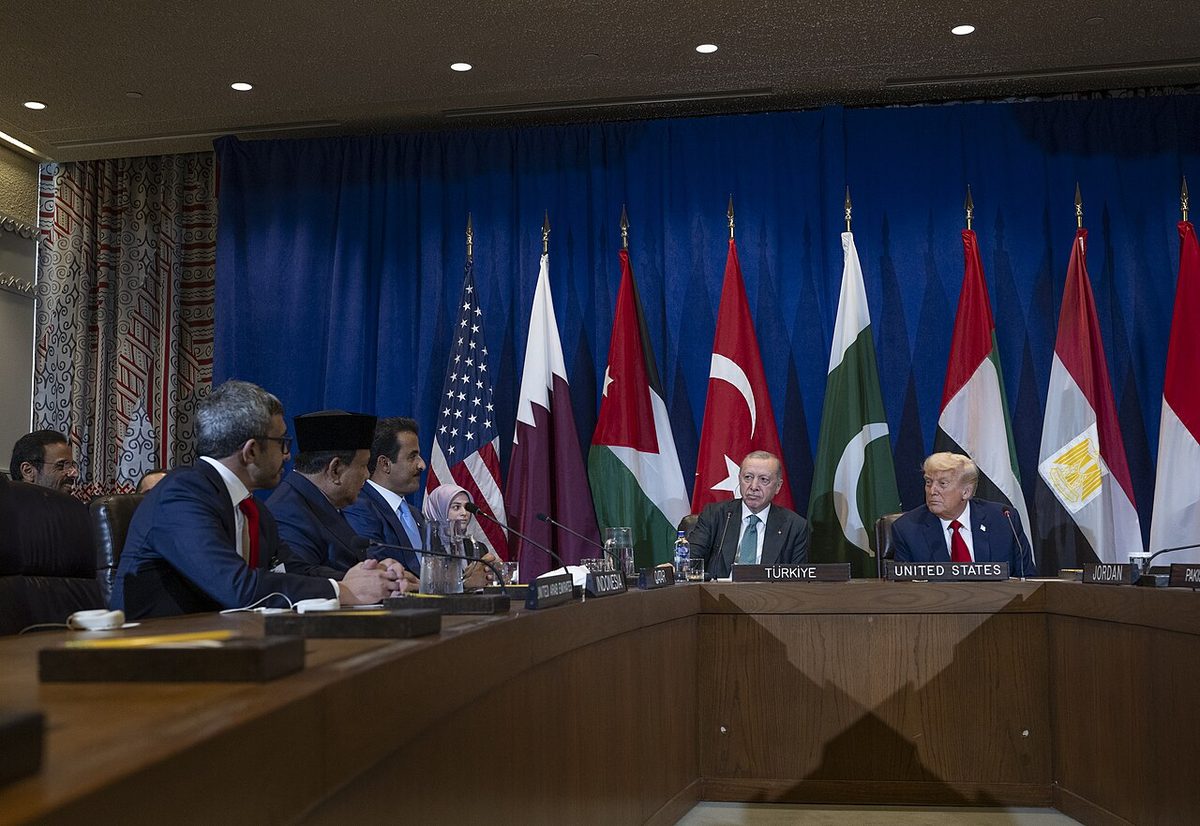
According to Khabaronline, citing the Anadolu Agency, President Recep Tayyip Erdoğan told U.S. President Donald Trump in a phone call on Saturday evening that tensions between Washington and Tehran must be resolved through diplomacy. According to Khabaronline's account based on a statement from Turkey's Presidential Communications Directorate, the Anadolu Agency reported that the call covered bilateral relations and regional and global developments. Khabaronline also noted that Iran's state news agency IRNA carried the same information; in other words, the existence of the call was confirmed both through Turkey's official channel and Iranian state media, though the full text or duration of the call was not disclosed.
According to Khabaronline, Erdoğan expressed confidence in the expansion of Turkey-U.S. cooperation and said the two sides would accelerate bilateral relations in the period ahead. The same report says Erdoğan emphasized that problems between Tehran and Washington must be resolved through diplomacy and reiterated Turkey's commitment to continuing efforts to expand peace. According to Donya-ye Eqtesad, Erdoğan told Trump: "Tension between Tehran and Washington must end and issues must be resolved through diplomacy; Turkey will continue its efforts for peace." In a separate report, Donya-ye Eqtesad quotes Erdoğan expressing this assessment alongside confidence that "cooperation between the two countries will continue to grow" and stating that Ankara would sustain efforts to strengthen relations.
According to Khabaronline, Erdoğan also addressed the Russia-Ukraine war and expressed hope that intensified diplomatic efforts would yield positive results; he said Turkey would continue participating in efforts to end the conflict, emphasizing the importance of increased engagement with Kyiv and Moscow. According to Donya-ye Eqtesad's account, Erdoğan said on this: "I hope diplomatic efforts to end the war in Ukraine will produce positive results; Turkey will continue to contribute its part, and increased contact with Kyiv and Moscow is important." According to both Khabaronline and Donya-ye Eqtesad, Erdoğan ended the call by thanking Trump for his support of the Turkic States Organization leaders' summit.
Neither Ankara nor Washington shared details about which specific bilateral issues (trade, defense industry, visas, etc.) were discussed under the bilateral relations heading; both sources left this section general ("bilateral relations were covered"). The full transcript or duration of the call was not included in either the Turkish Presidential Communications Directorate's statement or the Anadolu Agency's report; the White House issued no separate statement. For this reason, the call's substance could not be independently verified by international news agencies at the time this article was prepared; information remained limited to Turkish and Persian reports based on the Anadolu Agency's official statement, and the exact content of the conversation could not be verified.
How the Persian press covered it
Two outlets of different orientations covered the story: Khabaronline (moderate conservative, Larijani circle) and Donya-ye Eqtesad (economics daily, technocratic); Khabaronline noted that IRNA also confirmed the story. All three sources based their accounts on the same Anadolu Agency source and there was no significant framing difference; all emphasized Erdoğan's call for diplomacy and his assessment on Ukraine, using neutral, non-partisan language. In Donya-ye Eqtesad's separate second report, the detail of Erdoğan thanking Trump for supporting the Turkic States Organization summit also appeared; this detail was in Khabaronline's coverage but not in Donya's first report.
Context
Background:
- October 28, 2026: In an earlier phone call between Erdoğan and Trump, Middle East developments and the Ukraine war were addressed.
- November 1, 2026: In the Trump-Netanyahu call, renewed strikes on Iran were discussed (details).
- November 6, 2026: Reports on a possible U.S. strike on Iran highlighted Qatar's mediation efforts (details).
- November 7, 2026: Erdoğan addressed a separate issue with Aliyev in Baku (details), indicating Erdoğan conducted intensive telephone diplomacy throughout the week.
Turkey dimension: Turkey, as a NATO member sharing a land border with Iran, faces both energy and diplomatic risk amid U.S.-Iran tensions. Turkey imports a significant portion of its natural gas from Iran, and bilateral trade creates an economic tie that a direct conflict could affect. Erdoğan's ongoing contact with both Washington and Tehran can be read as part of Ankara's effort to maintain itself in a regional mediator role; however, no official statement has connected this mediation to a concrete outcome.
By the numbers:
- According to Tehran Times, citing Turkish Statistical Institute data, Turkey's imports from Iran in the first 10 months of 2025 (January-October) reached $2.035 billion, and Turkish exports to Iran reached $2.53 billion; total bilateral trade in the same period was $4.565 billion (Tehran Times, TIM/TCCB data, November 2025).
- According to Tehran Times, Iran's natural gas exports to Turkey reached approximately 8.17 billion cubic meters in 2025, up from approximately 7.04 billion cubic meters in 2024 (Tehran Times, 2025 data).
What's next: Except for the Turkic States Organization summit mentioned by Erdoğan, no new, formally scheduled diplomatic meeting on U.S.-Iran relations has been announced by the parties; therefore, no timeline for next steps is given.