According to ISNA, the Houthis (Ansarullah) in Yemen attacked the Saudi capital Riyadh and eastern regions of Saudi Arabia on Sunday with missiles and drones; following the strike, international flights from Riyadh were disrupted and an office building belonging to oil company Aramco sustained damage. Saudi authorities reported no deaths.
Yemen's Armed Forces spokesperson Yahya Sarii said in a statement that four separate military operations were conducted using ballistic missiles, cruise missiles, and drones. According to Sarii, the first operation targeted King Khalid International Airport in Riyadh, Aramco's oil storage facilities, and the city's financial center; the spokesman claimed the strikes were "direct and precise" and caused "extensive damage." According to Ettelaat, in a second operation Aramco's facility in the Bukayk area was targeted and a fire broke out. According to Sarii, the third and fourth operations targeted Saudi-backed forces' positions in Jawf and in the Marib and Lahij governorates; casualty claims from these two operations have not been independently verified.
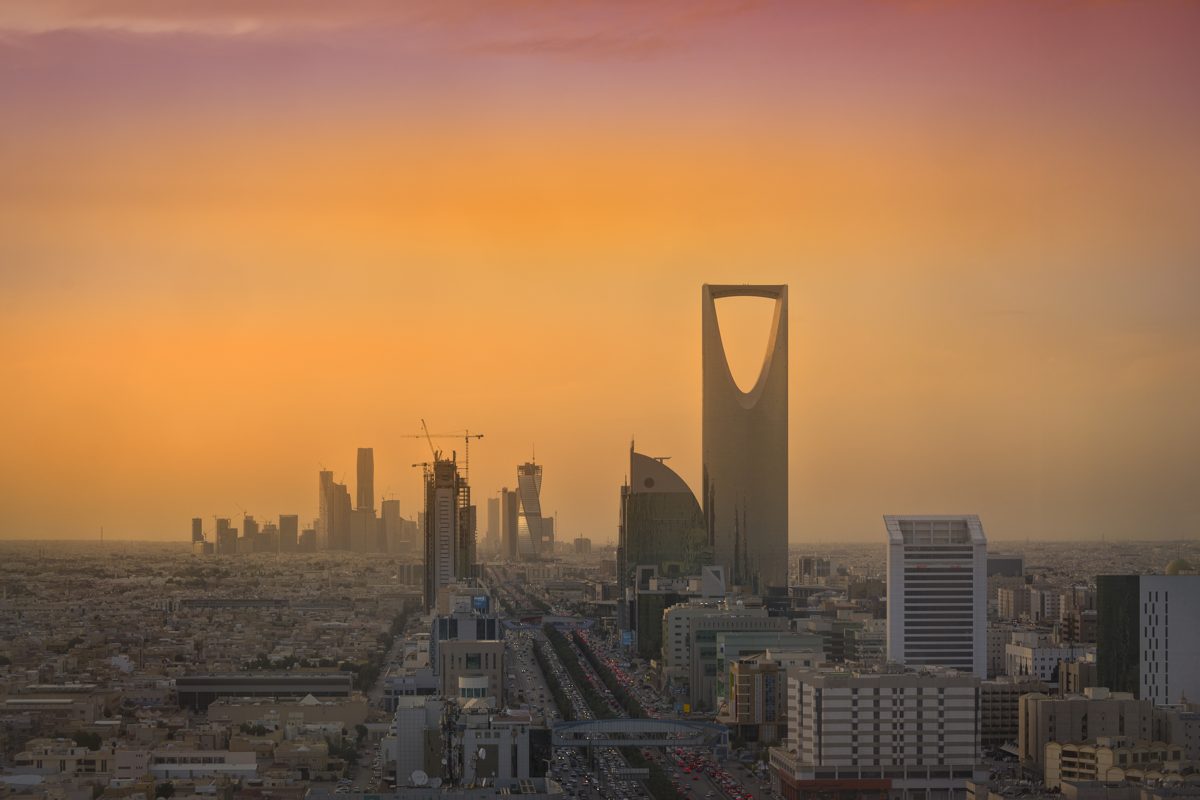
According to Saudi Arabia's Ministry of Energy, an Aramco administrative building in the King Abdullah Financial District sustained "limited" damage from debris of an intercepted missile, with no deaths or injuries reported. Saudi-led coalition forces said they destroyed two ballistic missiles headed for Riyadh, two cruise missiles headed for Riyadh and the south, one ballistic missile headed for the east, and one drone headed south. According to Iran International, citing Reuters, an eyewitness reported that numerous windows of the Aramco tower, one of the tallest buildings in the King Abdullah Financial District, were shattered; Reuters also reported that several loud explosions were heard in Riyadh and that security alerts were issued in some eastern locations including Zahran.
Condemnations from regional countries followed. The UAE described the attacks as violations of Saudi Arabia's sovereignty and international law. Qatar called for an "urgent" halt to the attacks and reiterated support for Saudi Arabia's "legitimate" steps to protect its security and territorial integrity. Bahrain, citing Article 51 of the UN Charter, supported Saudi Arabia's right to self-defense and called on the Security Council to hold attackers and their supporters accountable. Jordan also condemned the strikes. GCC Secretary General Jasem Muhammad Al-Budaiwi described the attacks as "cowardly terrorist acts."
Sarii cited Saudi Arabia's air strike on the El-Sharia area of Sanaa the previous day as justification for the operation; according to Yemen's Health Ministry, that strike killed at least 33 people, mostly women and children, and wounded 39. Sarii said that operations would continue under the principle of "blockade for blockade, escalation for escalation" until Saudi Arabia halts its strikes and lifts its blockade of Yemen; this framing is attributed to the Yemen Armed Forces spokesperson and has not been independently verified by outside sources.
How the Persian press covered it
ISNA and Ettelaat reported the event based on statements from Saudi Arabia's Ministry of Energy and Yemen's Armed Forces spokesperson, presenting it without partisan language and in concise form; Ettelaat explicitly identified its source as Al Arabiya English in one report. Iran International, citing Reuters, covered the same event in far more detail: eyewitness accounts, the specific number of intercepted munitions, and especially regional diplomatic responses from the UAE, Qatar, Bahrain, Jordan, and the GCC—all appearing only in this source—received coverage. Iran's state agencies did not highlight the collective Arab condemnation of the Houthis, Iran's stated regional ally.
Context
Background:
- October 2026: An attack on Aramco's headquarters in Zahran killed 13 and wounded over 300, according to Iran International citing Reuters.
- November 7, 2026 (16 Aban): Saudi Arabia conducted an air strike on the El-Sharia area of Sanaa; according to Yemen's Health Ministry, at least 33 people were killed and 39 wounded; this strike was cited as justification for the Houthis' Sunday operation.
- Early 2026: The US-Israel war against Iran weakened UN mediation that had largely frozen the Saudi-Houthi conflict; this is part of the same regional tension spiral as the CENTCOM operation expanding the Iran blockade to land borders.
- November 16, 2026: After claiming a "victory" at Bab-el-Mandeb, Houthi officials expanded their warning to the Saudi crown prince to the scope of "toppling the Al Saud government" (details).
Who they are / concept: Ansarullah (Houthis) — a Zaidi Shia armed movement controlling northern Yemen, including the capital Sanaa, since 2014; Iran International describes it as "Iran-backed." The movement has been at war with a Saudi-led coalition since 2015. Aramco — a Saudi state-owned company and one of the world's largest oil producers; its facilities in Riyadh and Zahran have been struck multiple times by Houthi attacks over the past year.
By the numbers:
- The October 2026 Zahran Aramco strike killed 13 and wounded over 300 (Iran International/Reuters, October 2026).
- The November 7, 2026 Sanaa air strike resulted in at least 33 deaths and 39 wounded (Yemen Health Ministry reporting, Iran International, November 8, 2026).
- According to Khaleej Times (English, international), in an earlier wave of strikes, debris from intercepted missiles in Riyadh wounded at least 4 people and damaged 15 homes; this pattern resembles Sunday's wave, but independent English-language agency verification of the November 9 strike was not located at the time of writing—this point remains unverified.
For information only; not investment advice.
The presumption of innocence applies.