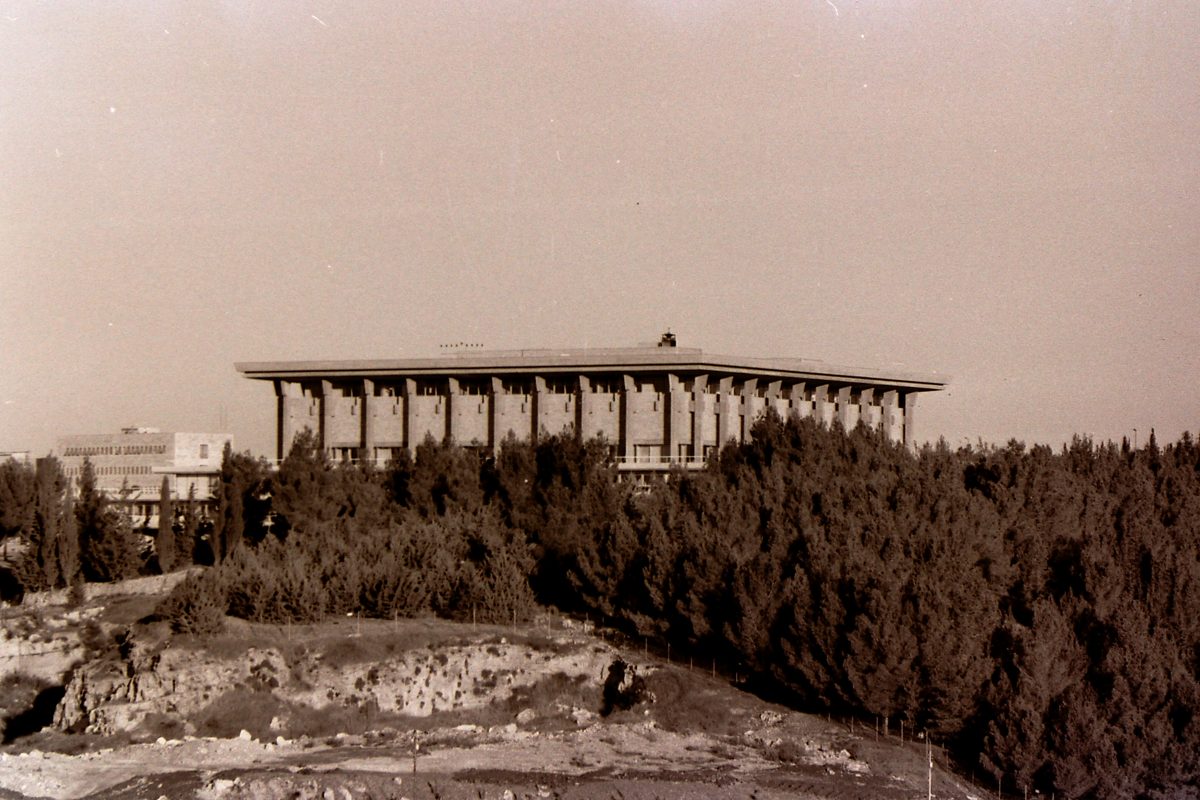
The first exit poll results announced after voting closed on Tuesday evening in Israel showed that neither Prime Minister Benjamin Netanyahu's alliance nor the opposition campaign led by retired major general Gadi Eisenkot achieved the 61 seats needed for government formation in the 120-seat Knesset. According to Hamshahri's report, exit polls from different Israeli television channels also do not align with each other.
According to information compiled by Hamshahri, the Jerusalem Post wrote that Netanyahu-backing alliance would win approximately 50 seats while the opposing camp would win 52; Arab parties are expected to reach 17-18 seats. Haaretz reported that the majority of voters cast ballots for anti-Netanyahu parties. According to Channel 11's poll, while Likud placed first, the opposition bloc's total seats were larger. According to updated Haaretz data reported later, the picture reversed, giving Netanyahu's alliance 52 seats and Eisenkot 49; Netanyahu-friendly Channel 14, however, claimed the alliance had reached exactly 61 seats—giving it a majority on its own—a figure contradicting all other channels' data. Maariv newspaper wrote that Eisenkot might become the first person tasked with forming a government.
Initial reactions to the results were sharp: Eisenkot said "the public voted for change and for ending Netanyahu's premiership"; Netanyahu responded by saying "we are waiting for the actual results," questioning the polls. Opposition leader Yair Lapid stated that Netanyahu's campaign had suffered "a heavy defeat." Avigdor Lieberman called on Likud's own members to "rise up" against Netanyahu. Netanyahu, on election night, pointed to Itamar Ben Gvir as responsible for the defeat, citing Ben Gvir's success in raising Arab voter turnout. Arab voter turnout in Israel was reported to have reached 80 percent, breaking records.
How the Persian press covered it
| Source (orientation) | Headline / framing |
|---|---|
| IRNA, ISNA (State news agency / Semi-official) | Elevated Eisenkot's statement that "the public voted for change and ending Netanyahu" to the headline; framed around Netanyahu's political defeat. |
| Hamshahri (Tehran municipality, principlist) | Presented the "stalemate" in exit polls and conflicting channel numbers side by side; avoided giving a definitive result. |
| Kayhan (Hardline) | Focused on reporting about possible plans the Israeli media might employ in case Netanyahu faces likely defeat. |
Channel polling numbers changed and contradicted each other throughout the night; the Israeli Central Election Commission's official final results had not been announced at the time this report was written. For this reason, the definitive distribution of seats and which bloc will form the government remain unconfirmed.
Context
The election occurred during a period when Israel's possible new military conflict with Iran was being discussed. Eisenkot, a former Israeli Chief of Staff, had criticized the US 2018 withdrawal from the nuclear deal as a "major strategic mistake" and follows a different line on Iran policy than Netanyahu. The election outcome could affect whether the government delays a decision on a possible attack; indeed, it was previously reported that Netanyahu and military commander Zamir differed on attacking Iran before the election. Coalition calculations are also complex: the number of seats Arab parties will win with record turnout makes it harder for either the Netanyahu or Eisenkot camp to clear the 61-seat threshold. Talk of Haredi (ultra-Orthodox) parties potentially forming a coalition with the rival camp is also being reported as an unusual development.