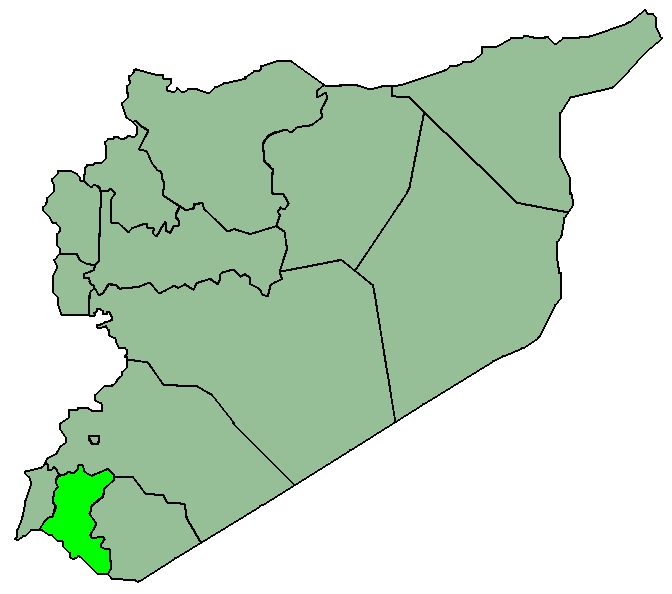
Jordanian warplanes struck the town of Lutf in Dera province in southern Syria Monday night; according to Syrian sources, members of a family living in the bombed house, including women and children, were killed. According to Iran's Hamshahri newspaper, Jordan justified the strike as targeting positions of groups it considers "terrorist."
Dera's Health Directorate said eight people died in the strike, including an elderly man and three children, with four wounded. Iran's state news agency IRNA, however, reported that the same strike killed ten people with four wounded; this discrepancy between sources was not verified. The Damascus government (El Colani administration) claimed Jordan did not coordinate with Damascus before the airstrikes and said it closed the Nasib border crossing with Jordan in response. According to ISNA, citing Reuters, Syria's Customs and Border Organization confirmed the same closure decision.
The Jordanian military said the strike followed the discovery that suspects in a church attack in the country the previous week had links to "terror groups" in Dera; this claim was not independently verified. According to Hamshahri's report, tensions rose in the region after the strike, and local sources claimed the bombed house was home to a civilian family uninvolved in conflict; this claim also could not be independently verified.
How the Persian press covered it
| Source (orientation) | Headline / framing |
|---|---|
| Hamshahri (Tehran municipality, principlist) | Framed it as "beginning of a new confrontation in the region"; reported eight deaths and emphasized Damascus's complaint about lack of coordination. |
| IRNA (state news agency) | Reported ten deaths, directly headlined it as "Jordan's airstrike on southern Syria." |
| ISNA (semi-official) | Covered the story with Reuters attribution, focusing on the border crossing closure. |
Context
Dera is known as the province where Syria's 2011 uprising began and has since remained an area where various armed groups operate. The Jordanian military has conducted strikes in this region just beyond its border in past years against what it viewed as threats. Since Bashar Assad's fall, the government of Ahmed al-Sharaa (Abu Muhammad al-Golani) that took power has struggled to provide security across the country; Jordan's allegation of uncoordinated strikes exposes Damascus's sensitivity in relations with neighbors and control gaps in border security.
The closure of the Nasib border crossing directly affects trade and human movement in the region; it is one of the most important land crossings between Jordan and Syria and is critically important for regional supply chains. The incident exemplifies a period in southern Syria where neighboring countries conduct cross-border operations on their own security grounds, though this is not always coordinated with the Damascus administration. Jordan, with its long border, views smuggling and armed group transit as direct threats to its national security and has conducted similar cross-border strikes in the past; whether Syria's new government was given advance warning of such operations remains a disputed matter among sources.