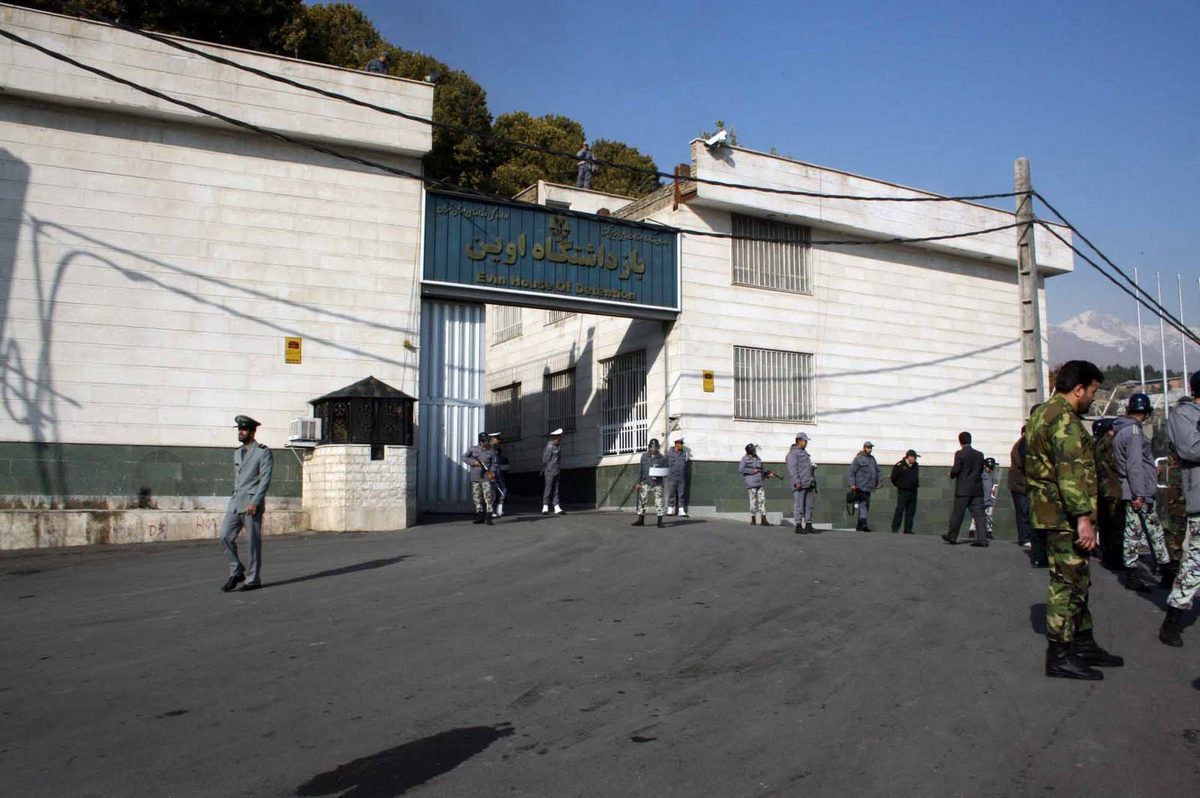
Fourteen political prisoners held at Evin Prison in Tehran issued a joint statement warning that the Iranian government has intensified repression in anticipation of possible public protests, and that even minor expressions of opinion are met with severe penalties. According to Iran International, the prisoners pointed to the case of political prisoner E.M. as an example of this approach.
According to Iran International's report, signatories of the statement argue that the government fears new protest waves due to mounting economic hardship and post-war social discontent, and has therefore intensified sentences for deterrence. The report states that prisoners presented E.M.'s case as an example of how minor dissenting statements are converted into grave security charges. Charges against E.M. are not based on a final court ruling; the presumption of innocence applies.
The statement did not include the names of individual prisoners in Iran International's report; the article only noted the statement was signed by 14 people held at Evin. Which cell block or political current the prisoners represent was not reflected in the report; this detail remains unconfirmed.
According to Fox News in September 2026, the human rights monitoring organization Abdorrahman Boroumand Center documented that more than 60,000 people have been detained in Iran since the start of 2026, and at least 950 executions have been carried out; at least 30 of these executions were recorded as involving protesters. According to the same report, the official summary of a conversation between UN Secretary-General António Guterres and Iran's President Masoud Pezeshkian did not address treatment of protesters, executions, or torture allegations; UN Spokesperson Stéphane Dujarric argued that Guterres has directly raised these issues in other conversations.
Context
Evin Prison is one of Iran's most widely known detention facilities and holds numerous political prisoners. According to previous reports by human rights monitoring organizations HRANA and Hengaw, E.M. was detained after signing an opposition political statement and appeared in state television footage where, apparently under pressure, E.M. made statements implying espionage charges; these organizations claim the footage was a coerced confession. HRANA also reported in August 2026 that officials at one block of Evin beat other political prisoners and transferred them to an unknown location. The current statement came shortly after Amnesty International reported that Iran's execution wave against protesters continues, and provides a current example of the scope of political detention in Iran. Organizations like HRANA and Hengaw operate with a critical perspective toward the Iranian government; therefore, information they convey should be evaluated without independent official confirmation.
The Iranian government had not issued a public response to the prisoners' claims or the statement as of the time this report was written. The deepening economic hardship and rising social discontent following seven months of war have led observers to discuss the possibility of a new protest wave; the prisoners' statement can be read as part of that conversation.