Whether the Strait of Hormuz is fully open or closed has been a question debated in the Iranian press for months. According to an assessment published by the moderate conservative Khabaronline, the strait is "neither fully open nor fully closed"; most traffic has been disrupted and energy transit has become more expensive. The newspaper describes this as an important lever in Iran's hands.
According to Khabaronline's analysis, an oil price above $100, compared with $70 before the war, is a sign that the blockade of the strait has worked to some extent. But the piece draws attention to the growing entrenchment of "workaround" routes such as Saudi, Emirati and Iraqi pipelines and ship-to-ship transfers south of the strait: although these routes carry only small amounts of oil for now, in the long run they could permanently reduce the strait's geopolitical value. According to the newspaper, keeping the strait closed for a long time could therefore have a more dangerous outcome than opening it.
The hardline Kayhan draws a different picture: in a report titled "Day 218 of the war," it writes that Trump has been repeating for seven months that "oil prices will fall when the war ends," yet the price is still $30 higher than before the war. It says the market has not given credence to Treasury Secretary Bessent's promise of increased supply, and that Brent crude has climbed back to $103 despite the US announcement of a 40-million-barrel stock release. According to Kayhan, this is proof that Iran's pressure on the strait is straining the US economy.
Kayhan also reports that the European Union is ready to release emergency stocks together with the International Energy Agency, but that according to former IEA official Neil Atkinson, this will provide only short-term relief and global supply will remain structurally low.
How the Persian press covered it
| Source (orientation) | Headline / framing |
|---|---|
| Khabaronline (moderate conservative) | Argues that keeping the strait closed for long is not in Iran's interest, citing the risk that alternative routes become permanent. |
| Kayhan (hardline) | Stresses that the strait crisis is hurting the US economy and that the Trump administration's oil-price promises have not held up. |
| IRNA (state news agency) | Reports the matter without taking sides, through regional statements such as Ansarallah's warning of "a different 2030 vision." |
Context
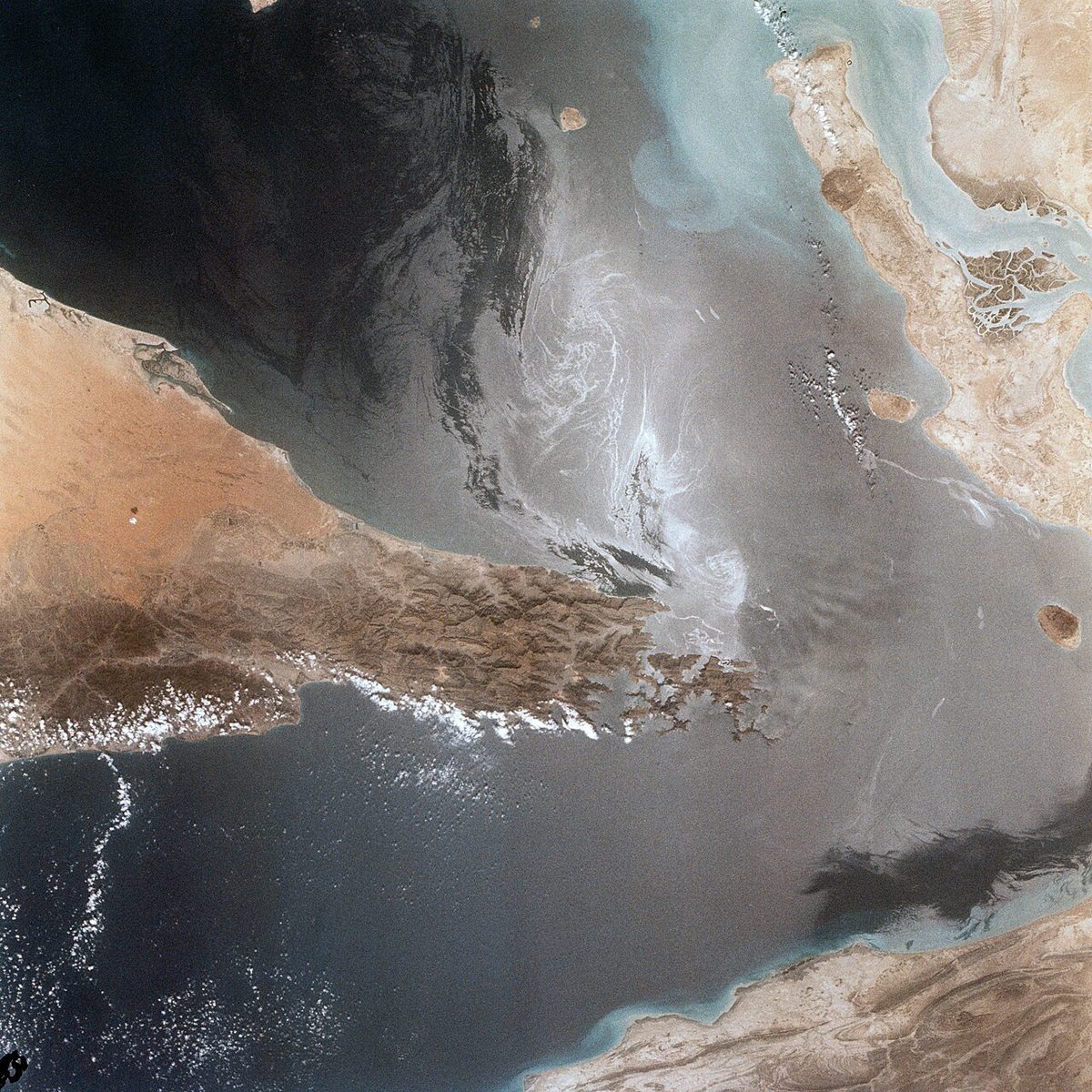
The Strait of Hormuz is a narrow waterway leading from the Persian Gulf to the open sea, through which a significant share of the world's oil shipments pass; the fact that it is partly bordered by Iran's coastline gives Tehran a strategic means of control. Under wartime conditions, security risks in the strait and the restrictions imposed by Iran have pushed oil prices well above prewar levels. This debate is also linked to the earlier story reporting the tanker strike: every security incident in the strait becomes a new subject of reckoning both for political camps in Tehran and for global energy markets.
The main risk Khabaronline highlights is the "normalization" of alternative routes. According to the piece, although the few million barrels of oil being rerouted to the south seem of little importance for now, if this flow becomes permanent it could weaken the strait's deterrent power for years; in the newspaper's view, that would be a bigger strategic loss than opening the strait.