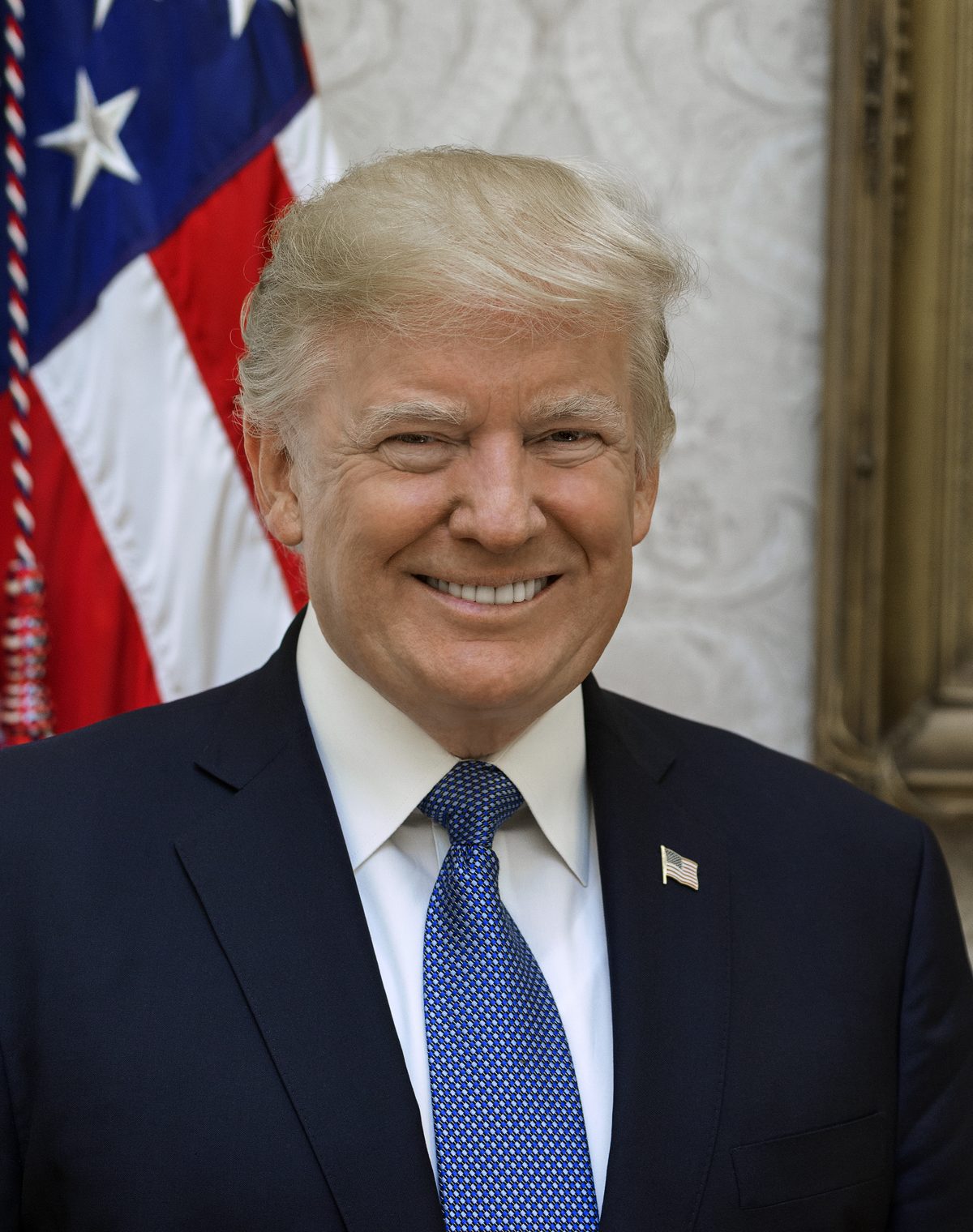
According to IRNA, U.S. President Donald Trump has reiterated rhetoric about possible military "adventurism" toward Iran following his party's heavy midterm losses and some recent retreat from his threats. IRNA did not specify which platform Trump used for this statement, but the same day IRNA reported separately that the House minority leader had "acknowledged that Iran is now stronger than before the war and that the U.S. should never enter this war."
According to Iran International, Trump on Thursday posted a message on Truth Social in which he told Vice President JD Vance to focus "all attention" on "widespread corruption and crime in cities and states run by Democrats"; he accused Minnesota, California, and Illinois of mismanagement and corruption, and alleged that Democrats were "stealing billions of dollars a month." Continuing in the same message on Iran, Trump stated: "We don't need a deal with Iran. Those days are long gone. We hold their money—hundreds of billions of dollars—we hold their throat!" The report noted that Vance had previously played a leading role in advocating for a ceasefire and resumption of nuclear negotiations with Iran, and that he had blamed the war for the party's heavy midterm losses. The article expressed uncertainty about what change, if any, Trump's message signaled regarding Vance's responsibility on the Iran file.
According to Iran International's separate report, Trump's statement was based on Axios reporting citing three sources at the G7 foreign ministers meeting: U.S. State Department Marco Rubio told colleagues that the preference was to continue economic pressure and blockade rather than resume war or accept "a bad deal"; sources said Rubio noted that Trump had not set a date for when the pressure would end, and that the goal was to restrict the Islamic Republic's financial resources and financing of allied groups. On November 12, Trump had stated his desire for a "complete and 100 percent" victory over the Islamic Republic during a Veterans Day ceremony, but had not specified concrete conditions for this goal.
According to IRNA's separate report, four Democratic U.S. senators announced they would not approve any budget package unless the year-end budget agreement limited Trump's ability to continue the war against Iran. IRNA did not name the senators. The report framed this stance as evidence that opposition to the war's cost and duration is strengthening in Congress.
On the diplomatic front, IRNA reported that the Emir of Qatar met with the British Prime Minister on Thursday to discuss recent developments in the Middle East and ways to strengthen coordination for reaching a comprehensive agreement among the relevant parties. Hamshahri also reported the same meeting as "the Emir of Qatar's new initiative to advance negotiations and reduce tension in the region." According to Iran International citing the Jerusalem Post, Qatari Prime Minister Mohammed bin Abdulrahman Al Sani told diplomatic sources at the November 12 G7 meeting that Doha assessed there were at least two weeks before a possible U.S. attack for Tehran and Washington to reach agreement; the same newspaper reported that the core dispute centered on the sequence of steps: lifting the naval blockade, addressing the nuclear file, and releasing frozen Iranian assets.
How the Persian press covered it
| Source (orientation) | Headline / framing |
|---|---|
| IRNA (state news agency) | Framed Trump's threat rhetoric as "repeated bluster despite midterm loss"; ran separate reports on Congressional opposition and Qatar's mediation push. |
| Hamshahri (Tehran municipality, principlist) | Highlighted the Qatar-UK meeting as "the Emir's new initiative"; in a separate headline reported "Trump again threatens Iran with military attack." |
| Iran International (opposition, diaspora) | Published Trump's Truth Social message in full quotes and juxtaposed it with Vance's earlier statements linking the war to the election loss; also reported Axios's "pressure preferred" framing and Qatar's two-week warning. |
While all three sources reported Trump's rhetoric and Congressional opposition, the senators' identities and Trump's exact threat statement as reported by IRNA were not detailed in any source; these points remain unconfirmed. IRNA's official framing directly characterized Trump's rhetoric as "bluster," while Iran International quoted the same statements without editorial comment, leaving it to the reader to judge.
Context
Background:
- November 2026 (midterm elections): The Republican Party suffered a heavy loss in Congress, attributed partly to voter backlash against the Iran war.
- November 11, 2026: Three competing approaches to ending the war (military pressure, Qatar-mediated diplomacy, prolonged naval blockade) were reported to be in contention within the administration (details).
- November 12, 2026: G7 foreign ministers in Paris emphasized that economic and political pressure would continue if a diplomatic solution could not be reached (details).
Who / concepts: The U.S. Senate requires a 60-vote supermajority (filibuster threshold) to pass budget packages; this threshold allows the minority party to block a bill if certain conditions are not met. The stance of the four senators reported by IRNA relies on this mechanism.
By the numbers:
- According to CNY Central citing AP, 45 Senate Democrats blocked the defense-budget bill (NDAA), preventing Republicans from reaching the 60-vote threshold; the vote occurred during the ongoing Iran war (CNY Central/AP, 2026).
- The Trump administration had requested an additional roughly $88 billion budget related to the war; whether this passed the Senate was not confirmed (CNY Central/AP, 2026).
- According to Iran International citing the Jerusalem Post, the Qatari Prime Minister assessed at least two weeks were needed before a possible U.S. attack for Tehran-Washington agreement to be reached (Iran International, November 9-10, 2026).
What to watch: It remains unclear when year-end budget negotiations will conclude in Congress. Whether the Qatari Emir's meeting with the British Prime Minister translates into concrete diplomatic action remains to be seen. Whether Trump's directive to Vance on "domestic politics" formally ends Vance's mediation role on the Iran file also remains unannounced; the White House has not issued a statement on this.