A container vessel carrying more than 2,500 boxes sank Wednesday morning in southern Hormuz waters after striking a sea mine. According to Hamshahri, Iran's Islamic Revolutionary Guard Corps Navy (IRGC) said the ship hit a mine after attempting to traverse a route deemed unauthorized and risky, causing a severe fire that led to its sinking.
The IRGC's official statement said the vessel hit a sea mine while trying to pass through an unauthorized and risky section of Hormuz, triggering an explosion and heavy fire in the engine room; the ship sank Wednesday morning in flames in southern waters. The IRGC called on local boats and fishermen in the area to avoid floating containers. The vessel was not identified by name.
According to Iran International, at least three vessels suffered damage near Hormuz in the same week. The Port Authority of Singapore reported that a vessel named "JFS Pride" was attacked on the 21st of Mehr (October 13), sustained damage and fire, then sank; all 21 crew members were evacuated safely. Another vessel, "JFS Gisele," sustained hull damage in a separate incident on the 22nd of Mehr (October 14) but reached a safe anchorage under its own power; all 22 crew were safe. Singapore authorities said the source of the projectiles remained "unclear." According to Reuters maritime security sources cited in the report, the JFS Pride's 2,824 TEU capacity overlaps with the 2,500-container vessel mentioned by the IRGC; however, the two sides cite different names and different causes. The United Nations-affiliated International Maritime Organization also reported that a bulk carrier named "Cape Dao" flagged to Antigua and Barbuda sank near Hormuz, noting that the vessel was struck by a projectile on the 1st of Mehr (unconfirmed).
Hardline Kayhan framed the events entirely differently: according to the newspaper, these developments prove that Iran effectively enforces sovereignty over the strait—"contrary to Trump's rhetoric." The newspaper describes mines as a "penalty tool" against vessels that violate rules, grounding this practice in Articles 3 and 34 of the UN Convention on the Law of the Sea.
How the Persian press covered it
| Source (orientation) | Headline / framing |
|---|---|
| Hamshahri (principlist) | Relays the IRGC's official account: "rule-breaking vessel hit a mine" |
| Kayhan (hardline) | Frames events as proof of Iran's "sovereign rights" over the strait; portrays mines as a legitimate deterrent |
| Iran International (opposition, diaspora) | Cites Singapore and Reuters sources, uses the word "attack," notes the projectile source remains officially "unclear" |
Sources conflict on whether the ship hit a mine or was struck by a projectile; the full cause remains unconfirmed.
Context
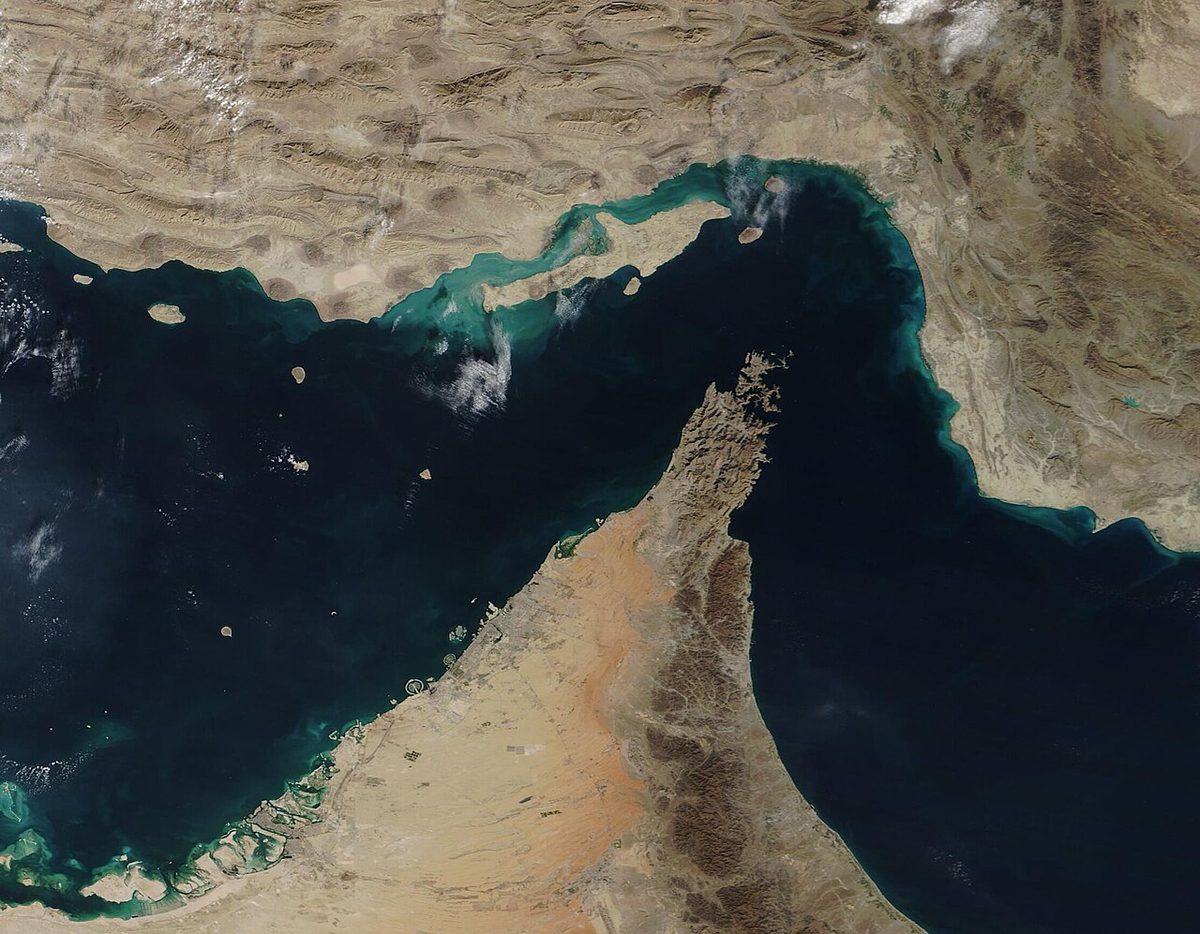
The Strait of Hormuz has been a flashpoint for tensions repeatedly since the Iran–U.S. conflict began in February 2026. On October 11, the IRGC and U.S. Central Command made conflicting statements about what happened to a tanker; October 12 saw a third supertanker hit a mine since Saturday. About one-fifth of the world's crude oil and liquefied natural gas transits this narrow strait; consecutive vessel damage incidents are driving up maritime insurance costs and pushing major shipping lines to avoid the region. The source of the mines has not been independently verified; Iranian officials frame incidents as "rule-breaking vessels' own fault" rather than claiming responsibility.
For information only; not investment advice.