Pakistan's military spokesman, Brigadier General Ahmed Sharif Chaudhri, confirmed in an interview with an Arab news outlet that four-way security talks held in Tehran last month brought together delegations from Turkey, Saudi Arabia, and Pakistan, and that all four sides had agreed to continue dialogue. According to Hamshahri, Chaudhri called for "moderation, de-escalation, and diplomatic engagement" by all parties and said that further escalation of tensions would benefit "none of the parties."
According to Hamshahri, the general said the Tehran meeting took place several days after a visit by Pakistan's Army Chief of Staff and that this participation demonstrated Islamabad's commitment to dialogue and peaceful resolution of regional disputes. Chaudhri said the delegations in Tehran agreed to continue dialogue to develop cooperation among the four countries and help bring about peace and stability in the region.
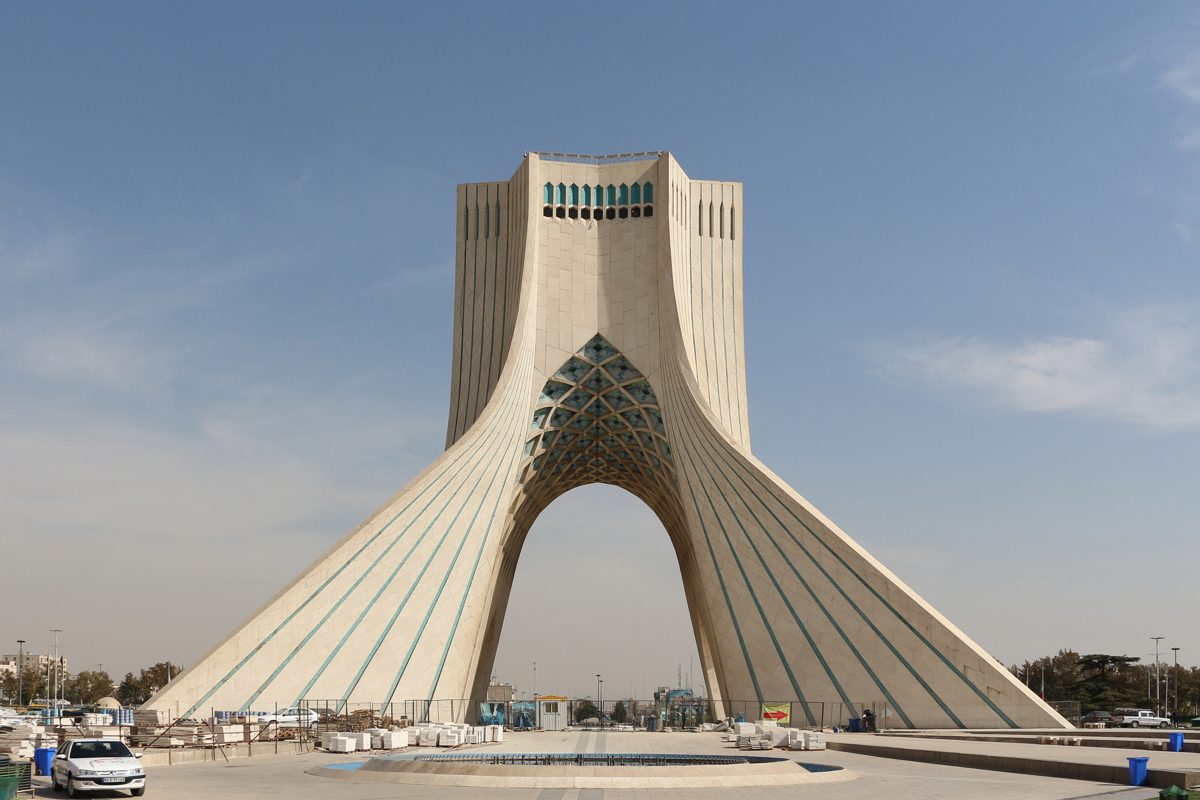
The Tehran meeting referred to took place on October 27 and was separately reported by Farsçadan at that time: Turkey's MIT Chief Ibrahim Kalin, Saudi Arabia's Defense Minister Khalid bin Selman, and Pakistan's Army Chief Asim Munir met in Tehran with Iran's High National Security Council Secretary Mohsin Rezaei. In that day's report, Iran framed the meeting as an "agreement" that all four sides would continue the process, whereas Saudi Arabia's separate statement did not use that language. Chaudhri's statement today represents the first comprehensive public statement about the results of that meeting from any of the four parties in the two weeks since.
Chaudhri's remarks reveal Pakistan's ability to pursue two parallel commitments simultaneously: on one hand, deploying military forces under defense agreements signed with Saudi Arabia, and on the other maintaining a dialogue channel with Iran through the four-country format alongside Turkey and Saudi Arabia. Hamshahri's report did not directly quote the general on how these two commitments are reconciled.
The Pakistani spokesman also addressed bilateral and trilateral defense agreements signed with Saudi Arabia, saying Pakistani forces are currently deployed in Saudi Arabia undertaking primarily air and missile defense support and participation in joint exercises. When asked whether Islamabad would provide additional assistance in air defense and missile systems or intelligence cooperation, Chaudhri said "continued necessary support" could be expected without elaborating; he also noted that troop numbers, deployment locations, or operational arrangements related to military pacts have not been shared with the public. Chaudhri argued that both the bilateral and trilateral defense pacts are "purely defensive" in nature and contain no intent to attack any country; he added that Pakistan stands ready to take all necessary defensive measures to protect Saudi Arabia.
According to Hamshahri, despite Pakistani political and military officials' claims that the Mecca Pact is defensive and contains no external aggression, officials of the Houthi-affiliated "Change and Reconstruction Government" in Yemen condemned Islamabad's participation in Saudi Arabia's "aggression" against Yemen. Hamshahri did not provide details about which official made this condemnation or when; whether Pakistan responded to the condemnation was not reported.
How the Persian press covered it
| Source (orientation) | Headline / framing |
|---|---|
| Hamshahri (Tehran municipality, principlist) | Highlighted the general's "dialogue will continue" statement and also reported his assertion that Pakistan-Saudi defense pacts are "purely defensive." |
| IRNA (state news agency) | In a separate report the same day, reported that Pakistan's military said the Tehran meeting was "a step toward de-escalation and strengthening regional cooperation"; did not include details about defense agreements. |
Both sources reported the general's "dialogue will continue" statement identically; however, details about the scale and nature of Pakistani military presence in Saudi Arabia and the Houthi condemnation appeared only in Hamshahri's report; IRNA's report that day omitted these two details. Whether this difference reflects source availability or editorial choice was not confirmed.
Context
Background:
- August 2026: Turkey, Saudi Arabia, and Pakistan signed the "Mecca Collective Defense Pact," declaring that an armed attack on any one of the three would be treated as an attack on all three.
- October 27, 2026: Turkish MIT Chief Ibrahim Kalin, Saudi Arabia's Defense Minister Khalid bin Selman, and Pakistan's Army Chief Asim Munir held four-way security talks in Tehran with Iran's High National Security Council Secretary Mohsin Rezaei (details).
- November 12-13, 2026: Pakistan's military spokesman made the first comprehensive public statement on the results of this meeting.
Who / concepts: The Mecca Pact (Mecca Collective Defense Pact), signed in August 2026, is an alliance agreement among Turkey, Saudi Arabia, and Pakistan treating an attack on any one as an attack on all three; it does not yet have an integrated joint command structure.
Turkey angle: Turkey, as a signatory to the Mecca Pact and one of the four parties to the Tehran talks, continues to remain engaged in efforts to reduce regional tension without formally assuming an official mediation role in the Iran-U.S. conflict. MIT Chief Ibrahim Kalin's October visit to Tehran exemplifies Ankara's strategy of maintaining direct contact with Iran while simultaneously pursuing Mecca Pact membership; today's statement by the Pakistan spokesman confirms this four-way channel remains open.
By the numbers:
- The Mecca Pact was signed in August 2026; the first ministerial-level meeting took place in Istanbul the same month (Farsçadan archive, October 2026).
- According to Investing.com Live, the Tehran four-way security meeting included Saudi Defense Minister Khalid bin Selman, Pakistan Army Chief Asim Munir, and Turkish intelligence chief Ibrahim Kalin; Iran was represented by High National Security Council Secretary Mohsin Rezaei (Investing.com Live, October 2026).
What to watch: Chaudhri provided no information about the location or date of a next meeting among the four sides. Whether Pakistan will increase its deployment in Saudi Arabia remains unannounced.