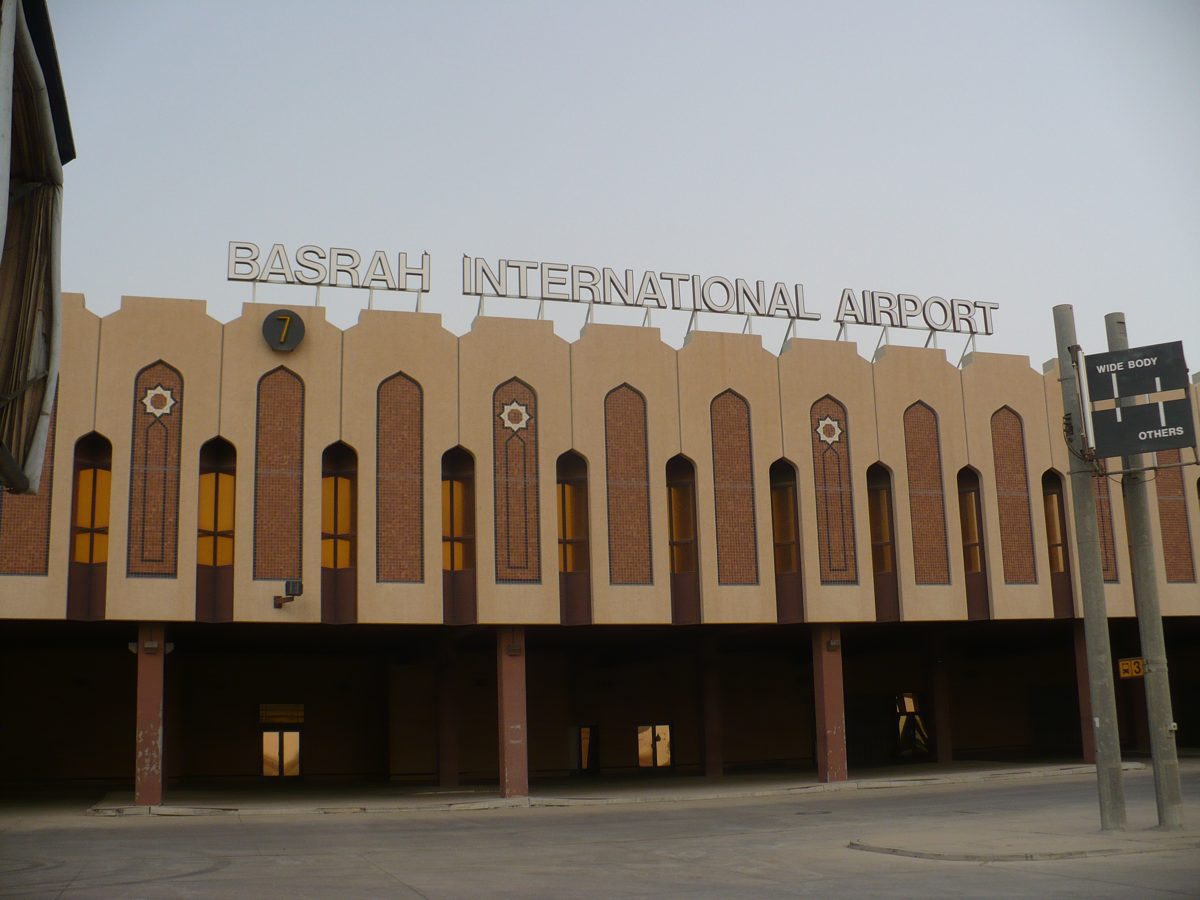
According to Reuters' account from Basra Airport officials, Iraq refused to allow a plane carrying the Iranian national football team to land at Basra International Airport on Tuesday, November 11. Iran International reported that the Iranian national team had traveled to Iraq to participate in the Basra Four-Nation Tournament, which also included teams from Iraq, Lebanon, and Palestine.
Two officials at Basra Airport told Reuters that the decision was made by Iraq's Civil Aviation Authority and was linked to U.S. sanctions against Iranian airlines. One aviation authority official told Reuters that his country could not accept the risk of violating U.S. sanctions against Iranian carriers. Reuters noted that this development demonstrates the growing impact of U.S. sanctions on Iran's airlines' operations in Iraq.
Iran International recalled that the U.S. had previously warned (after September 23) that international companies working with Iranian airlines could face sanctions; Iraq had suspended Iranian flights into Baghdad International Airport in September in response to this secondary sanctions threat. U.S. Treasury Secretary Scott Bessent had warned that airports serving Iranian airlines could face sanctions including cuts from the U.S. dollar-based financial system; this warning was part of Washington's broader effort to tighten restrictions on Iran's transport sector and foreign companies serving sanctioned Iranian airlines.
The decision in Basra reflects Iraq's cautious stance toward Iranian flights that has continued since September and now extends to the sports sector. Reuters recalled that similar restrictions have been applied at Erbil and Sulaimaniyah airports, and that Baghdad is pursuing exception negotiations with Washington. The Iranian side has not made an official statement about the decision; it remains unclear whether the Iranian Football Federation has determined a way to get the team to the tournament. Reuters' report stands as a rare example showing that sanctions now directly affect not only commercial cargo and passenger flights but also state-backed sports events.
Context
Background:
- September 23, 2026: The U.S. announced that international companies doing business with Iranian airlines could face sanctions after this date.
- September 25, 2026: Iraq suspended Iranian flights at Baghdad, Erbil, and Sulaimaniyah airports.
- October 2, 2026: Iran urged Iraq to lift the flight ban; Baghdad and Washington continued exception negotiations.
- November 11, 2026 (Basra): The Iranian national football team's plane was denied landing at Basra for the four-nation tournament—the most recent example of the same sanctions rationale being applied.
Who and what: Secondary sanctions, a country's authority to penalize third-party companies or institutions not its own nationals that conduct business with a sanctioned country; here, the threat that the U.S. can directly target Iraqi airport authorities if they service Iranian planes.
By the numbers:
- Iraq suspended Iranian flights at three major airports (Baghdad, Erbil, Sulaimaniyah) in September 2026 (Al Jazeera, September 25, 2026).
- U.S. sanctions threats apply to companies doing business with Iranian airlines after September 23, 2026 (Al Jazeera, September 25, 2026).
- The Basra Four-Nation Tournament included Iran plus Iraq, Lebanon, and Palestine; the tournament is limited to four teams (Iran International, November 11, 2026).
Turkey factor: This story has no direct Turkey connection; sanctions enforcement is limited to Iraq. Turkey's own airspace and land border policy are covered under the U.S. regional blockade of Iran in a separate New York Times report.
What's ahead: It remains unclear how the Iranian national team will reach or whether it will withdraw from the Basra four-nation tournament; the outcome of Baghdad-Washington exception negotiations has not yet been announced.