According to a leaked document published by Iran International, a highly classified letter written by a former secretary of the Supreme National Security Council to Iran's Supreme Leader reveals how oil sales were directed to his son's shipping network; according to the document, this arrangement also served to circumvent US sanctions through new methods using Chinese ports and storage tanks. The claim is single-sourced and currently unverified.
According to Iran International, the document in its possession is a classified letter written by a former acting oil minister and ex-general director of the National Iranian Oil Company; this letter is presented as a response to an earlier "highly classified" letter from the former security official to the Supreme Leader. Iran International says that in his previous letter, this official had described oil sales during the Pezeshkian administration as a "disaster." According to Iran International, this official and the Supreme Leader died in the February 28, 2026 US-Israeli strike; this claim contradicts the official statements previously reported by Farsçadan (see Context below) and has not been verified by any other source.
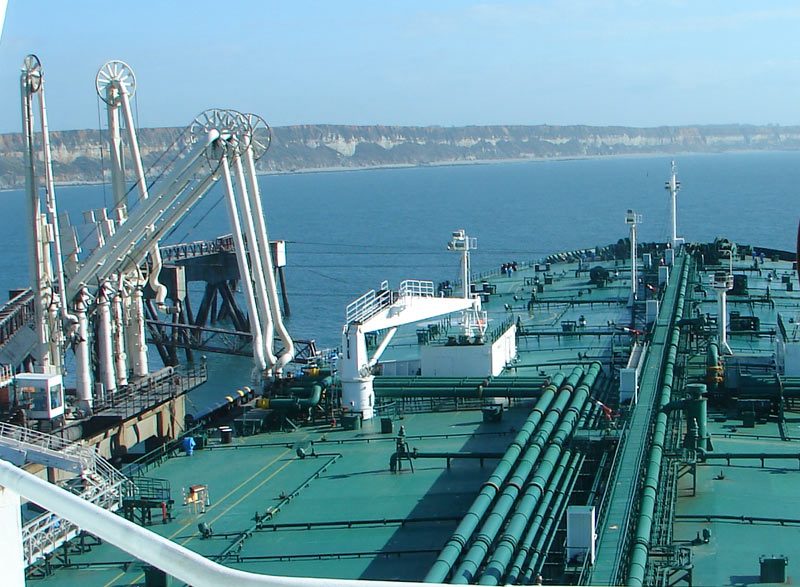
According to Iran International, the letter by the former minister criticizes the previous administration's policy of purchasing new ships while simultaneously revealing a secret cooperation between Tehran and China: through negotiations with Beijing, the Foreign Ministry created a "hub" for sanctioned oil by acquiring multiple ports and oil terminals on Chinese soil; at the same time, Tehran leased large storage tanks in several Chinese cities to enable direct sale of oil to the Chinese market. According to Iran International, the practical executor of this arrangement is the owner of a shipping fleet known as the "Ghosts"—the son of the former official. Iran International says this official's ships carry oil to Chinese terminals controlled by the Islamic Republic, allowing them to dock without trouble while circumventing US Treasury sanctions. Iran International reports that the US Treasury placed 51 ships linked to this official on the sanctions list.
According to Iran International's account of the document, these ports and tanks are concentrated at four locations: a partially-owned berth at small transit terminals in the Ningbo-Zhoushan Free Trade Zone; secondary berth stakes secretly acquired in Qingdao and Yantai ports in Shandong Province; selected tanks at locations with fast pipeline access. According to the source, seven large storage tanks total, with four located at Dalian and Huizhou ports plus Dongying and Weifang coastal cities, and three at the Aoshan customs depot, Zhoulanggang terminal, and Zhenjiayao oil zone in the Zhoushan archipelago. Iran International also wrote in a separate leaked document released two months ago that a minister's special adviser directed 2 billion dollars' worth of debt to a "trustee" (a trusted intermediary person or company) to store oil in a ship belonging to this official's company.
According to Iran International, the letter by the former minister also states that the former security official told the Supreme Leader that during the previous government oil was sold at a 50-cent-per-barrel discount, while under the current government the discount had risen to $9 per barrel; the Oil Ministry denied this claim. According to the source, this correspondence also played a role in the firing process of the Oil Minister who left office three weeks ago. At the time of writing, neither the Supreme National Security Council, the Oil Ministry, nor the individuals named issued an independent statement about these allegations; Farsçadan therefore marks these allegations as a single-source relay from Iran International. The presumption of innocence applies.
Context
Background:
- October 23, 2026: An Assembly of Experts member said the Supreme Leader's wounds had fully healed and his non-appearance was for security reasons (details); this statement directly contradicts today's document claim of death.
- October 28, 2026: High-level discussions involving the Speaker and Chief Justice were used to convey the message "no vacuum in governance" (details).
- Approximately two months ago (September 2026): According to Iran International, a minister's special adviser revealed that 86 million barrels of oil was transferred at 8.5% discount to four trustees (including this official's son).
- Three weeks ago (mid-October 2026): The Oil Minister left office; the former minister was appointed as acting oil minister.
Who it is / concept: Supreme National Security Council (Persian: Showra-ye Ali-ye Amniat-e Melli) coordinates Iran's defense and security policies at the highest level; it is a separate entity from the Assembly of Experts. The term "trustee" (amanatdar) refers to trusted intermediary persons or companies who conduct oil sales on behalf of state institutions, taking commission, because official entities cannot directly handle sanctioned oil due to restrictions. International media refer to shipping networks that hide ownership and routing information while transporting sanctioned oil as "shadow fleets" or "ghost fleets"; these tankers frequently change name and flag.
By the numbers:
- According to Iran International, the arrangement encompasses 3 berths and 7 storage tanks at four Chinese locations; the US Treasury has placed 51 ships linked to this official on the sanctions list.
- According to Maritime Executive, the US Treasury placed over 50 individuals, organizations, and ships linked to this official on the sanctions list in July 2025; this was the most comprehensive sanctions package against Iran since 2018 (Maritime Executive, July 2025).
- According to Reuters-based reports, Iran has had to pay an estimated 450 million dollars in storage fees to Beijing for 25 million barrels of oil waiting at Chinese ports (primarily Dalian and Zhoushan) for years (offshore-technology/Reuters, January 2025).
The presumption of innocence applies.